


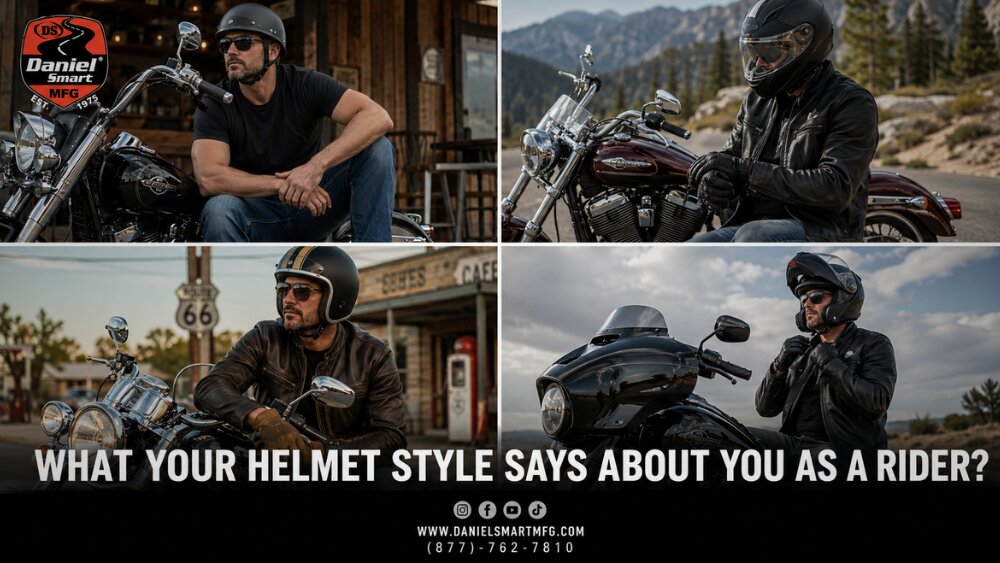
When you look at the rider coming from afar, all you see is the helmet. In fact, it is something you see before the face. And through the helmet, you can tell a lot about the rider. How? Well, different types indicate whether riders play it safe, are ready to take risks, or care about protection, comfort, and attitude.
Curious about what different helmet styles reveal about riders? Let’s find out.
Why Helmet Style Matters Beyond Looks
Motorcycle helmets sold for use on U.S. streets must meet DOT’s federal safety standard, FMVSS 218.
This is compulsory and more important than any style because motorcycle riders are still a big part of fatal traffic accidents.
So far, in 2024, 6,228 motorcyclists have lost their lives. According to NHTSA data, this marks one of the highest counts of motorcyclist fatalities we've seen since at least 1975.
What Does Your Helmet Style Say About You?
Securing a helmet is one thing, but keeping the style as per your personality is another. So, this is what you need to know for helmet styles for riders, meaning:
-
Full-face Helmets: Safety first. Best coverage & protection. Preferred by commuters and long-distance travelers who prioritize protection above everything else.
-
Modular Helmets: Functional. Full-face with a flip-up chin bar for your convenience. Chosen by riders who value flexibility and practicality on the road.
-
Open Face (3/4) Helmets: Old school. Less coverage, more wind, and feel. Favored by cruiser riders who enjoy freedom and a classic riding experience.
-
Micro Dot Motorcycle Helmet: Minimalist motorcycle half-helmets. The lightest, lowest-profile, DOT-certified option with the least coverage. Preferred by riders who like simplicity, minimal weight, and an open-road feel.
-
Polo Style Helmets: Sleek and stylish low-profile helmets. Chosen by riders who prefer a clean, classic look while maintaining a balance of comfort and road presence.
These are patterns and not rules. Many riders will blend styles depending on the ride.
DOT, ECE, and Snell: What the Certifications Mean
To understand your helmets, you must know what each certification means for your safety:
-
DOT (FMVSS 218) Helmets: The minimum legal requirement in the U.S. All street-legal helmets must meet this standard.
-
ECE 22.06 Helmets: The international standard, common on imported helmets, is used worldwide.
-
Snell: A more stringent optional certification favored by racers and track riders.
A helmet style could have one certification, or all three. What's really important is the sticker inside the shell, not the paint job, to know if a helmet is actually tested.
What are the Main Types of Motorcycle Helmets?
If you are looking to buy types of helmets as per your personality, here are the types of helmets to consider:
-
Open-face (Jet) Helmet: This one’s the most budget-friendly, but it doesn’t offer much protection because part of your face is still exposed. Some models have a protective screen, and they’re lightweight with good visibility.
-
Trial and Offroad Helmets: These helmets handle impacts better than jet helmets, but they don't provide great overall protection. Off-road helmets are similar but come with extra chin protection and a sun visor, which is handy for motocross goggles.
-
Modular Helmets: These are really versatile! They have a flip-up feature that lets you switch from open face to full-face. They're perfect for bikers who make a lot of quick stops.
-
Full-Face Helmet: This type covers your entire head, face, and chin in a single unit. It's the safest option for city and road riding, offering maximum protection.
How to Choose a Helmet Style Based on Personality and Riding Style?
Now, there is no hard-and-fast rule about the helmet style and personality type, only patterns. But you can choose your own style for it.
-
Ride Type: For commuting and long-distance trips, you’ll want more protection, while short rides can afford lighter gear.
-
State Laws: A total of 17 states and D.C. mandate helmets for all riders, whereas 30 states have rules that apply only to younger or inexperienced riders. In Illinois, Iowa, and New Hampshire, there are no helmet laws at all.
-
Weather Considerations: Full-face and modular helmets are better suited for handling rain and cold compared to open-face styles.
-
Helmet Lifespan: It's a good idea to replace your helmet every five years, or even sooner if you've taken a hard hit.
A helmet is only one part of you; gear, you must also look for the Motorcycle Accessories Every Biker Needs for a Safe Ride for a complete look.
Get the Fit Right. First
Helmet style only matters if the helmet actually fits. A few quick checks:
-
It should sit level on your head, not tilted back toward your hairline.
-
The strap should hold snug under your chin with no more than two fingers of slack.
-
There should be no pressure points after wearing it for ten minutes straight.
-
It shouldn't shift or rock when you turn your head side to side.
Helmet Laws in the U.S.
By 2026, there will be 17 states, along with Washington, D.C., that mandate helmets for all riders, regardless of age. In 28 states, helmets are only necessary for younger or less experienced riders. Meanwhile, Illinois, Iowa, and New Hampshire don’t have any helmet laws at all. It's a good idea to double-check the regulations in any state you’re riding in, not just the one you call home.
Helmet Care and Replacement
Make sure to swap out your helmet every five years, or sooner if you take a hard hit, even if it seems fine on the outside. The foam lining and shell can deteriorate over time in ways you might not notice until you really need them during a crash.
Also, store your helmet away from direct heat and sunlight, since UV rays can break down the shell and straps more quickly than regular use does.
Conclusion
Your helmet is more than just a legal requirement; it reflects your riding style, priorities, and personality. Whether you prefer the maximum protection of a full-face helmet, the versatility of a modular design, or the freedom of a low-profile half helmet, the right choice balances safety, comfort, and personal expression.
Understanding helmet types, certifications, fit, and replacement schedules helps you make a smarter investment for every ride. Brands like Daniel Smart MFG offer a wide range of motorcycle gear and accessories designed for riders who value both protection and style.
Ultimately, the best helmet is the one that fits properly and suits your riding needs.
FAQs
-
What does your helmet style say about your personality as a rider?
Helmet style often reflects riding preferences and priorities. Full-face riders typically value protection, while half-helmet and open-face riders often prioritize freedom and classic style.
-
Which motorcycle helmet style offers the best protection?
Full-face helmets provide the highest level of protection. They cover the head, face, and chin, reducing the risk of injury in accidents and harsh weather conditions.
-
How do I choose the right motorcycle helmet for my riding style?
Consider your riding habits, local weather, and safety requirements. Commuters and touring riders usually benefit from full-face or modular helmets, while casual riders may prefer lighter options.