Motorcycle Helmets
375 products
Showing 1 - 24 of 375 products
375 products
Showing 1 - 24 of 375 products


Shop Motorcycle Helmets: Evolution, Types, and Buying Guide
Every motorcycle helmet on the road today, from a $99 half shell to a $400 carbon-fiber full-face, carries over a century of trial, tragedy, and engineering behind it. Riders didn't always have this protection. For decades, a leather cap and a pair of goggles were considered "gear enough," and head injuries were simply an accepted cost of speed. What changed that — and how a leather skull cap became a DOT ECE 22.06 certified full face motorcycle helmet with a flex energy management liner, spherical impact technology, and a Bluetooth-ready shell — is a story worth knowing before you ever put one on. This guide walks through where motorcycle helmets came from, how full face, modular, half, and 3/4 helmets differ, what they're actually made of, which certifications matter, where helmet technology is headed next, motorcycle helmet laws by state, and how to pick the right budget-friendly, lightweight, or extended-size DOT approved motorcycle helmet — including the complete range of DOT and ECE-certified motorcycle helmets available at Daniel Smart MFG.
The World Before Motorcycle Helmets: A Brief History
The Age of Leather Caps and No Real Protection
In the early 1900s, motorcycles were loud, fast for their time, and completely unforgiving. Riders wore leather caps and goggles — gear built for style and wind, not survival. A leather cap kept bugs out of your teeth and hair out of your face, but it did essentially nothing to protect the skull in a crash. Head injuries were treated as an unavoidable part of riding, and "helmets" as we understand them today simply didn't exist yet.
1914: The Brooklands Track and the First Crash Helmet
The origin of the modern motorcycle helmet traces back to the Brooklands race track in England in early 1914. A medical officer, Dr. Eric Gardner, noticed he was treating a motorcyclist with a head injury roughly every two weeks. He commissioned a local craftsman to build helmets out of canvas and shellac — stiff enough to absorb a heavy blow, smooth enough to glance off obstacles rather than catch on them. The Auto-Cycle Union initially rejected the idea, then made the helmets compulsory for the 1914 Isle of Man TT. Riders resisted, but the results spoke for themselves: after the race, the Isle of Man's medical officer reported zero concussion cases for the first time in memory.
1935: T.E. Lawrence and the Turning Point for Helmet Use
Two decades later, a single crash reshaped public attitudes toward head protection. In May 1935, T.E. Lawrence — "Lawrence of Arabia" — crashed his motorcycle near his home in Dorset, England, swerving to avoid two boys on bicycles. He wasn't wearing a helmet. He died six days later from his injuries. One of the doctors who treated him, neurosurgeon Hugh Cairns, was so affected by the death that he spent years studying head trauma among military dispatch riders. His research directly led to the British Army making crash helmets compulsory for its riders in 1941, marking the shift of helmets from a stylish accessory to genuine life-saving equipment.
The 1940s–1960s: From Soft Leather to Hard Shells
Coming out of World War II, motorcycle racing exploded in popularity, and riders pushed speeds further than ever. Helmets evolved quickly to keep up — from soft leather with cork padding to hardened canvas shells by the early 1950s. By the mid-1950s, dedicated helmet brands began to emerge specifically to serve this growing need. AGV was founded in Italy in 1953, and by 1954 had produced the first motorcycle helmet made of fiber. Bell Helmets, founded in the U.S. by Roy Richter in 1954, would go on to change the industry forever.
1961–1968: Shoei, Arai, and the First Full-Face Helmet
Japan entered the helmet industry in the early 1960s: Shoei was founded in 1961, followed by Arai in 1962. Then, in 1968, Bell introduced the world's first full-face motorcycle helmet. Some riders joked it looked like a fishbowl — but it redefined what "protection" meant, covering the chin and lower face for the first time rather than leaving it exposed.
The 1970s–1980s: Fiberglass, Kevlar, and Carbon Fiber Arrive
The 1970s brought fiberglass into mainstream helmet construction — lighter and tougher than the canvas and hard plastics that came before, and able to crush and absorb impact energy rather than simply resist it. In the 1980s, Shoei pushed further, creating the first multi-fiber helmet using carbon fiber and Kevlar together — materials borrowed directly from aerospace engineering. In 1989, BMW Motorrad released the System 2 Carbon, the first helmet made entirely from carbon fiber, a genuine leap forward in the strength-to-weight ratio riders had access to.
Helmet Coverage Evolves: Full Face, Half Face, and 3/4 Modular
As materials matured, so did helmet shapes — and with them, the idea that different riders need different levels of coverage. A full-face helmet, covering the entire head including a chin bar across the front, became recognized as the most protective design, since studies later confirmed that roughly 35% of crash impacts strike the chin-bar area directly. Open-face and 3/4 helmets, covering the ears, cheeks, and back of the head without a chin bar, offered a wider field of view and more airflow at the cost of facial protection. Half helmets (also called "skull caps" or "shorty" helmets) trimmed coverage down further still, becoming a cultural fixture among cruiser riders and 1960s-70s rockers who prioritized minimal, open-feel gear.
The modular helmet — a hybrid of the two — emerged later as engineering caught up with rider convenience. A modular (or "flip-up") helmet behaves like a full-face helmet when closed but lets the rider pivot the chin bar upward to talk, eat, or drink without removing the whole helmet. This made them especially popular with police motorcycle units and riders who wear eyeglasses. The Snell Memorial Foundation certified its first flip-up modular helmet in 2009, and ECE standards later added specific certification suffixes ("-P" for protective chin bar, "-NP" for non-protective) to distinguish which modular helmets offer genuine chin-bar protection versus convenience-only designs.
When Helmet Safety Became Official: Certification History
Style and instinct eventually gave way to standardized, lab-tested safety requirements. Following the death of racer William "Pop" Snell in 1956, his friends and family founded the Snell Memorial Foundation in 1957, creating the first serious voluntary helmet testing protocol — a standard still referenced today. In the U.S., the Department of Transportation formalized FMVSS 218, the regulation that defines what "DOT-approved" legally means. In Europe, UN Regulation No. 22 (ECE 22) was first issued in 1972, establishing uniform requirements for coverage, field of vision, shock absorption, and chinstrap durability across member countries — later updated to ECE 22.05, and now ECE 22.06, the most rigorous revision yet, adding oblique/angled impact testing to address rotational head injuries. For professional racing, the Fédération Internationale de Motocyclisme (FIM) now requires its own homologation, a standard tougher than either DOT or ECE.
Each certification label — DOT, ECE, SNELL, FIM — tells you something different about how, and how rigorously, a helmet was tested, which is why understanding them matters more than judging a helmet by looks alone.
Understanding Helmet Coverage Today: Full Face vs. Modular vs. Half vs. 3/4
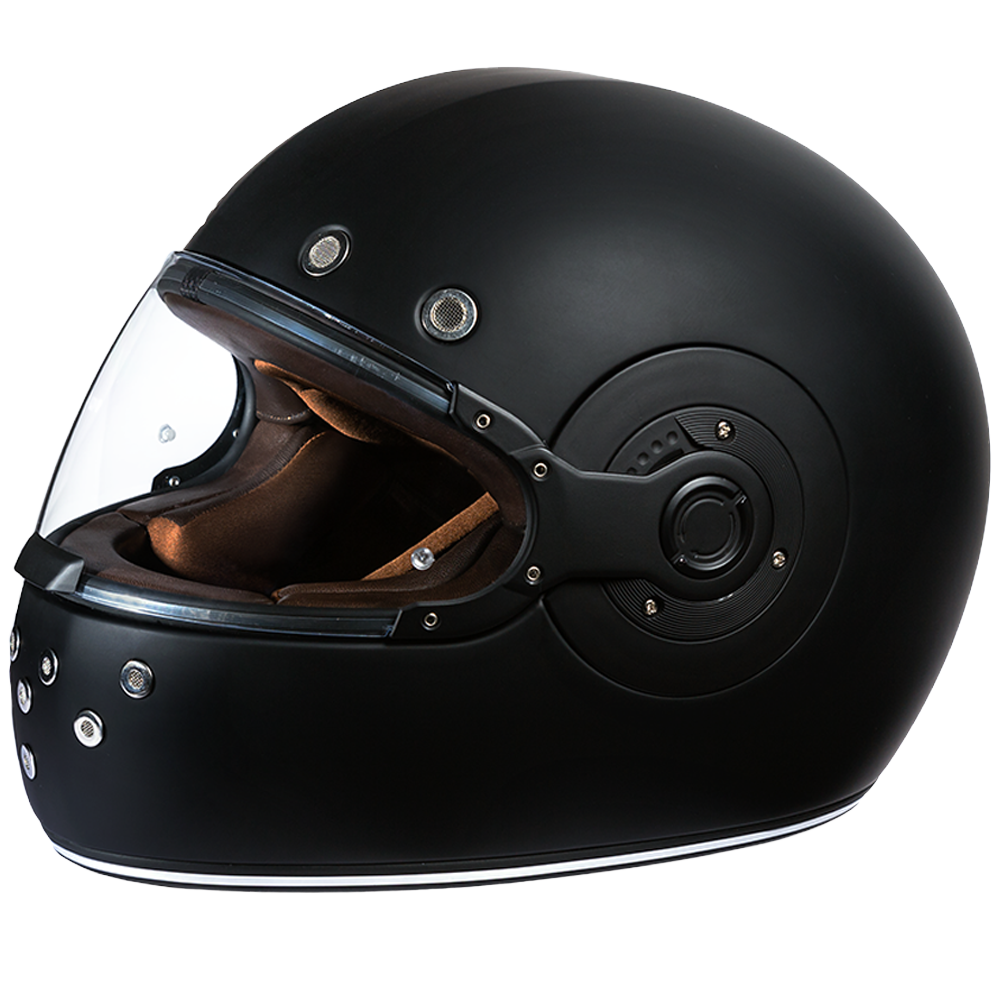
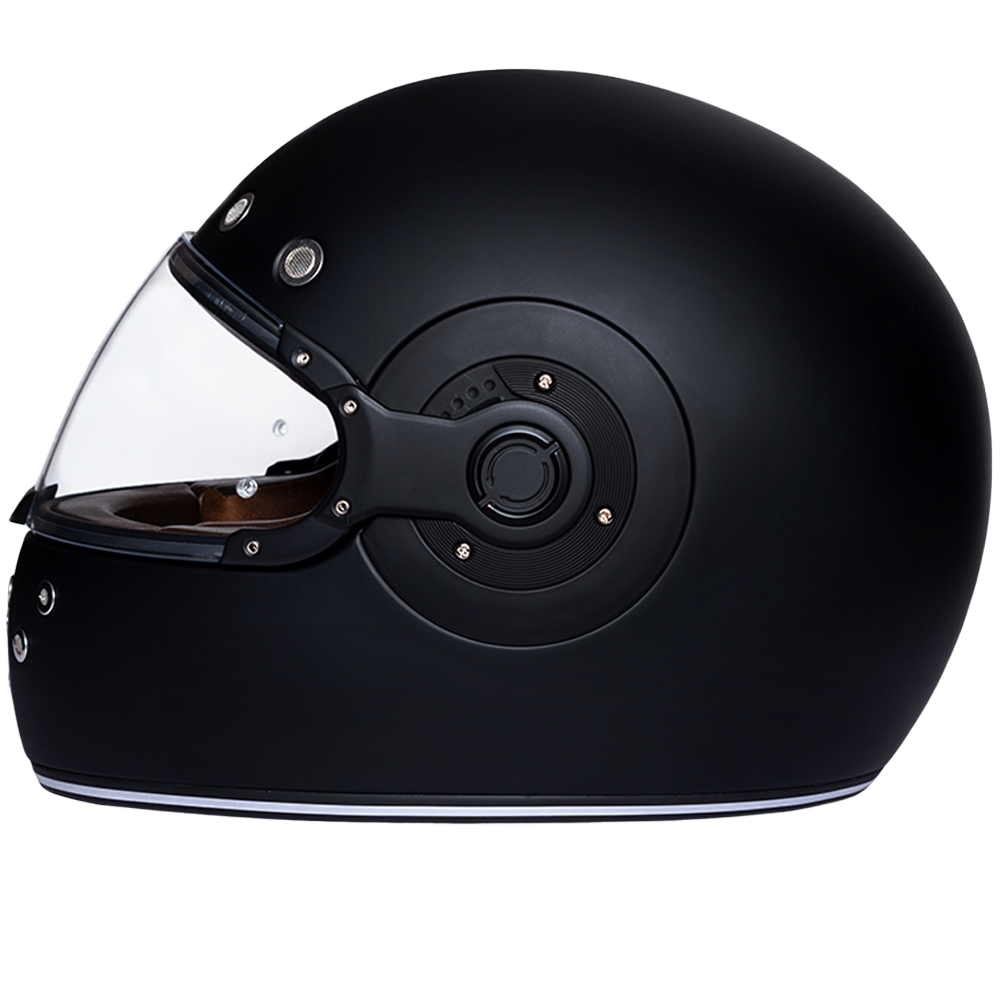
Full-face helmets remain the gold standard for protection. They wrap the entire head, including a fixed chin bar, and typically include a visor that swivels for airflow and visibility. Because the chin-bar area absorbs a disproportionate share of crash impacts, full-face helmets are the top recommendation for touring, sport, and daily commuting riders alike.
Modular helmets give riders the protection of a full-face helmet with the flexibility of an open-face one. The flip-up chin bar means you can stop, lift the front, and talk or drink without unbuckling the whole helmet — a major reason they've become the go-to choice for touring riders and commuters who stop-and-go frequently.
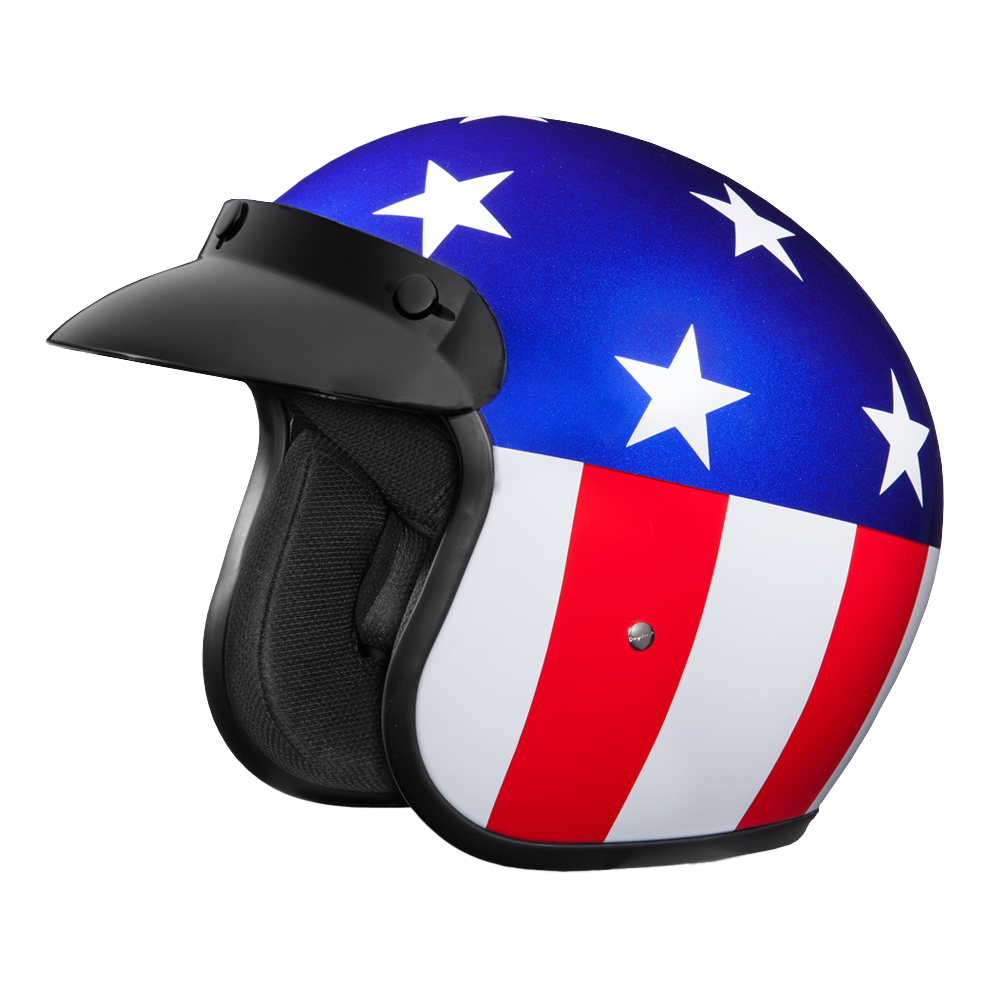
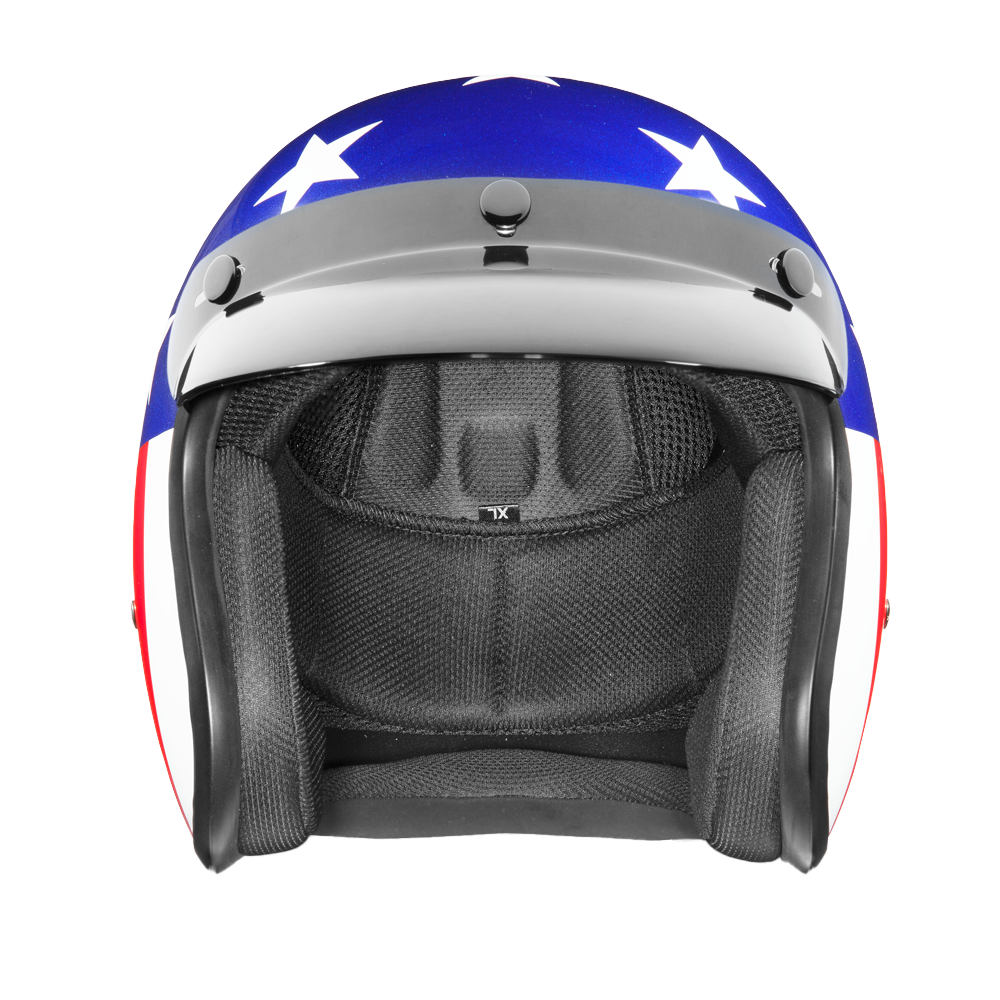
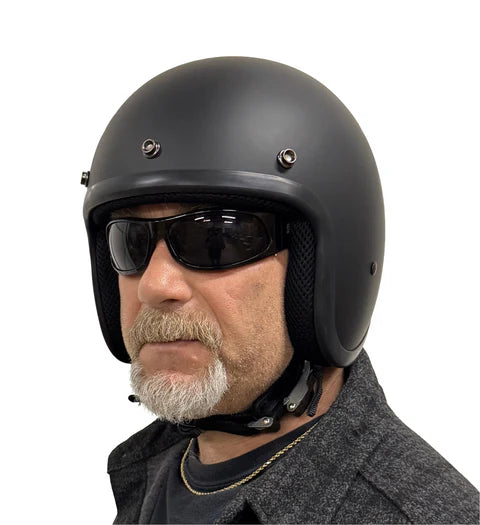
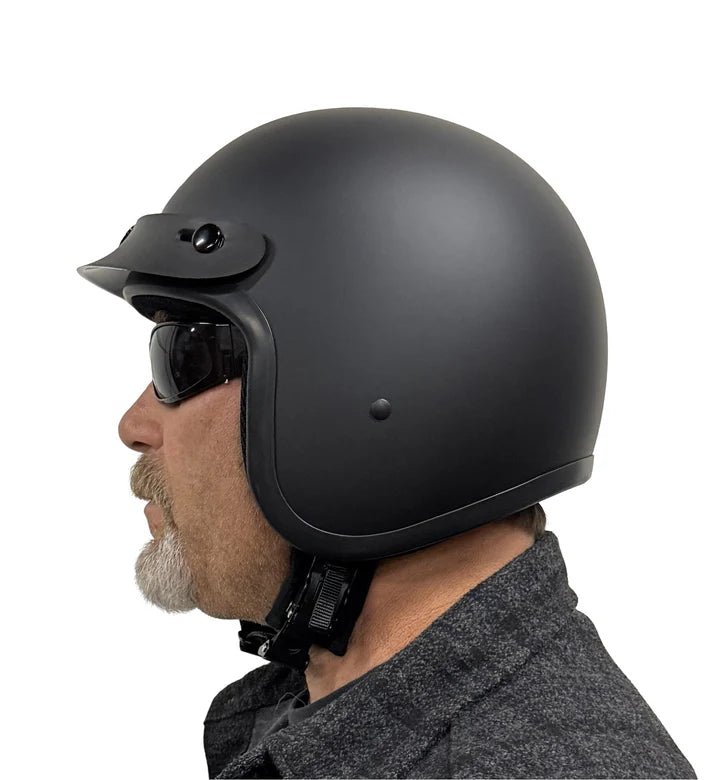
Open-face and 3/4 helmets cover the ears, cheeks, and back of the skull, but leave the face and chin exposed (often paired with a snap-on visor or goggles). They trade chin-bar protection for a wider field of view, more airflow, and the classic cruiser silhouette many riders prefer.
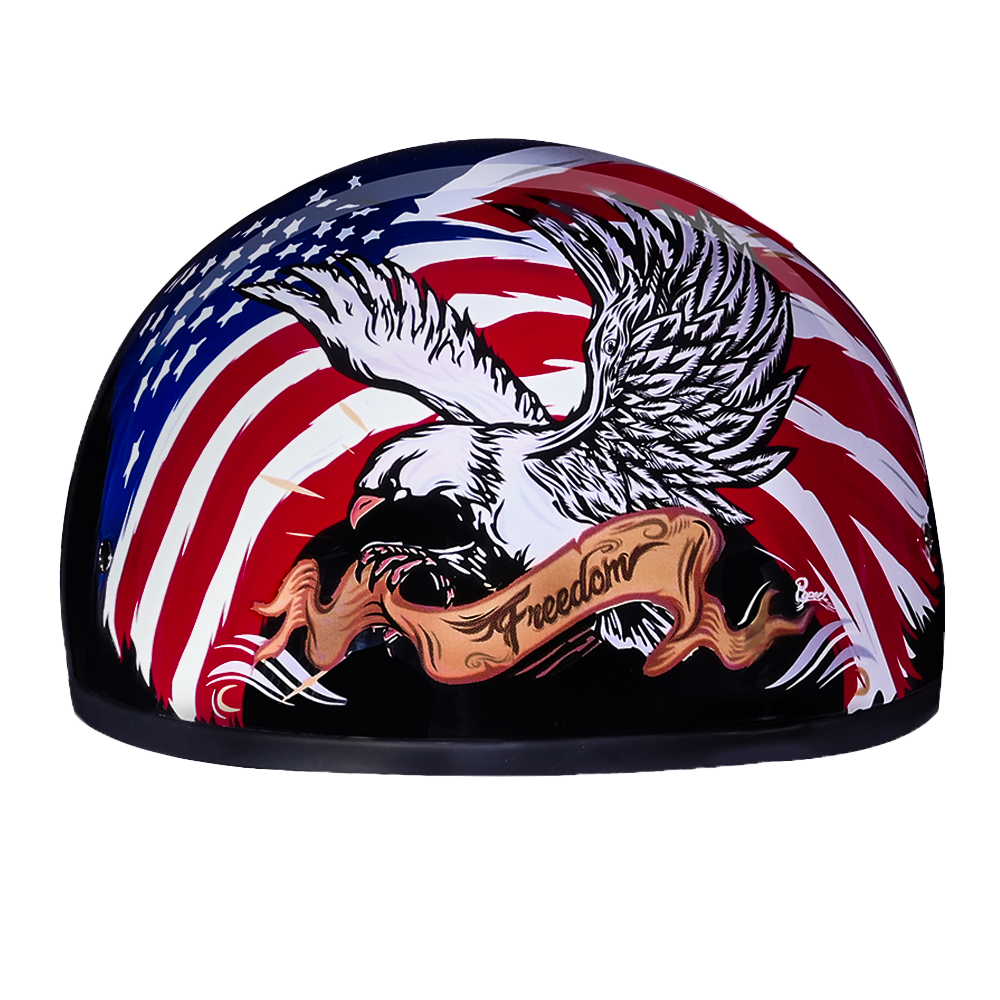
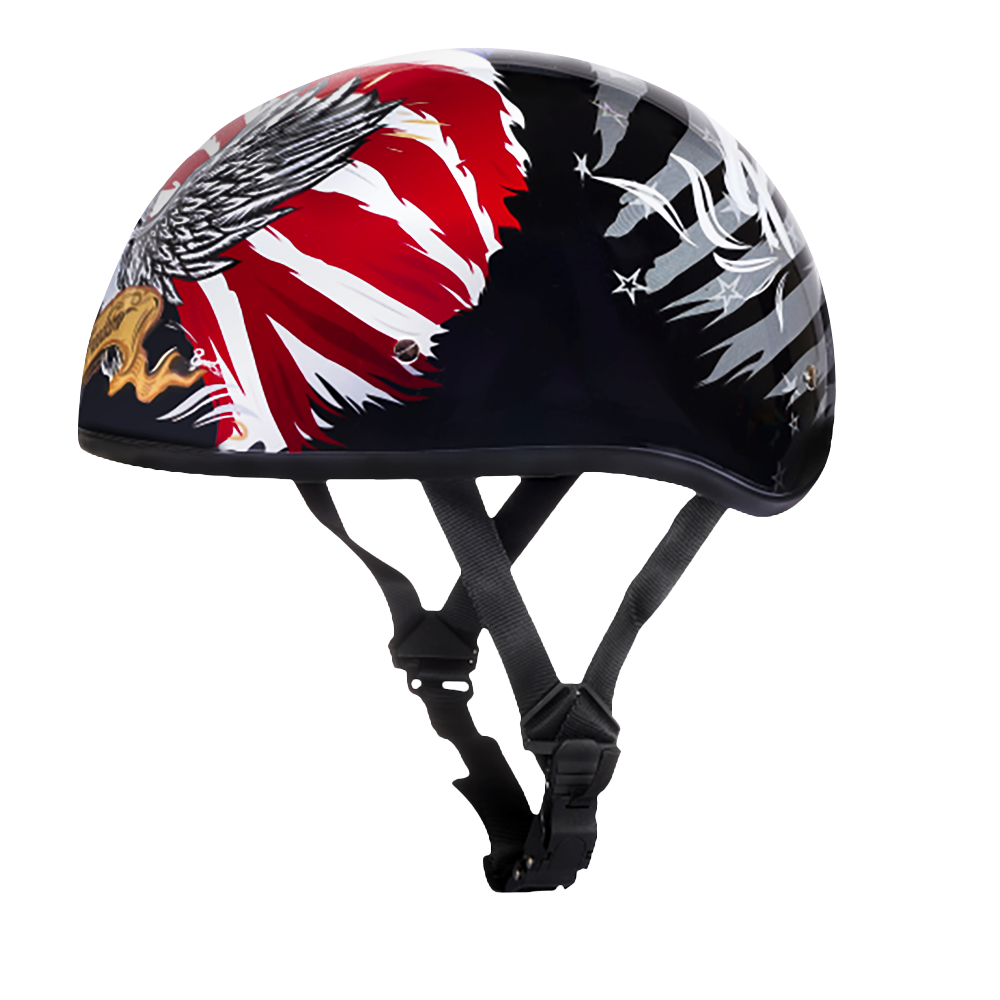
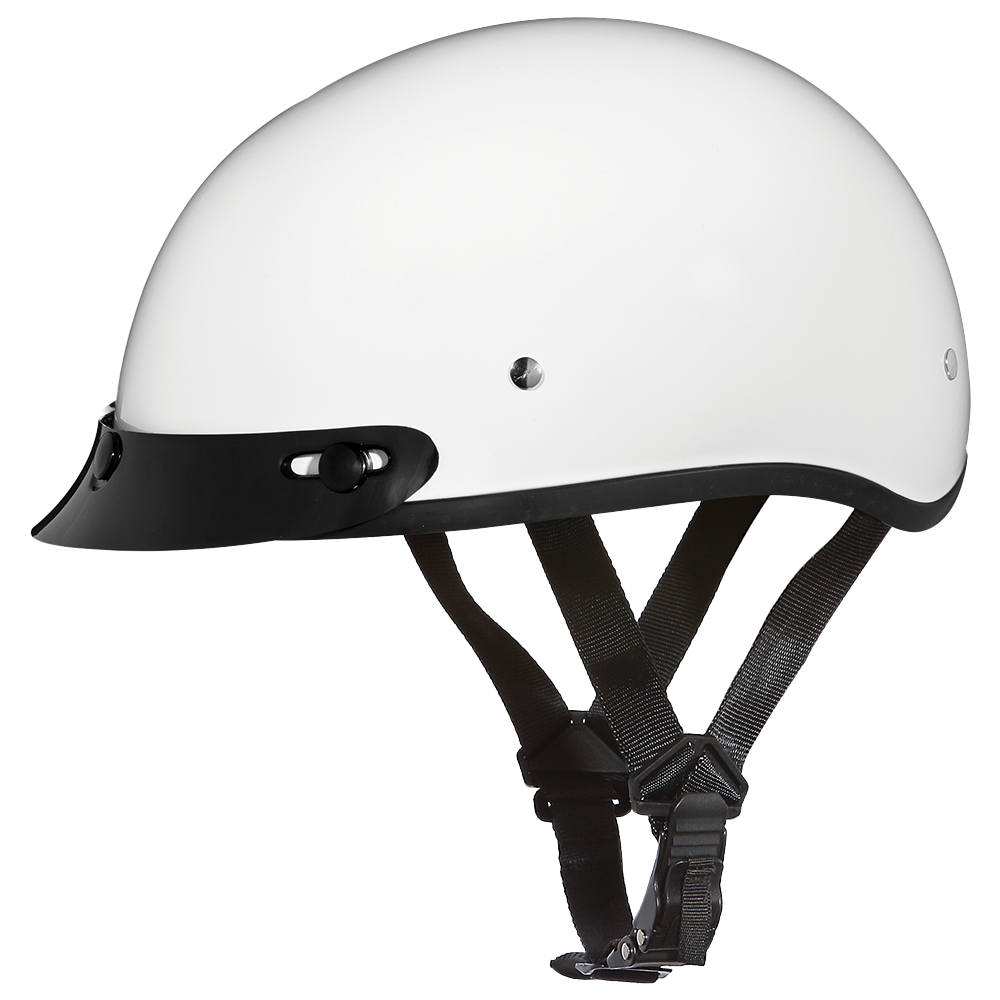
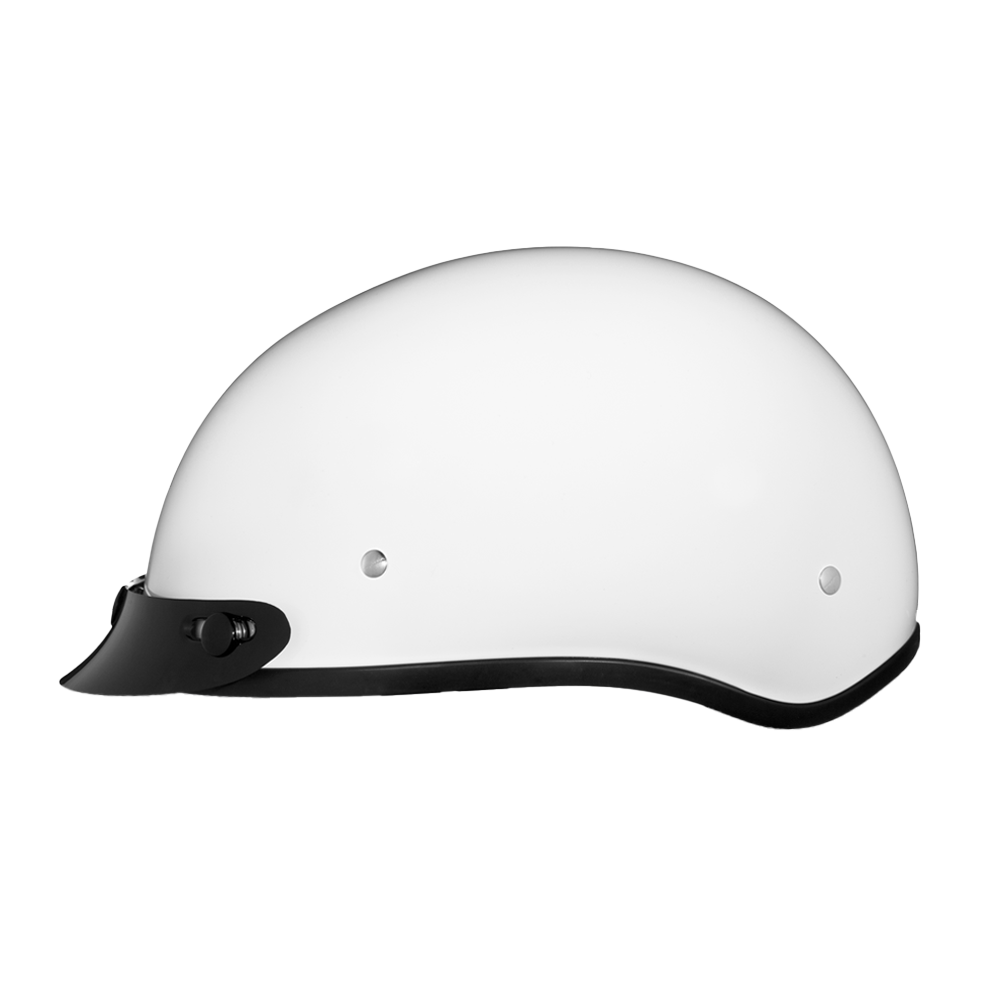
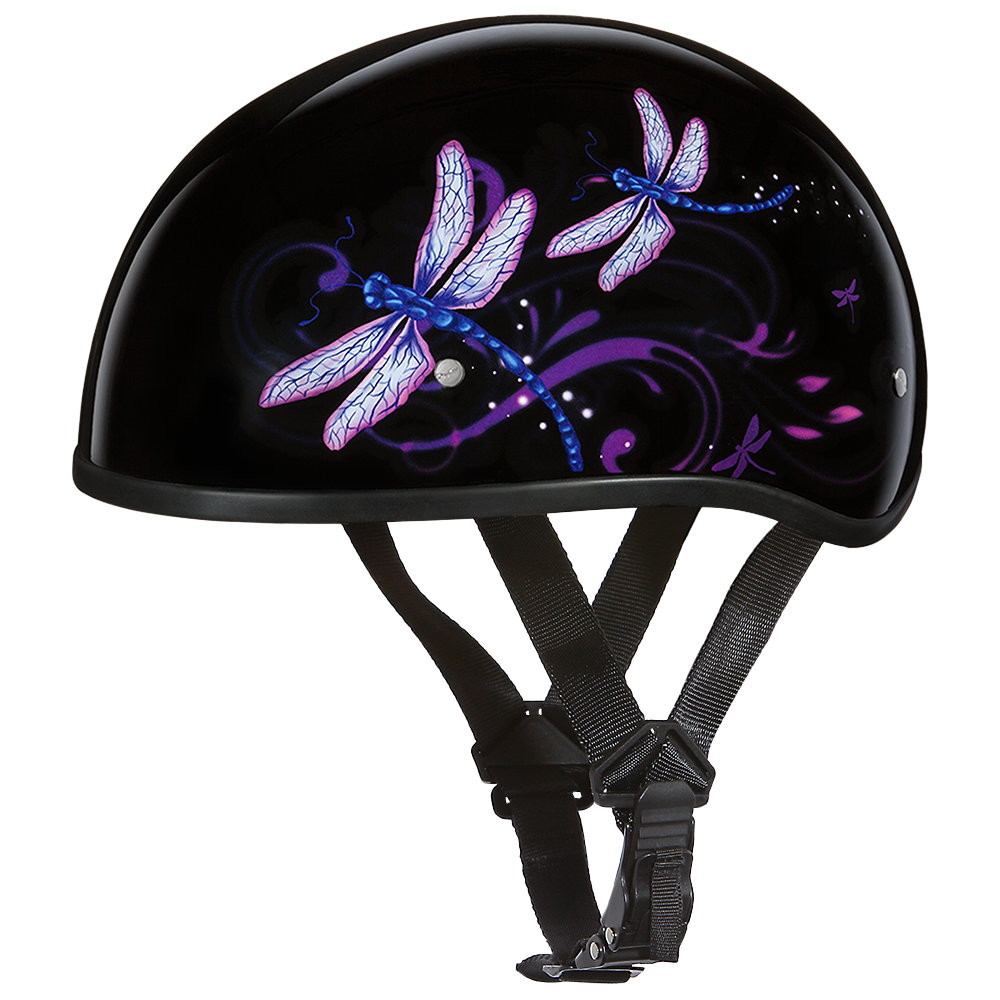
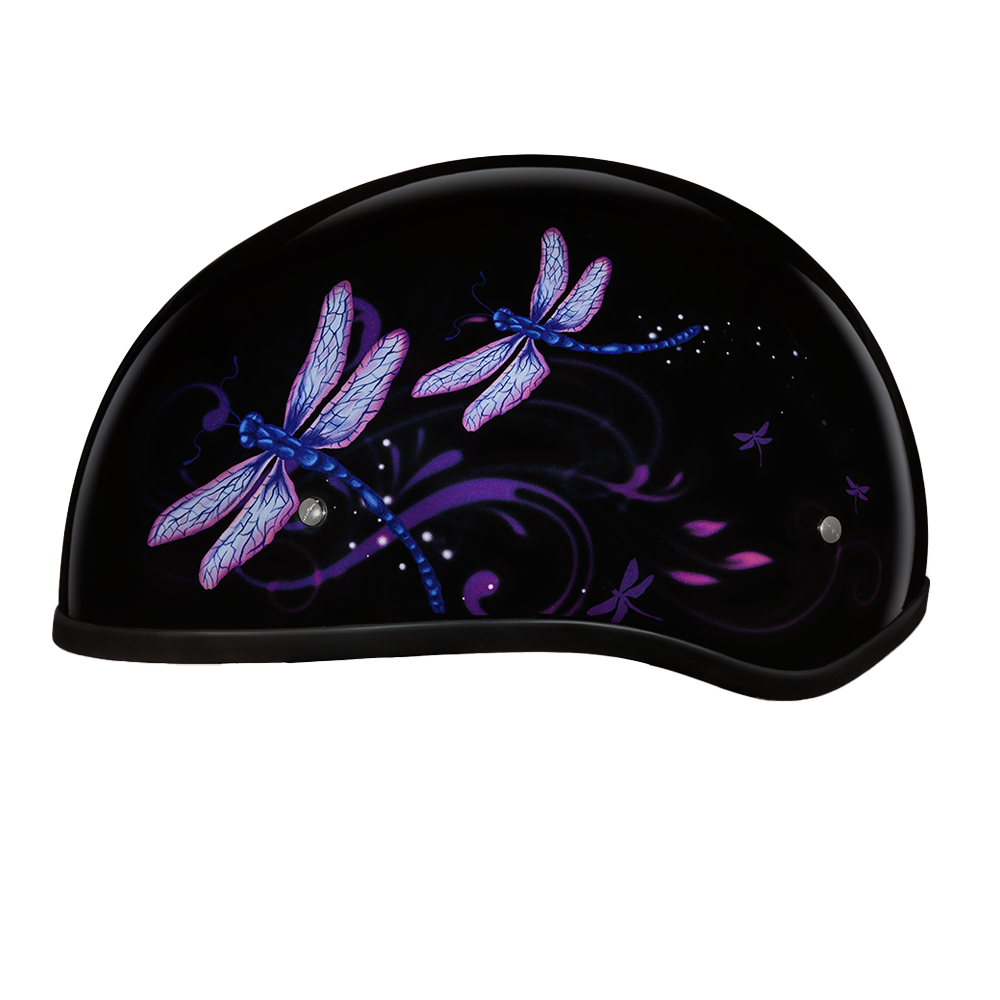
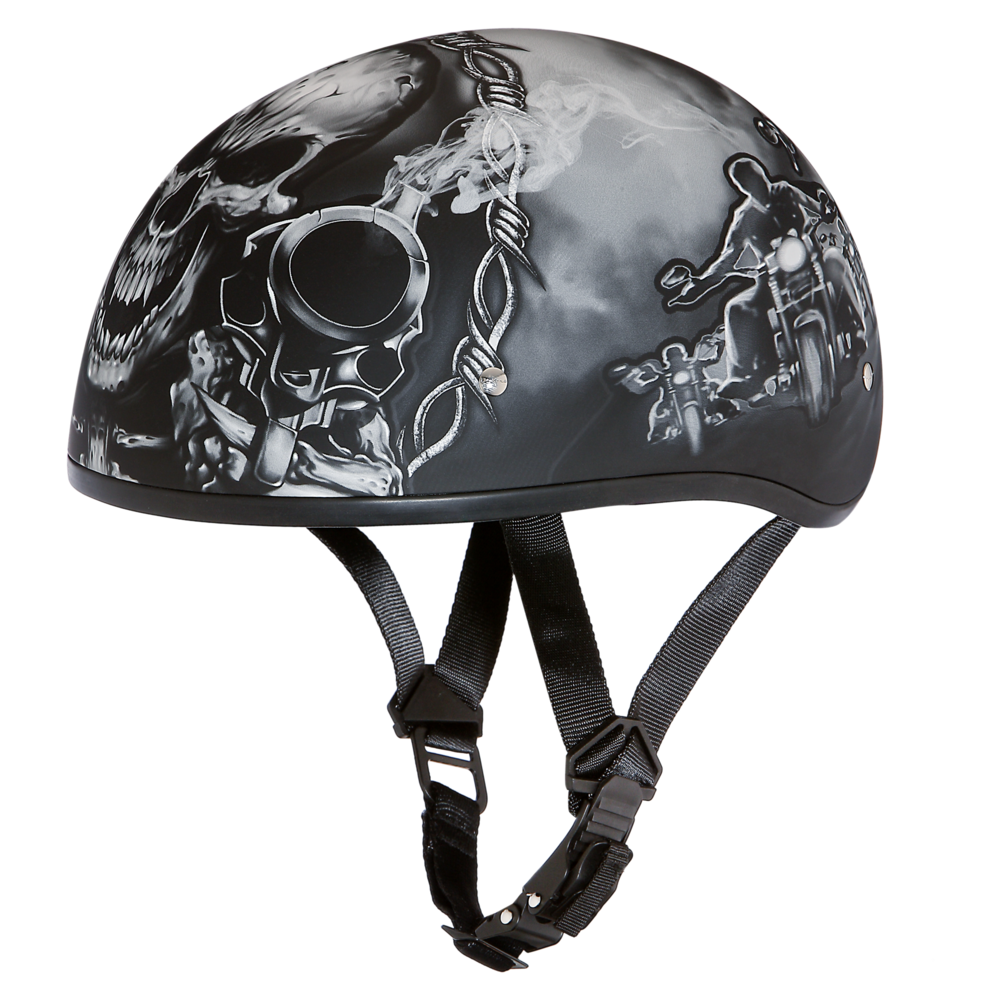
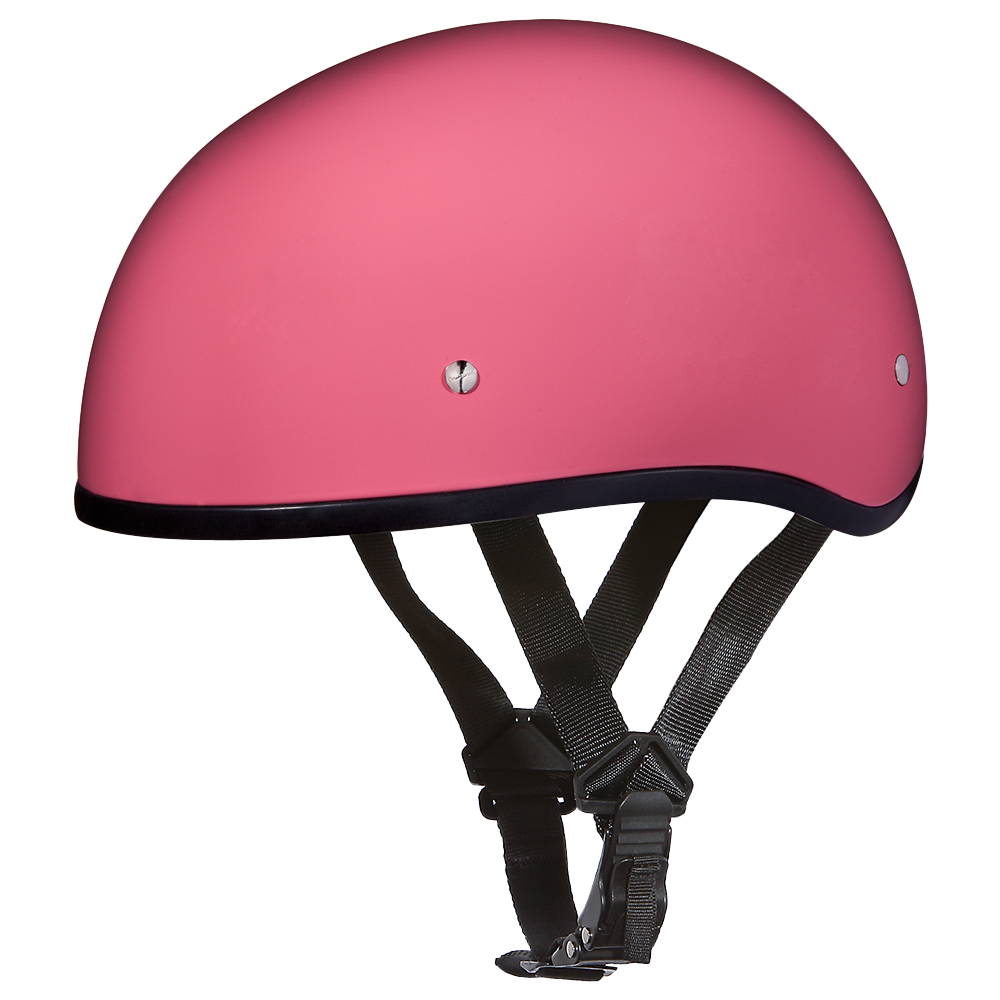
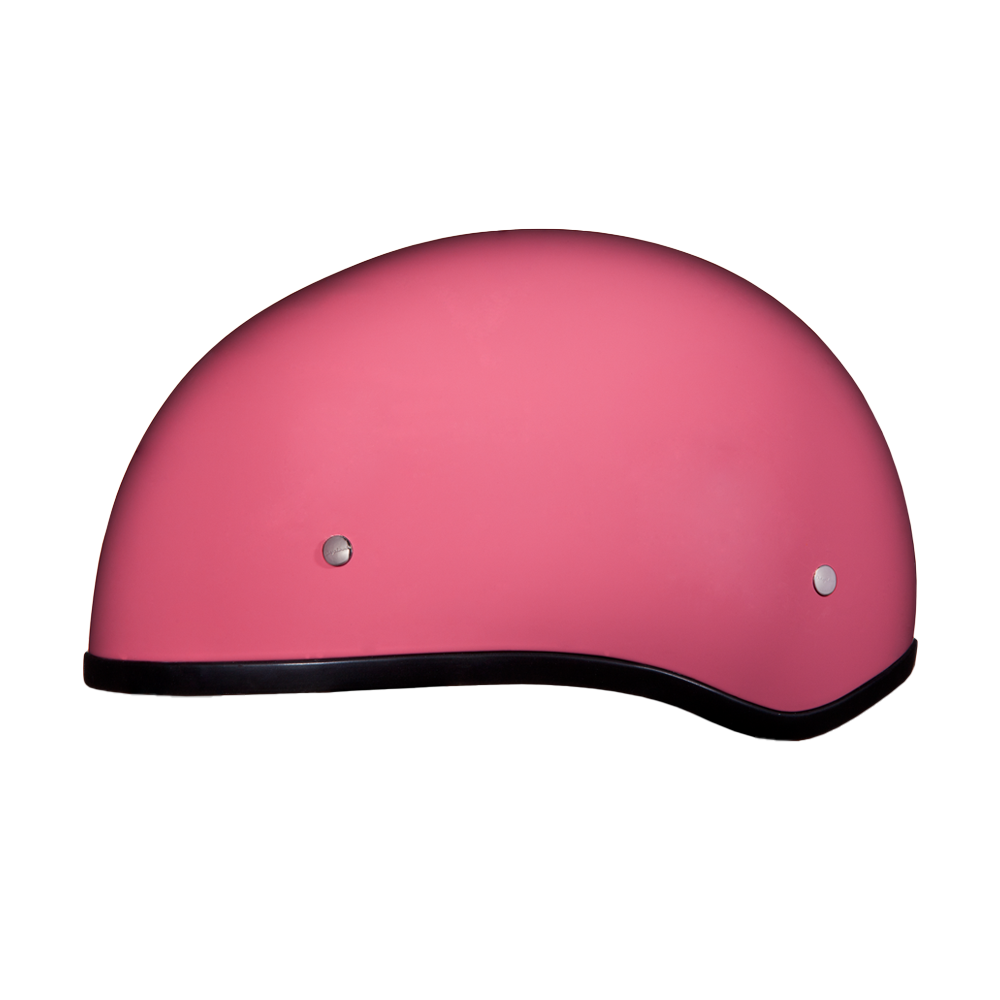
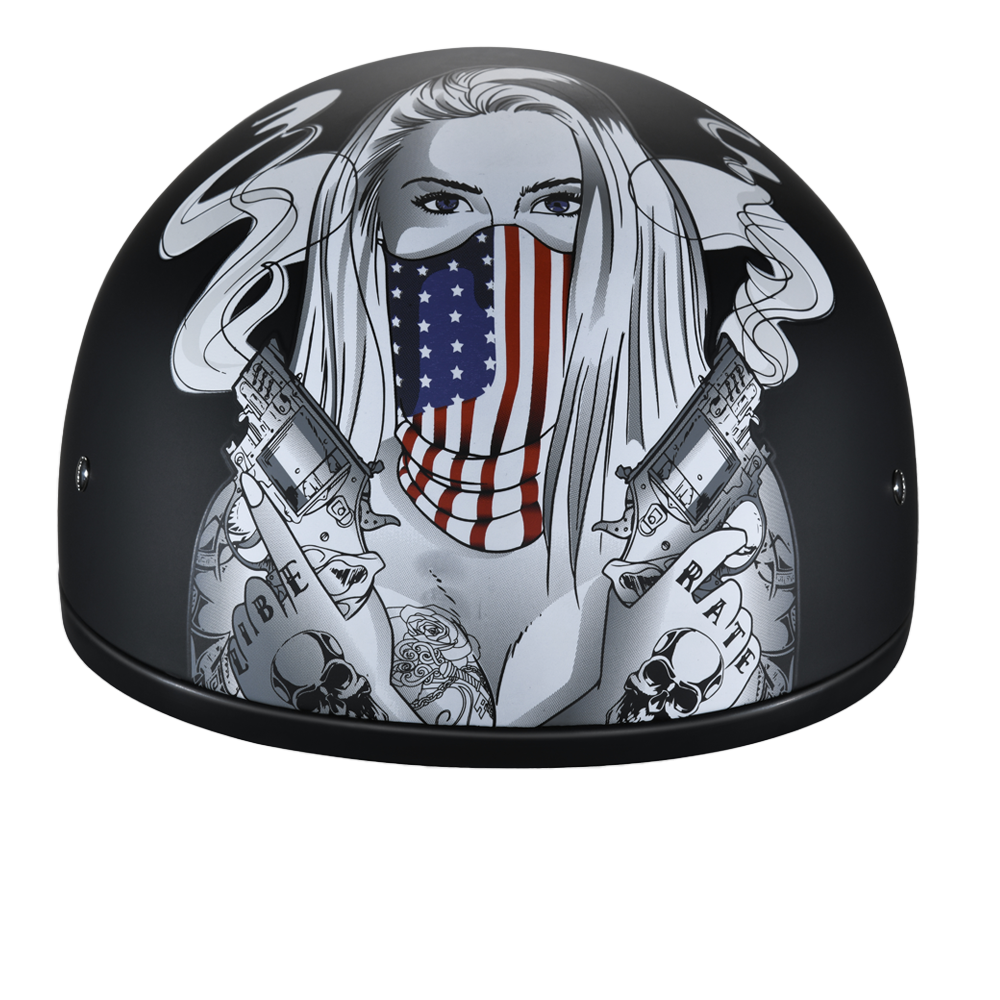
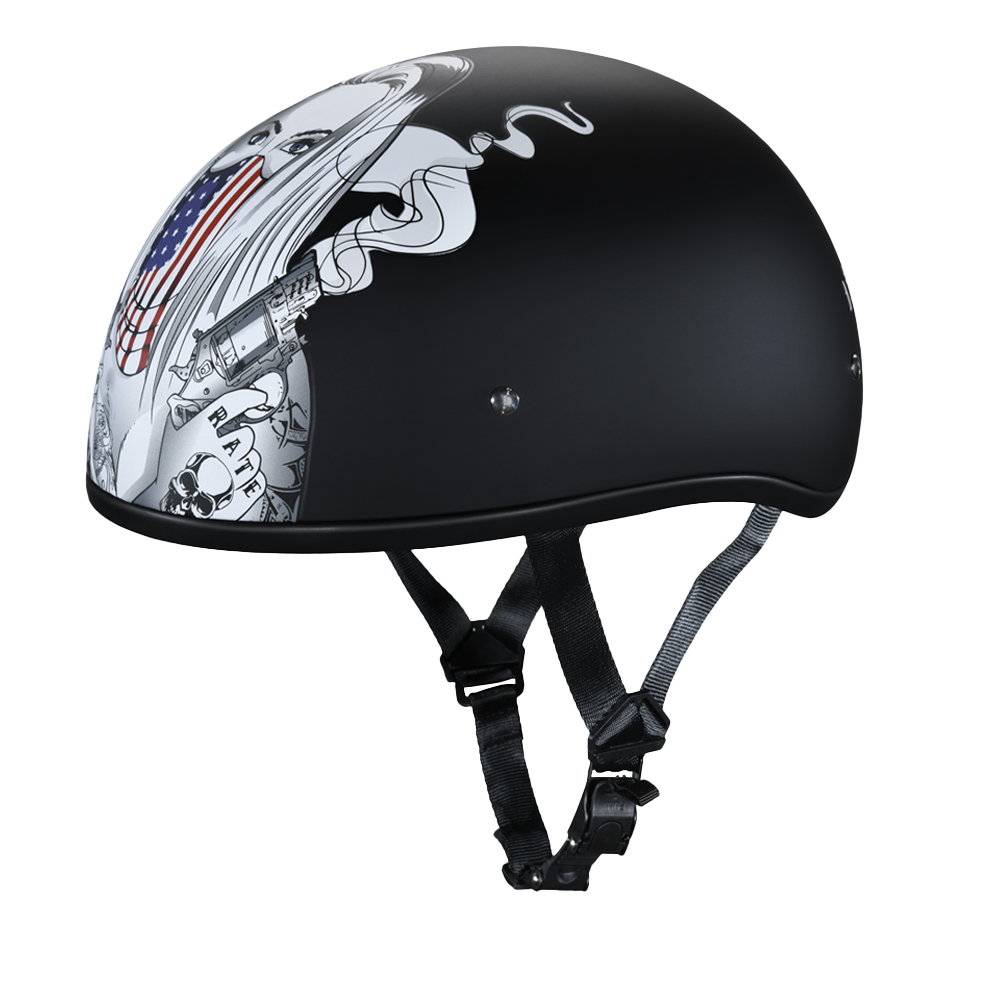
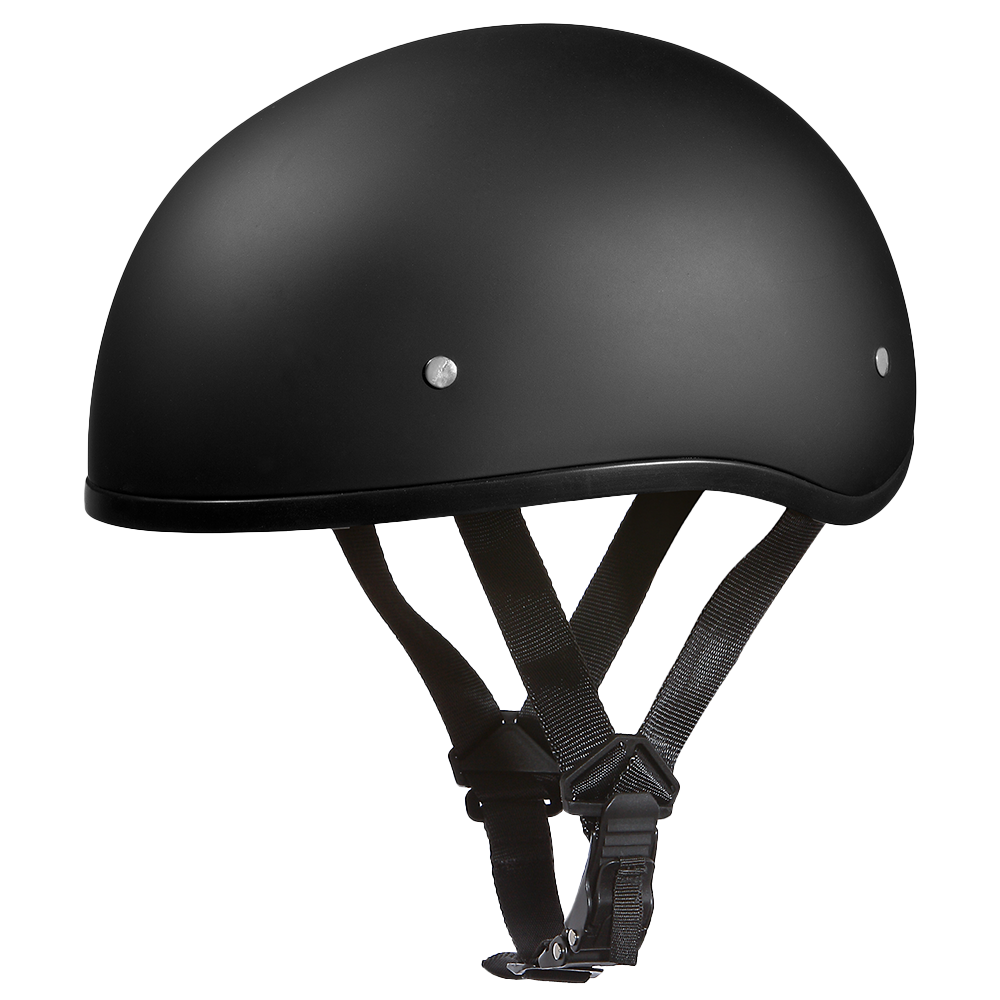
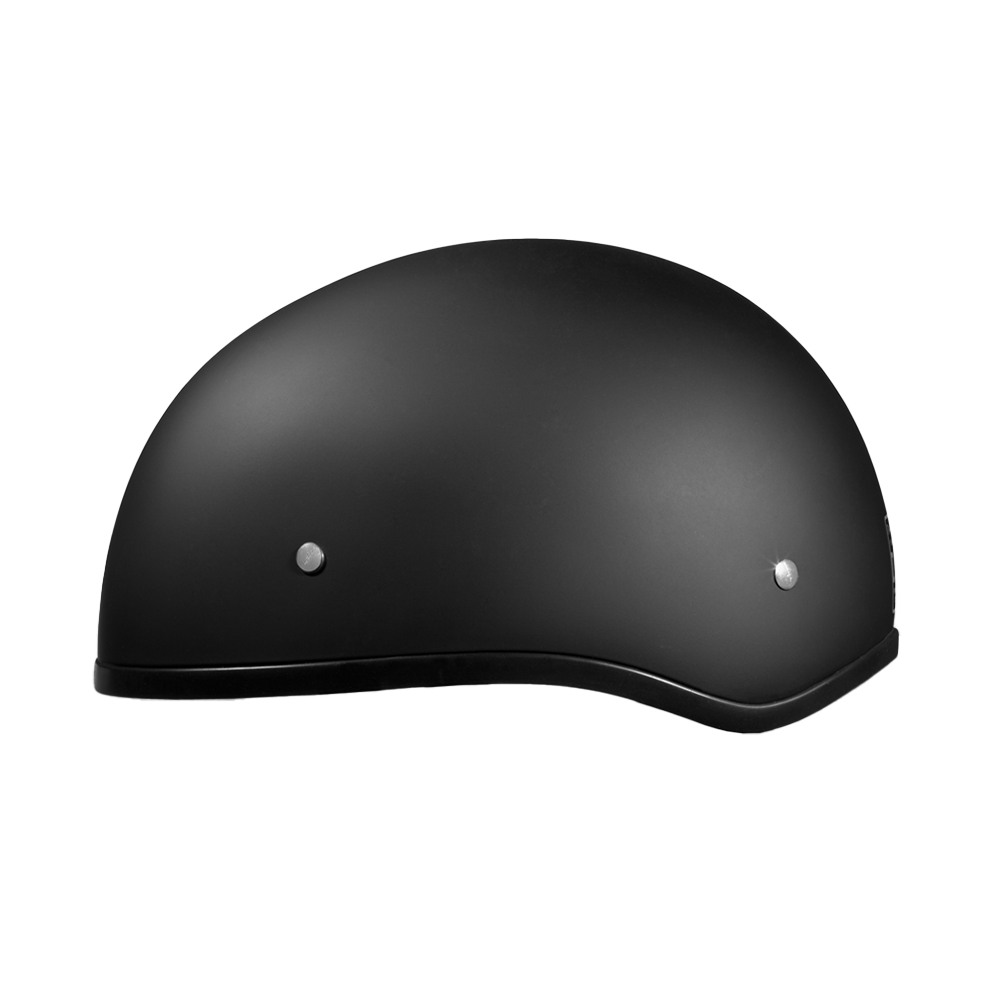
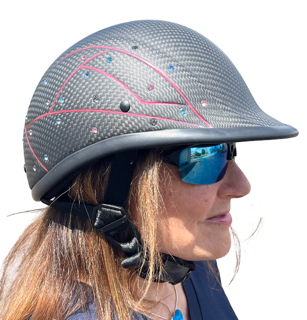
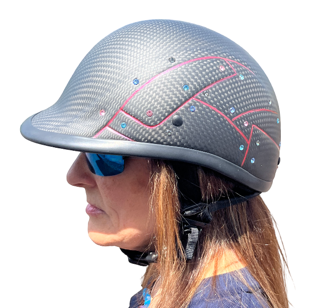
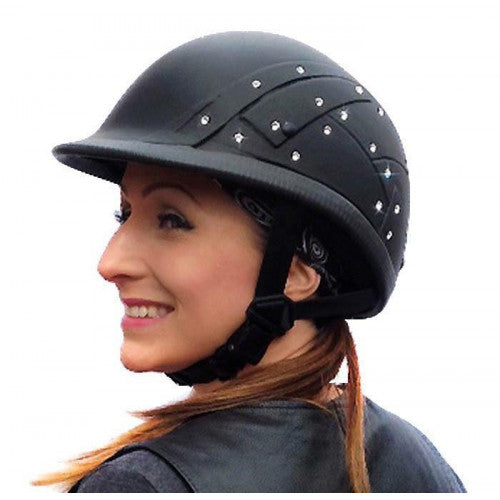
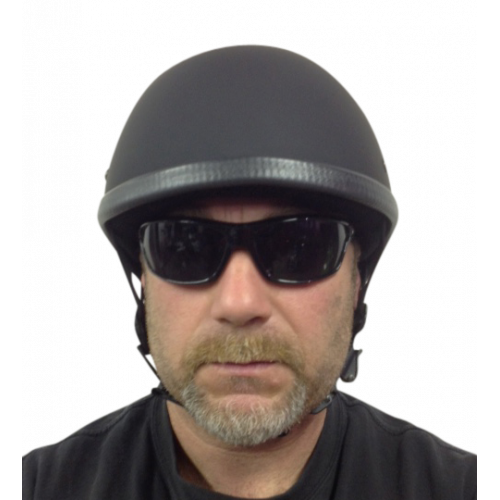
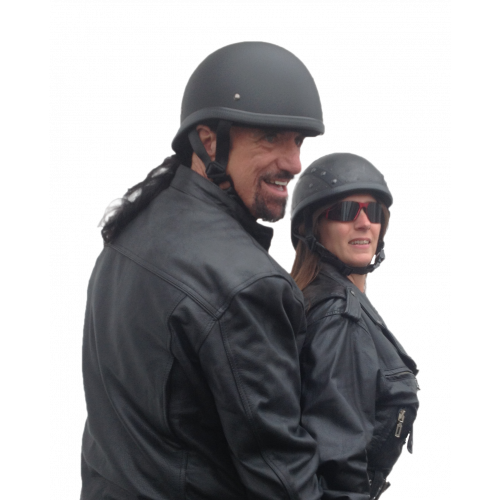
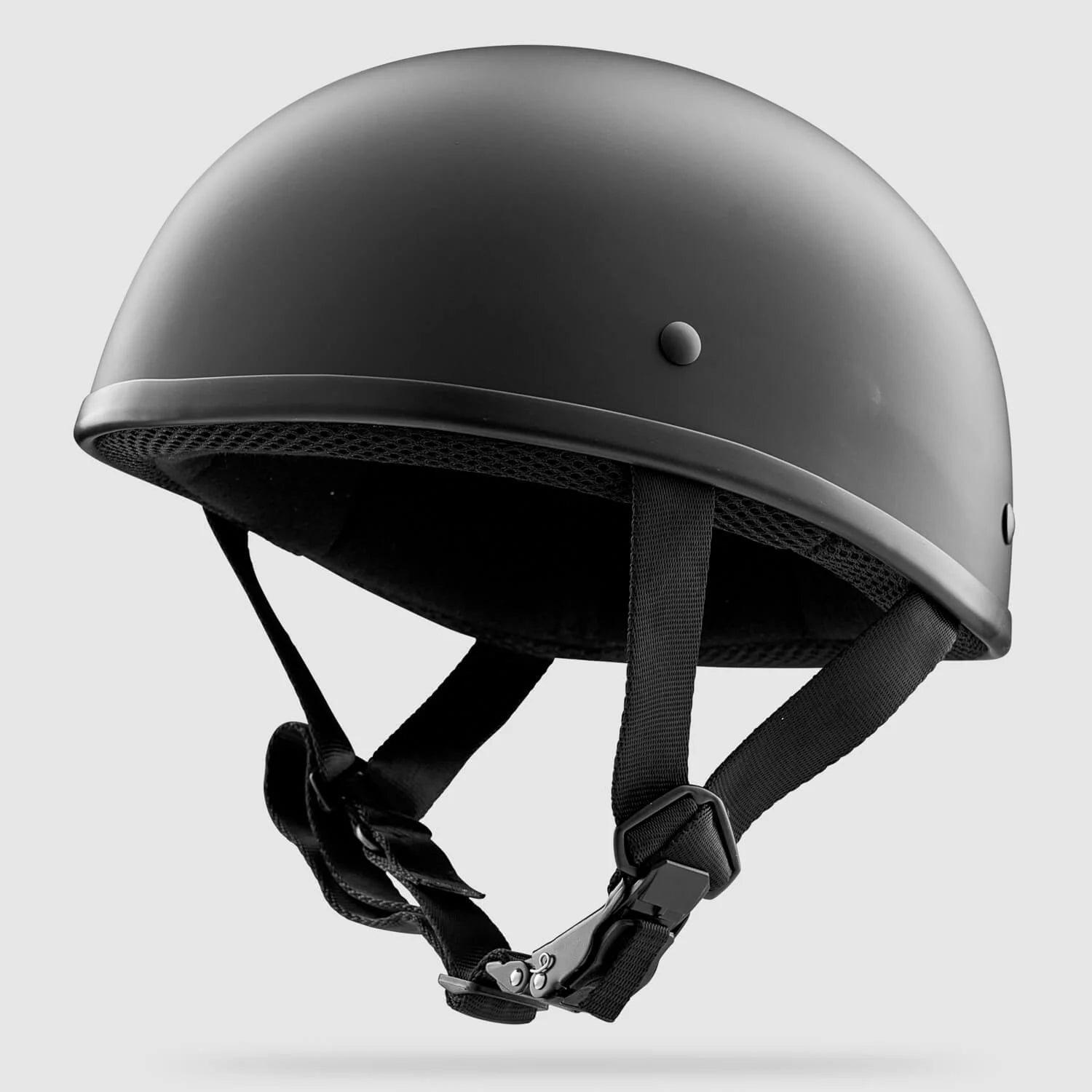
Half helmets ("skull caps," "shorty" helmets) provide the legal minimum coverage in most U.S. states, wrapping roughly the top and back of the head only. They're the lightest, most minimal option — favored for their low profile and open feel, but offering the least crash protection of the DOT-legal styles.
How Motorcycle Helmets Are Built: Construction & Materials
Every certified motorcycle helmet is built around the same core principle: absorb and redirect impact energy before it reaches the skull and brain. That happens through two main components:
-
The outer shell — typically polycarbonate, fiberglass, Kevlar, or carbon fiber — is the hard structural layer. Its job is to resist puncture and hold its shape so the softer liner underneath doesn't disintegrate on abrasive contact with pavement.
-
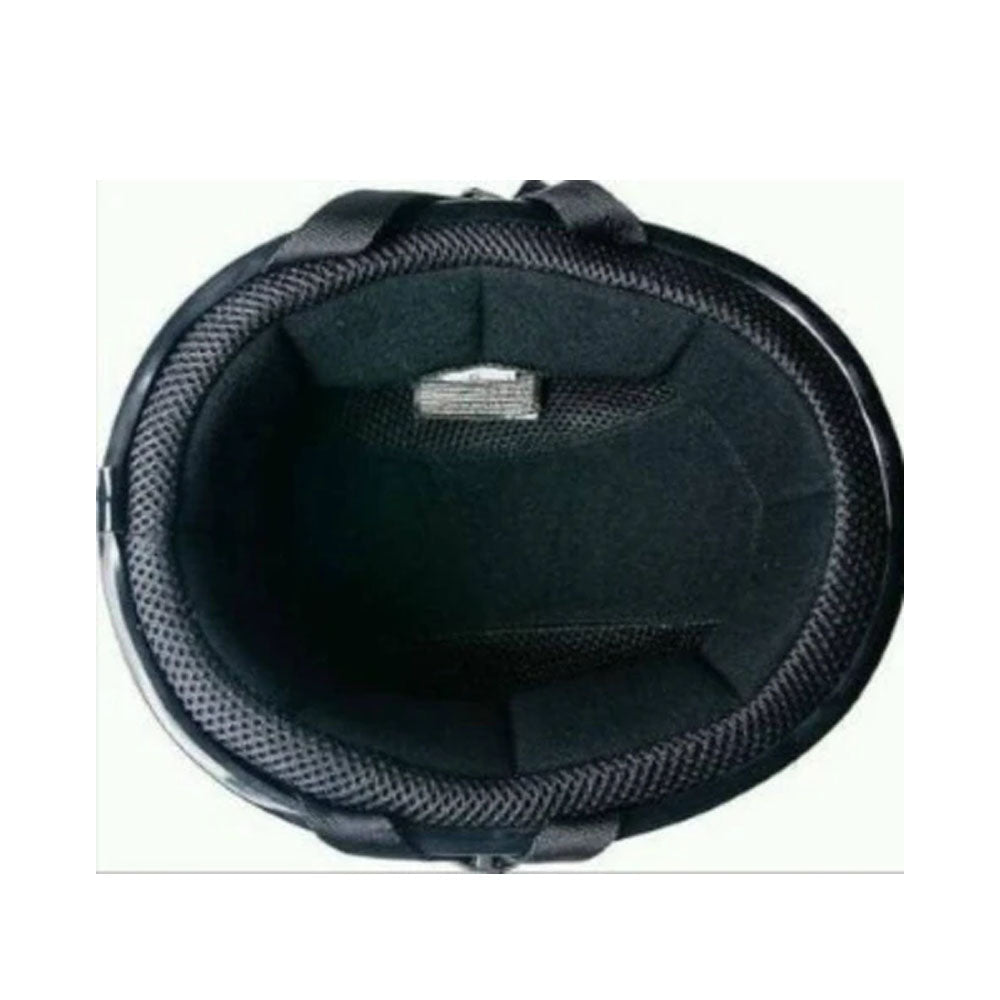
The inner EPS liner — expanded polystyrene or polypropylene foam — is designed to crush on impact. That crushing is what actually protects the brain: it extends the time and distance over which the head decelerates, reducing the force transferred to the skull.
Polycarbonate shells are the most affordable and widely used; fiberglass shells crush more predictably on impact and sit in the mid-tier; carbon fiber and Kevlar composites offer the best strength-to-weight ratio and make some of the lightest motorcycle helmets on the market, sitting at the premium end since the material is lightweight but expensive and labor-intensive to work with. Many modern helmets also add multi-density liner technology (foam layered in different densities to manage both low-speed and high-speed impacts) and spherical impact technology, a rotational-impact system that allows the outer liner to rotate slightly on impact and redirect rotational force away from the brain. Some premium touring and modular models pair this with Flex Energy Management — a three-layer impact system tuned separately for low-, mid-, and high-speed hits — a major factor behind the ECE 22.06 update's added angled-impact testing.
Beyond the shell and liner, functional features round out a modern helmet: ventilation channels for airflow, anti-fog visor technology and anti-scratch coatings, Pinlock-compatible shields, an ultra-wide field of view for better peripheral awareness, quick-release chin straps for emergency responders, and increasingly, Bluetooth connectivity and Bluetooth-ready shell cutouts for integrated communication systems. Riders who need a wider fit than a standard shell offers can also find extended-size helmets, typically running XS through 5XL, built specifically to keep proportionate fit rather than stretching one shell shape across every head size.
Top Motorcycle Helmet Brands & Certifications Right Now
The brands most associated with performance and racing pedigree today include Shoei, Arai, AGV, Shark, Schuberth, Nolan, X-lite, HJC, Bell, Scorpion, Airoh, Klim, Alpinestars, and LS2 — spanning everything from ultra-premium race-homologated shells to value-driven daily riders. On the American cruiser and everyday-rider side, brands like Daytona built their reputation on wide size ranges, DOT/ECE dual certification, and price points accessible to riders who want genuine protection without racing-helmet pricing.
On certification, three marks matter most for street riders in the U.S. and abroad:
-
DOT (FMVSS 218) — the U.S. legal minimum, focused on impact absorption, penetration resistance, and retention system strength.
-
ECE 22.06 — the current European standard (superseding 22.05), now testing oblique/angled impacts to address rotational injury risk, in addition to the traditional straight-on impact tests.
-
SNELL M2020/M2025 — a stricter, voluntary U.S. standard developed with racing in mind, often layered on top of DOT certification for extra assurance.
A helmet carrying both DOT and ECE 22.06 certification gives a rider two independently verified layers of testing rather than one — which is why DOT ECE certified motorcycle helmets have become the preferred baseline for serious riders shopping today.
Unsafe helmets are still out there, though, and it's worth knowing what to avoid. Warning signs include unusually thin shells, weak or flimsy chin straps, missing or vague labeling, and fake DOT labels — a sticker with no accompanying manufacturer information, size chart, or care/replacement instructions is a red flag, not a certification. Genuine novelty helmets (sold openly as "non-DOT" for off-road or costume use) are a different, legal category — the concern is helmets marketed as street-legal that aren't actually certified.
The Highest Tech in Helmets Right Now: What's Trending
Helmet technology has moved well beyond "shell plus foam" in the last few years. The trends defining the current generation:
-
Rotational-impact systems — MIPS, Spherical Technology, WaveCel, and Koroyd cores now sit alongside traditional EPS foam in premium helmets, specifically targeting the angled, rotational impacts that straight-on crash tests used to miss.
-
Smart-foam and adaptive liners — newer liner materials are engineered to stay soft for comfort but harden instantly on impact, and some adaptive-zone liners can sense the direction of force and respond accordingly.
-
Integrated HUD (heads-up display) and AR visors — a small but fast-growing category projects navigation, speed, and hazard alerts directly onto the visor, so riders don't have to look away from the road.
-
Built-in Bluetooth and voice-assistant communication — Bluetooth-ready shell cutouts and factory-installed comms systems (noise-canceling mics, hands-free calling, intercom with other riders) are now common even outside the premium tier.
-
Carbon-Kevlar hybrid shells — pairing the two materials continues to push weight down while holding or improving impact resistance.
-
Adaptive ventilation and biometric monitoring — early-stage but emerging: helmets that adjust airflow based on speed/temperature, and systems experimenting with AI-based crash detection.
For everyday riders, the practical takeaway is that rotational-protection systems and dual DOT/ECE 22.06 certification are quickly becoming the new baseline for "well-protected," not just a premium upgrade.
Motorcycle Helmets at Daniel Smart MFG: The Full Range
Daniel Smart MFG doesn't manufacture helmets in-house, but stocks and ships one of the most complete, competitively priced helmet catalogs available from a single U.S. retailer — with real inventory, not dropshipping.
Brands carried: The core lineup is built around Daytona Helmets, spanning skull caps through carbon-fiber full-face models, alongside LS2 Helmets and the in-house Badass helmet line for riders who want distinctive graphics and styling.
Want a comparison of these brands, click here: Daytona Helmets vs LS2 Helmets vs Badass Helmets
Coverage & styles available:
-
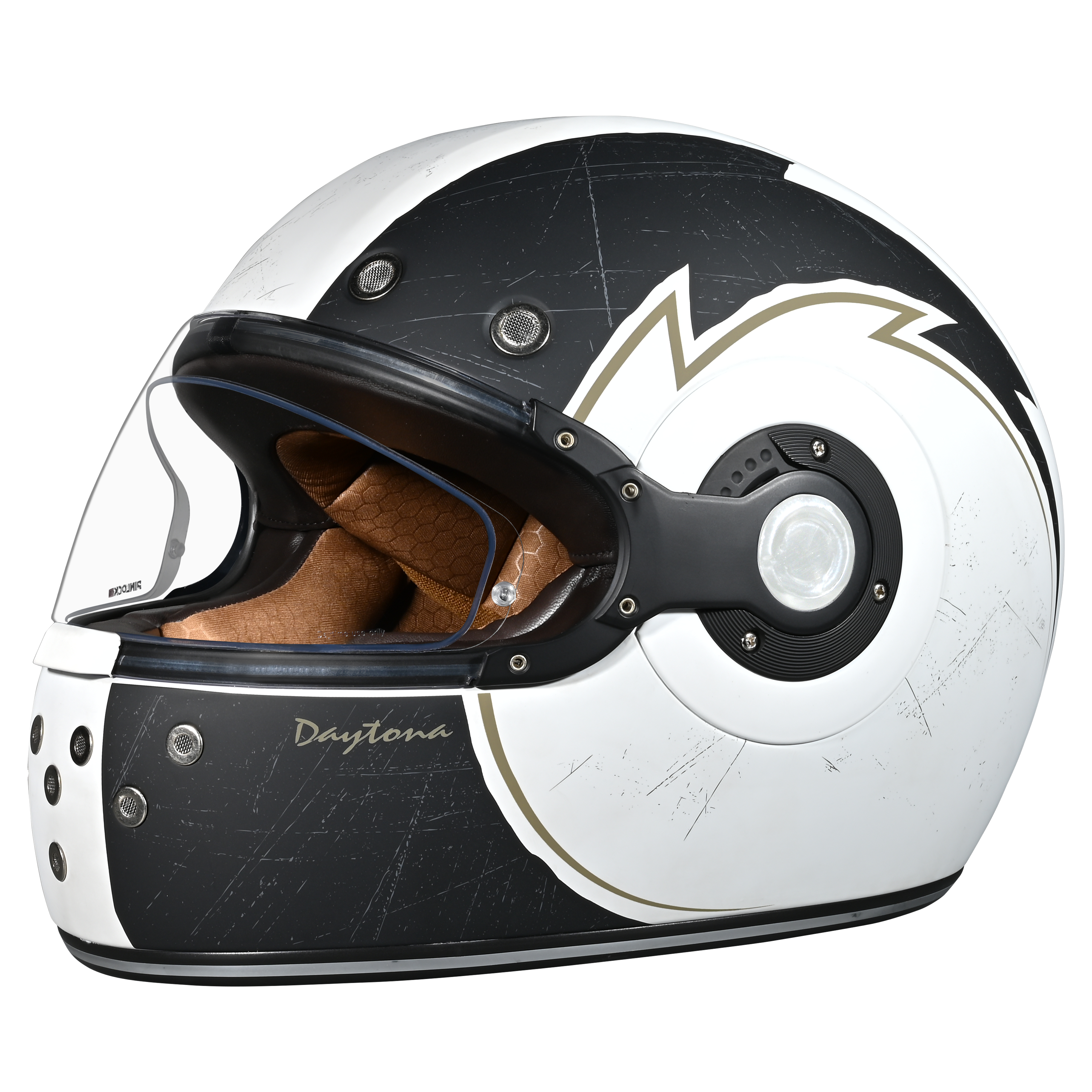
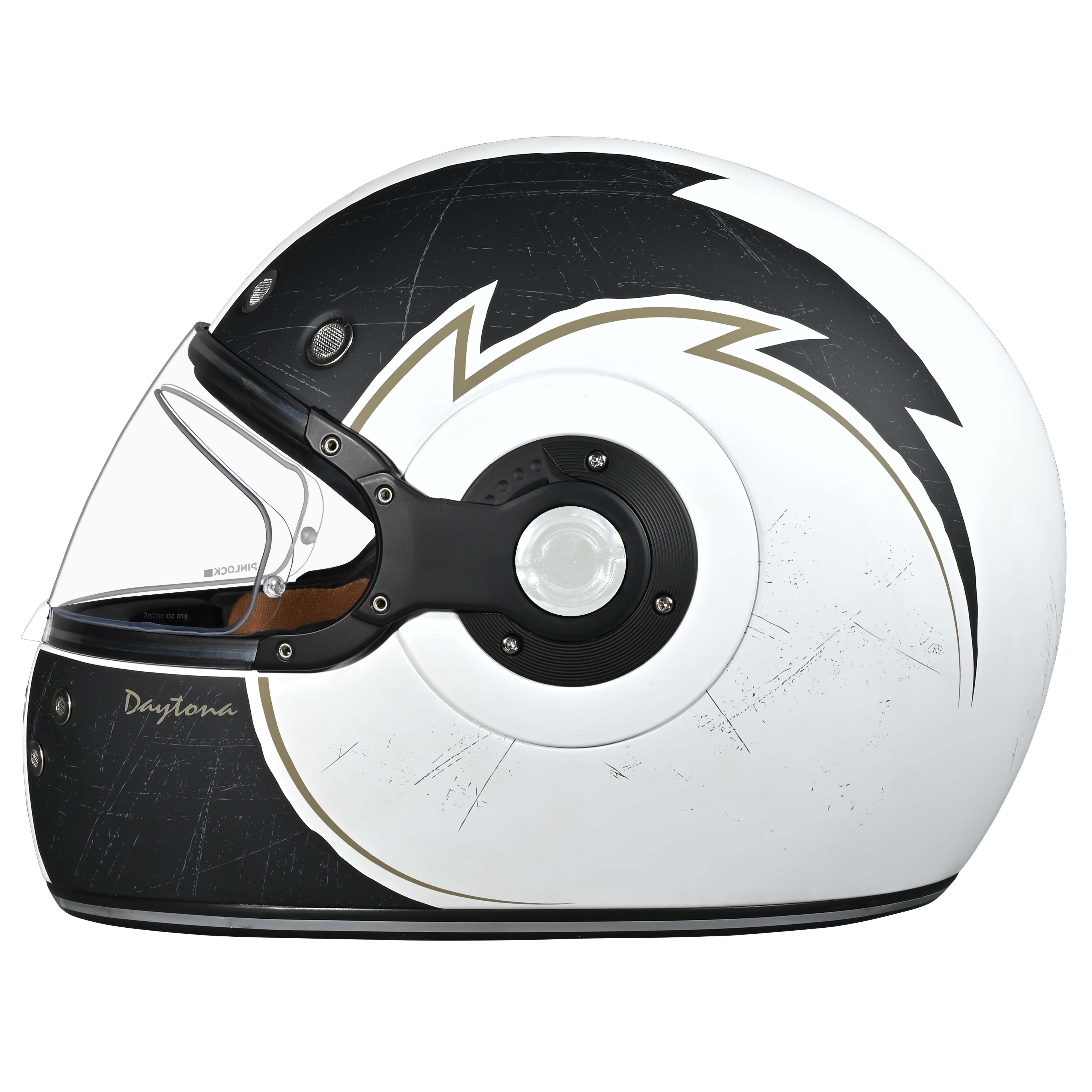
Full-face helmets — including the Daytona Viper and C6, built for maximum coverage and long-distance comfort.
-
Modular (flip-up) helmets — including the Daytona Glide, with a retractable inner smoke shield and adjustable venting.
-
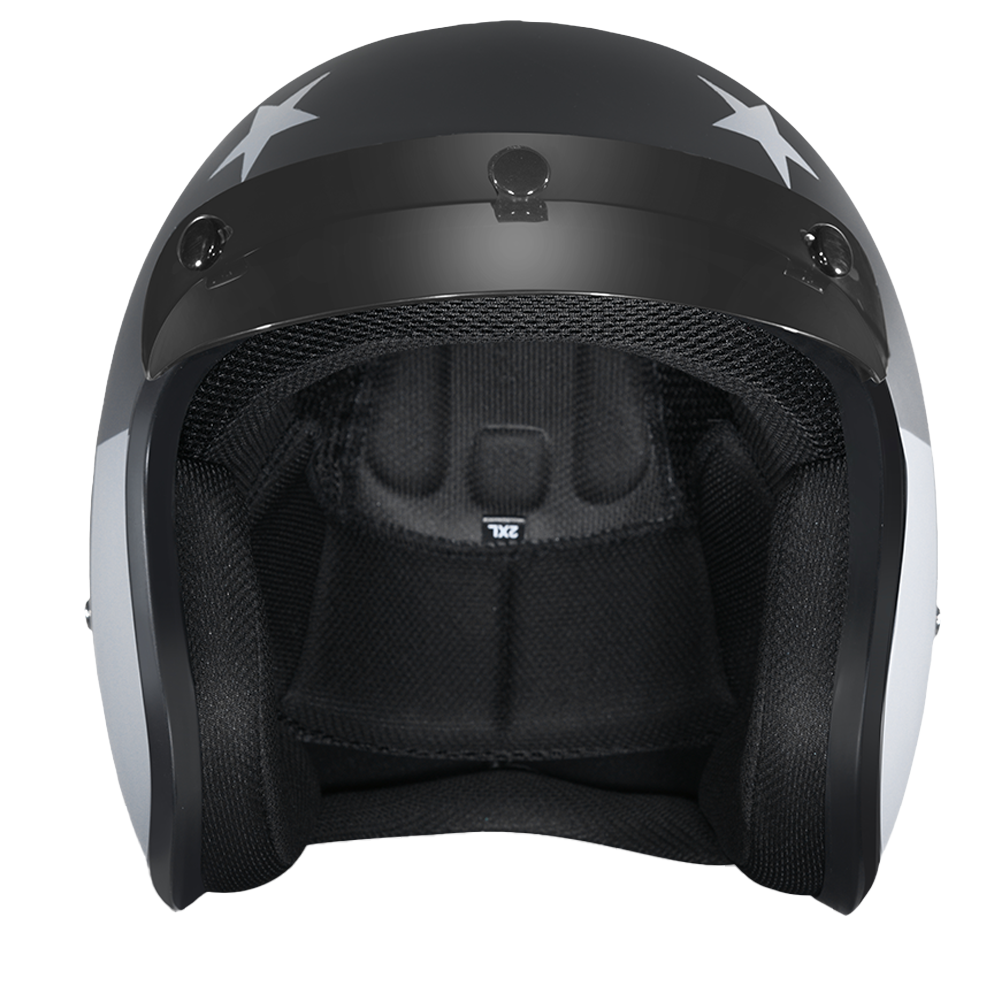
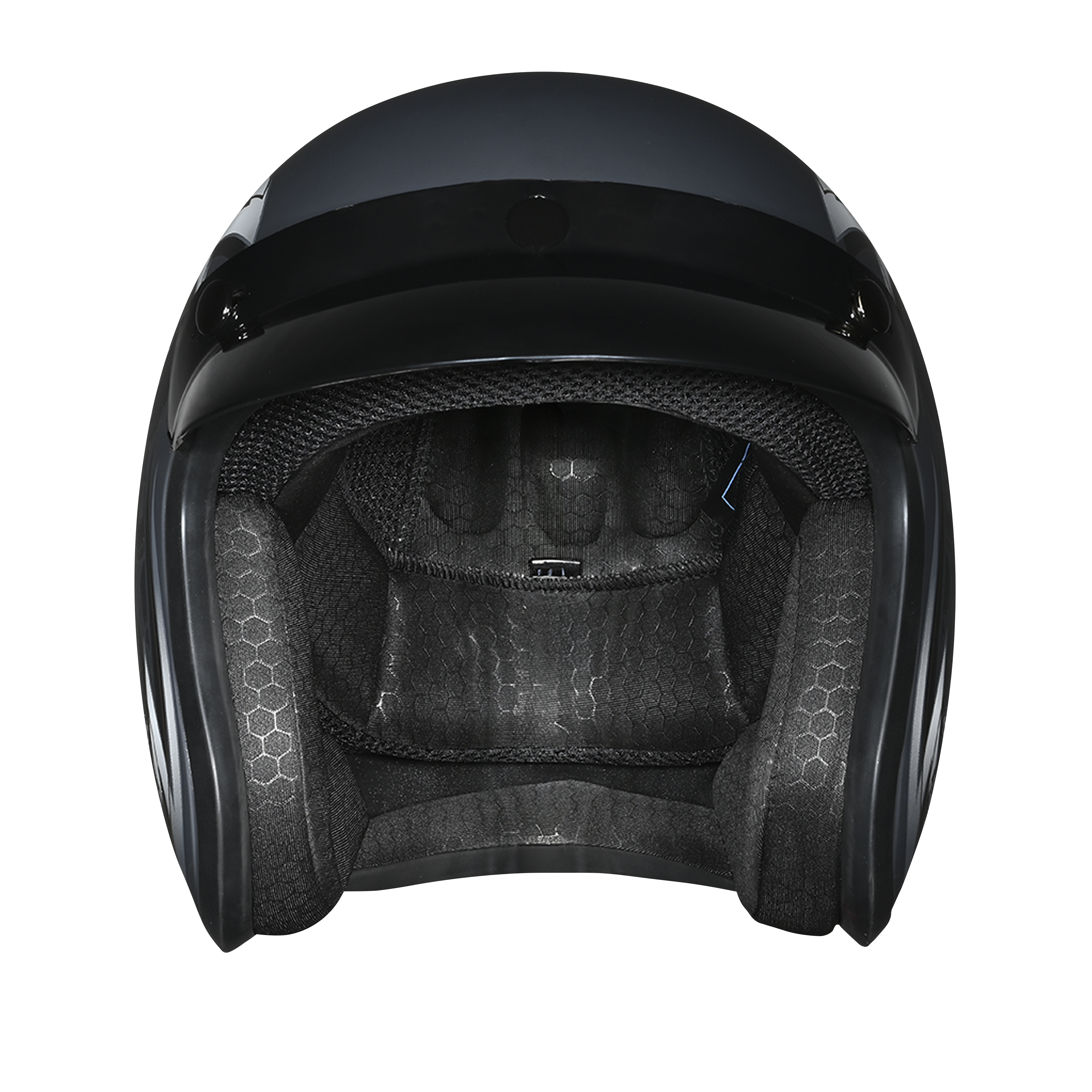
3/4 open-face helmets — including the Daytona Cruiser and Retro Jet, for classic cruiser styling with a wider field of view.
-
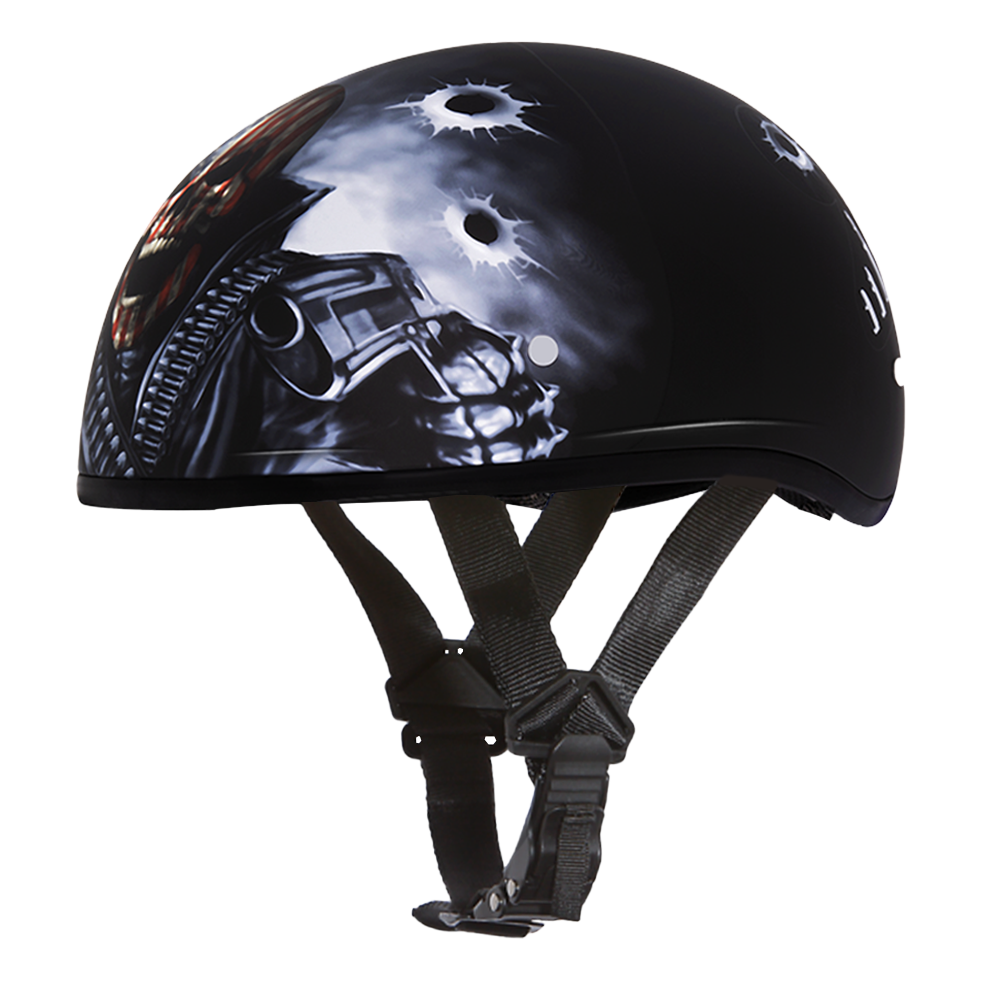
Half/skull cap helmets — including the Daytona Skull Cap line, available in one of the broadest size ranges on the market (3XS–4XL).
-
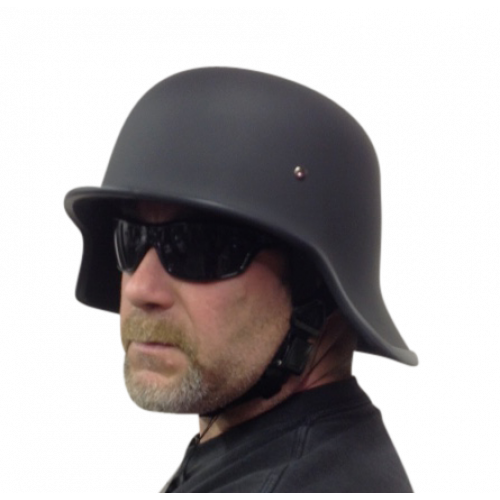
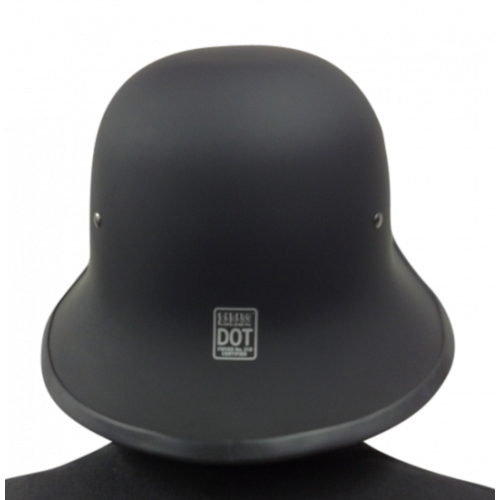
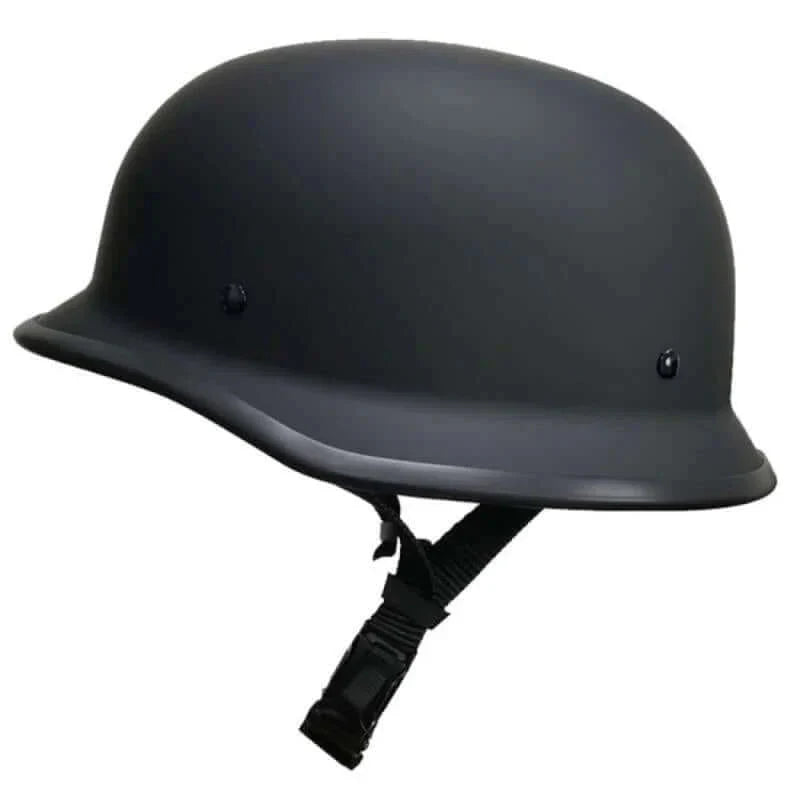
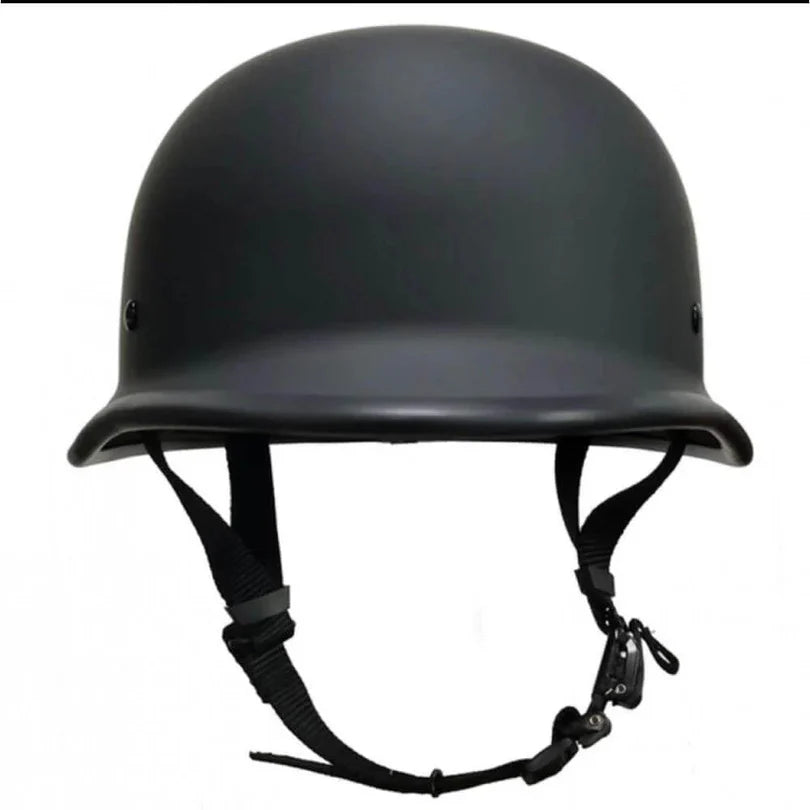
German-style helmets — low-profile, minimal-coverage designs popular with cruiser and vintage-style riders.
-
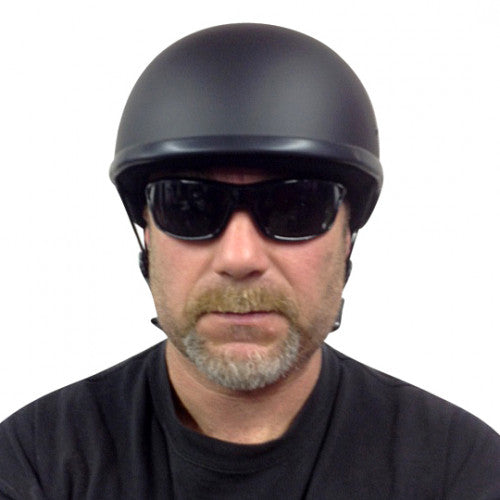
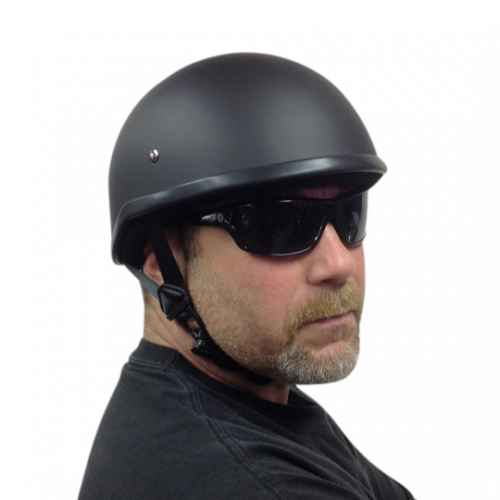
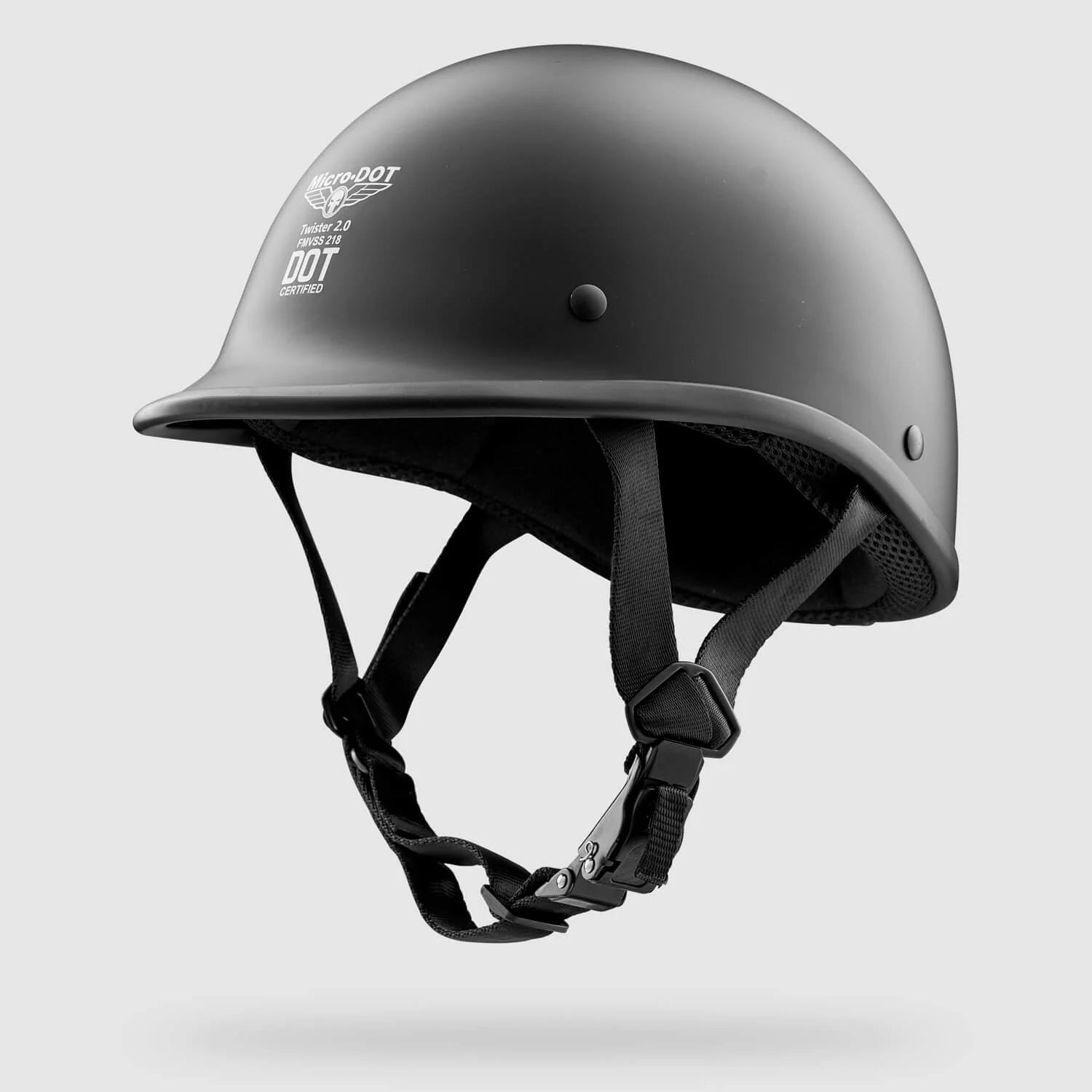
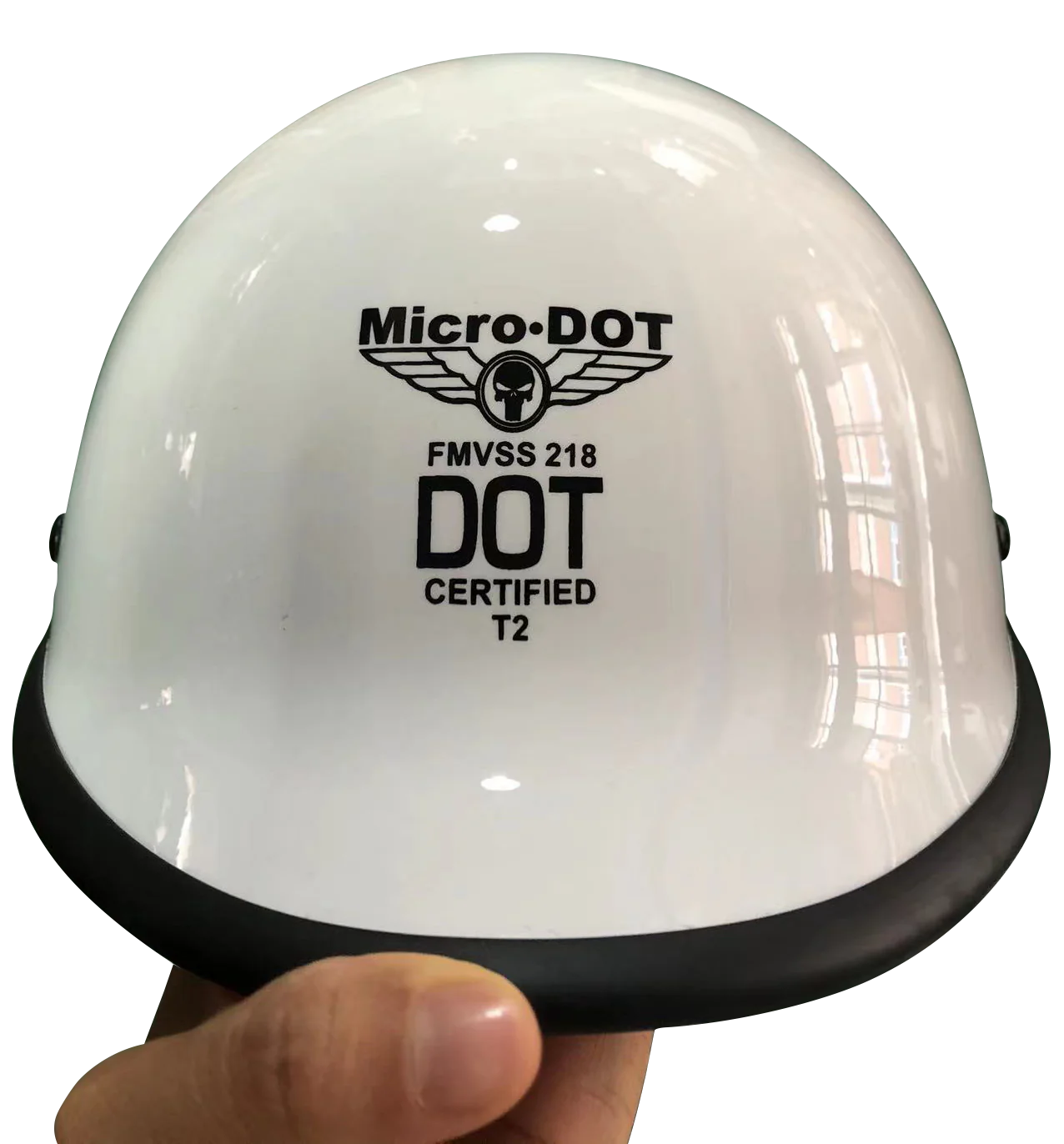
Polo-style and Micro DOT beanie helmets — ultra-low-profile DOT-legal options, including reversible and carbon-fiber-look finishes.
-
Novelty helmets — non-DOT styles for off-road, costume, or display use only.
Certification: Every DOT-labeled helmet in the catalog meets or exceeds FMVSS 218. Select full-face, modular, and 3/4 models — including the Viper, C6, and Retro Jet — carry dual DOT and ECE certification (updated to ECE 22.06), giving riders U.S. legal compliance plus independent European verification in one helmet.
Materials: The range spans standard polycarbonate/ABS shells up through carbon-fiber shell options (Daytona Skull Cap Carbon Fiber, several Badass carbon-fiber models) for riders who want reduced weight without sacrificing structure.
Features: Depending on the model, expect anti-scratch and anti-fog visor coatings, dual inner/outer visor systems, Bluetooth-ready shell cutouts, adjustable ventilation, moisture-wicking interiors, and quick-release retention hardware.
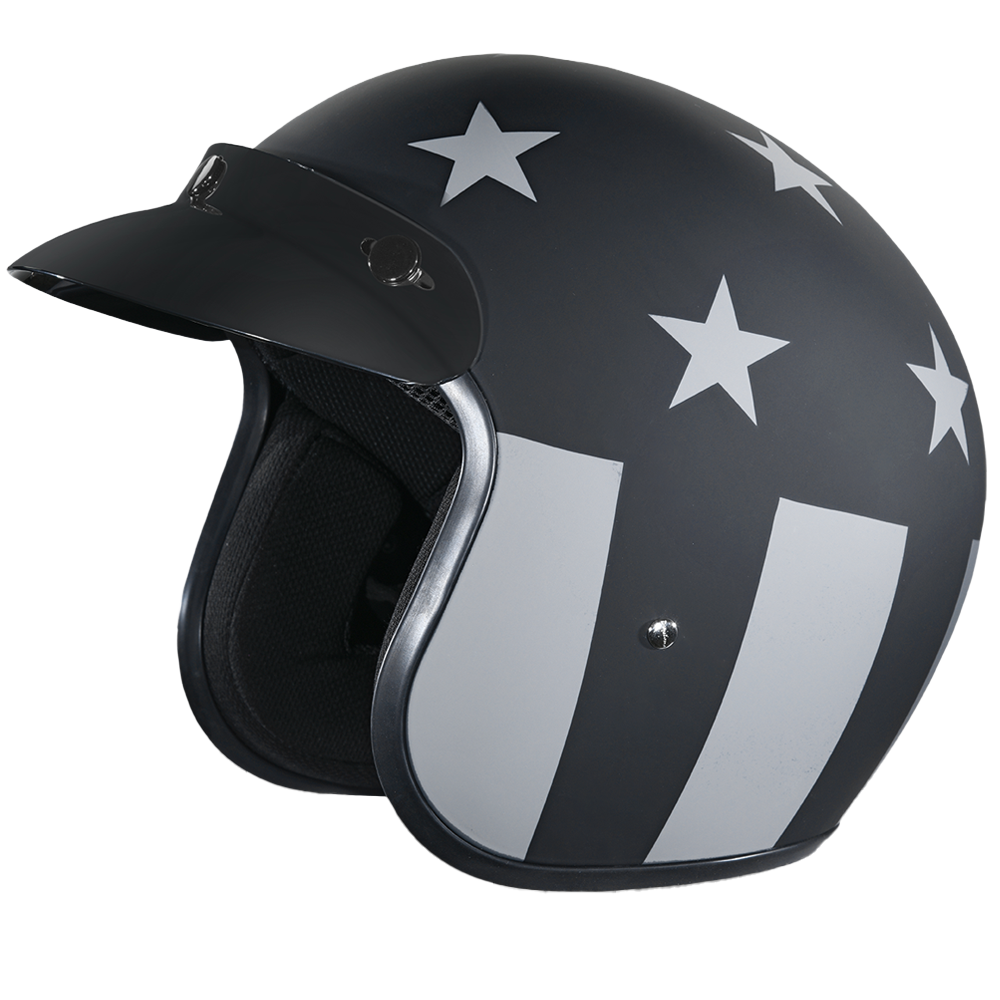
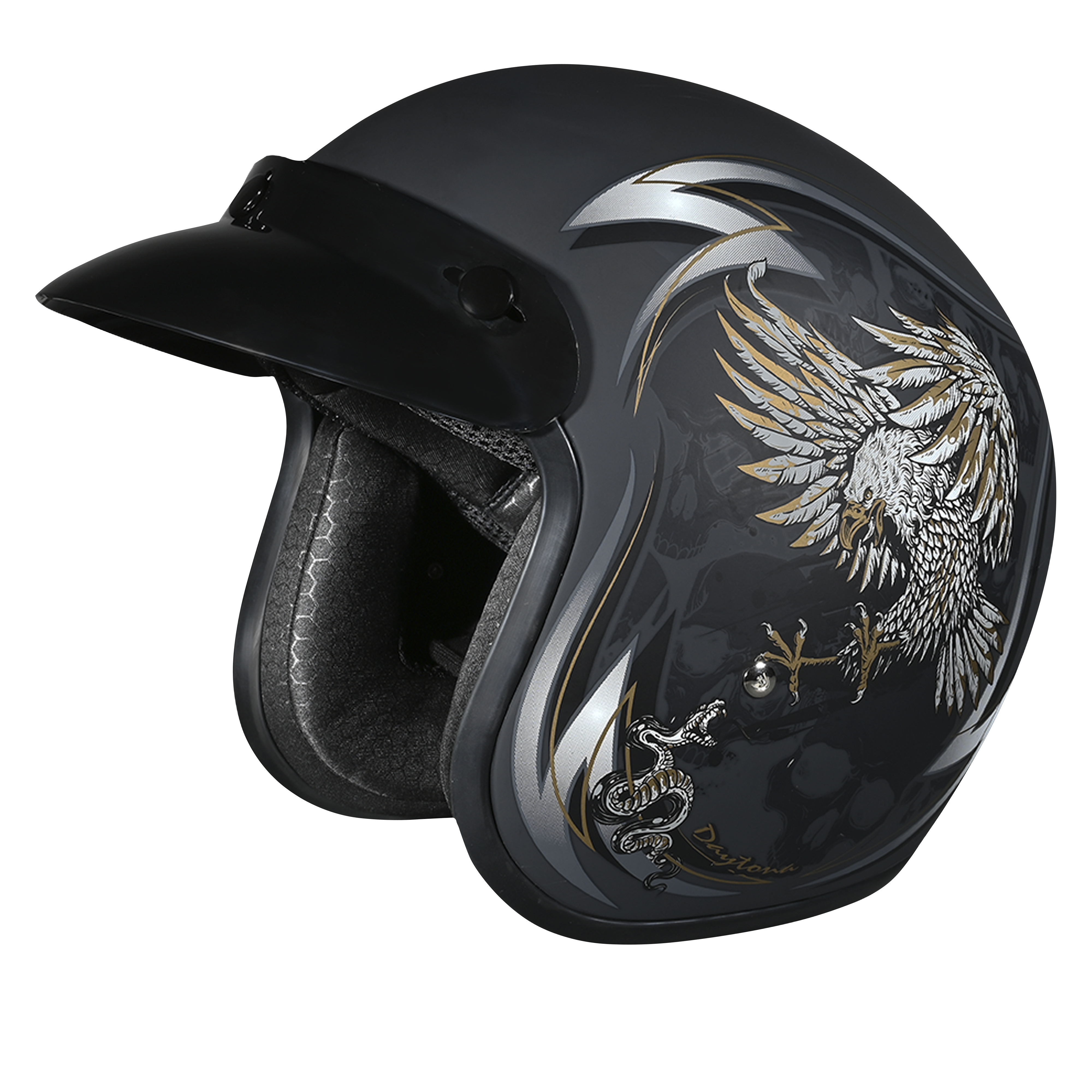
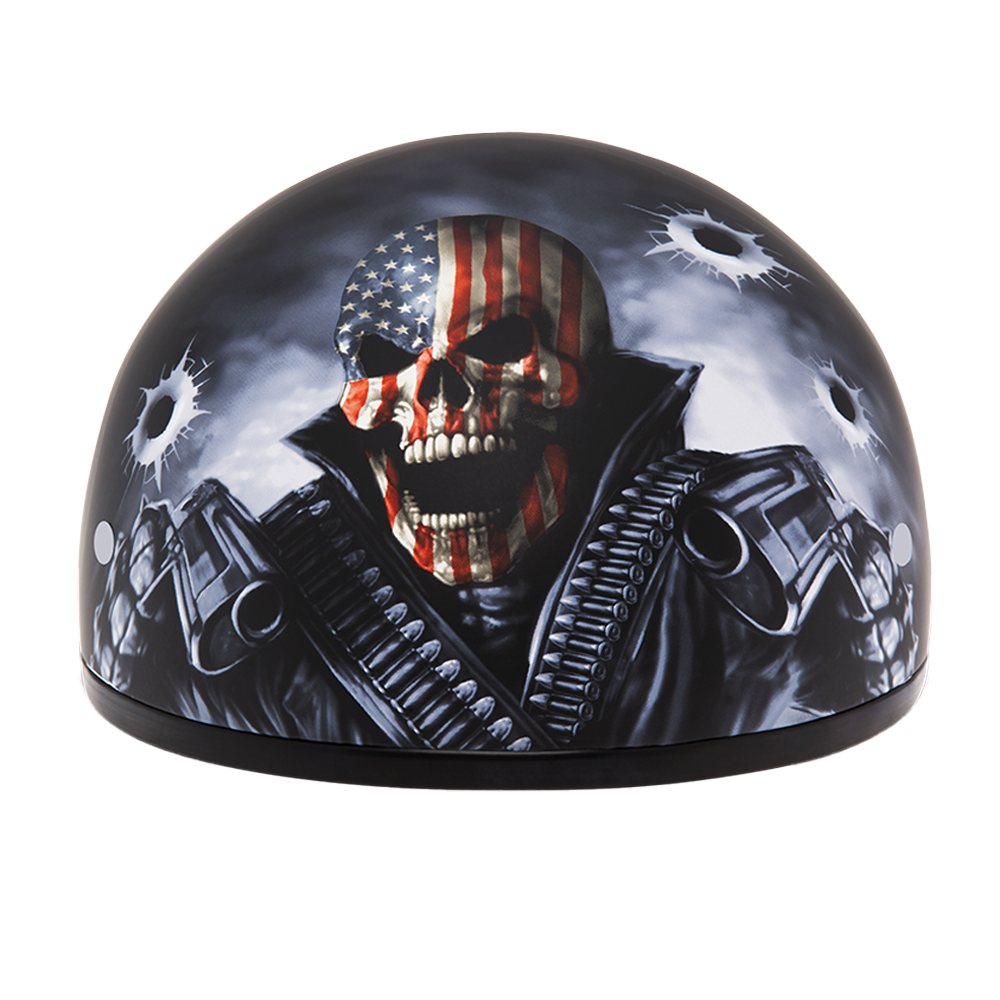
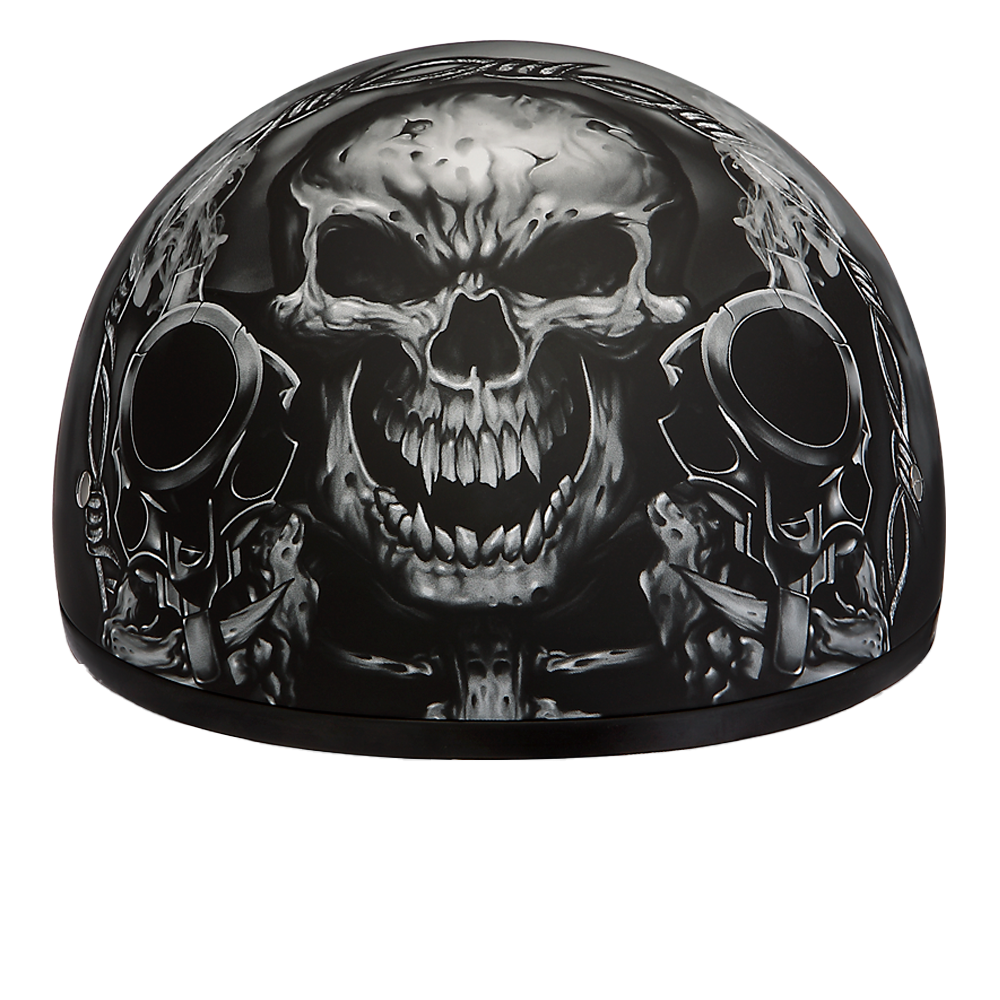
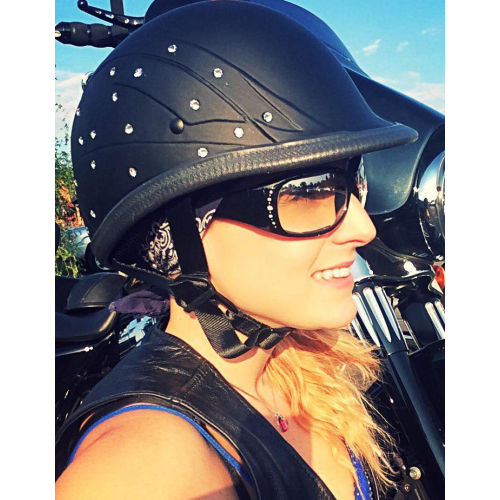
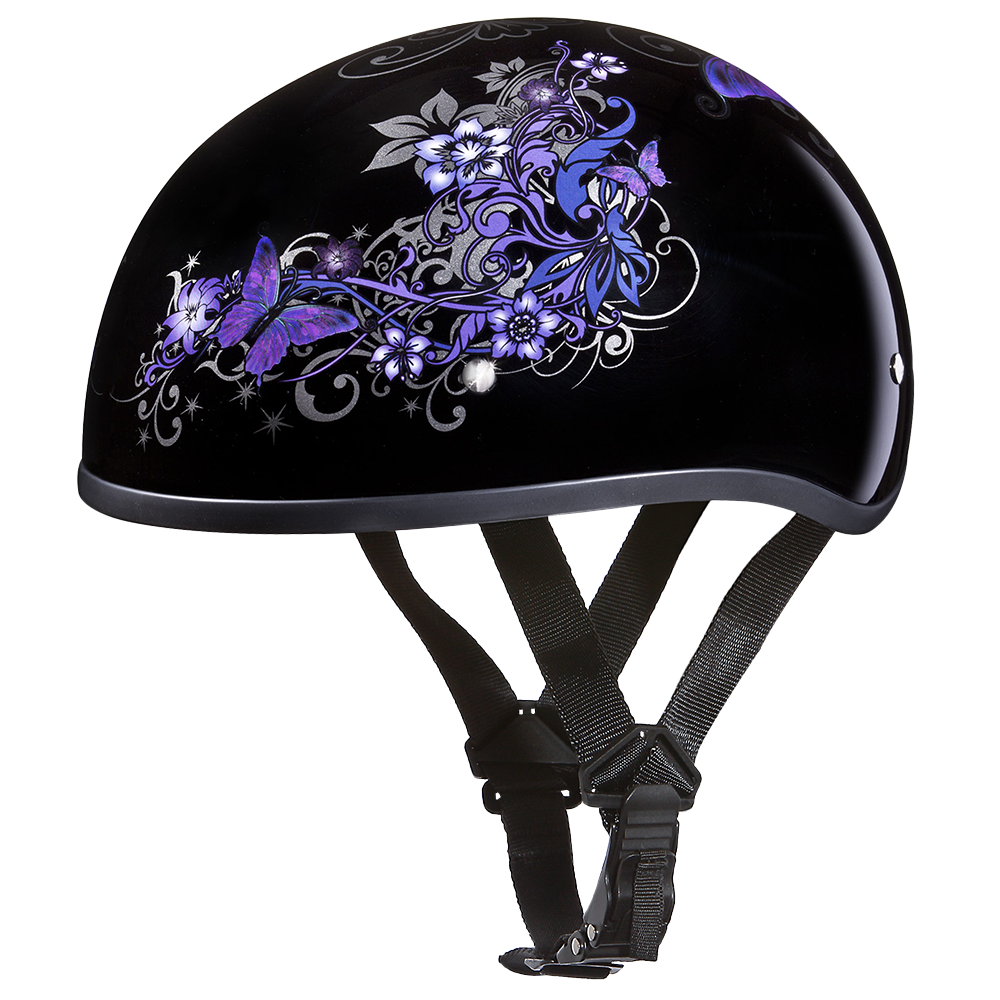
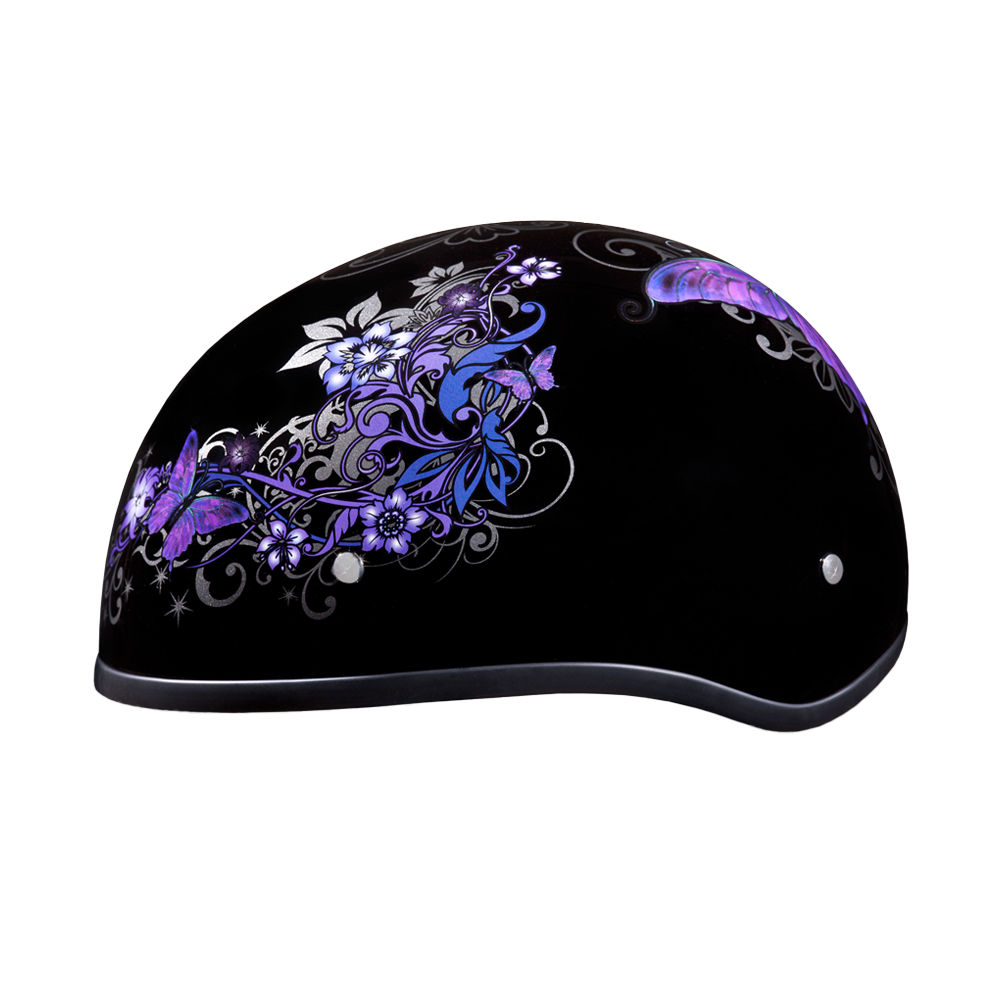
Colors & graphics: From clean solid-color motorcycle helmets — black motorcycle helmets, hi-gloss and dull black, white, grey — to pink and purple motorcycle helmets, blue and red motorcycle helmets, metal-flake finishes, chrome accents, and full graphic wraps (skulls, flags, florals, and club-style artwork) across the Badass and Daytona novelty lines, including American-flag-themed designs.
Sizing: Most helmet lines run 3XS through 4XL, with multiple shell sizes used across the range specifically to keep proportionate fit at both the small and extended-size ends — rather than stretching a single shell shape across every size. Take accurate motorcycle helmet measurements before ordering (see the buying guide below) to land in the right size the first time.
Price range: Budget-friendly and affordable options run $50–$100 for non-DOT novelty helmets, $100–$200 for the bulk of DOT half, 3/4, German, and Micro DOT styles — a strong range for anyone specifically looking for an inexpensive or best budget motorcycle helmet — and $140–$420 for full-face and modular helmets depending on certification, material, and graphics, with dual DOT/ECE full-face models like the Viper landing in the $360–$420 range and premium LS2 full-face models running similarly.
Helmet accessories: Beyond the helmets themselves, the catalog also carries motorcycle helmet accessories — replacement visors and shields, buckles, spikes, colored and mirrored inserts, neon straps, and Pinlock lenses — so riders can maintain or personalize an existing helmet without replacing the whole shell.
How to Buy the Perfect Motorcycle Helmet: Safety Standards & Fit
1. Start with certification, not looks. Confirm the helmet carries a genuine DOT sticker (FMVSS 218) at minimum; ECE 22.06 or SNELL adds a second layer of independently verified testing. Watch for fake DOT labels — a real certification includes proper labeling with sizing, cleaning, and impact-replacement instructions, not just a sticker.
2. Take proper motorcycle helmet measurements, not a guess at your hat size. Wrap a soft tape measure around the largest part of your head, about an inch above your eyebrows, and match that to the brand's specific size chart — sizing varies between manufacturers, which is exactly why extended-size and wide-fit shell options exist for riders outside the standard range.
3. Check for a snug, even pressure, not a loose fit. So how tight should a motorcycle helmet be? Snug enough to feel even pressure all the way around with no single hot spot, firm enough that it doesn't shift when you shake your head side to side, and secure enough that it won't roll off from the back when the strap is fastened — but never so tight it causes pain or numbness.
4. Match coverage to how you ride. Long-distance touring and highway commuting favor full-face or modular helmets; cruiser and low-speed city riding are common territory for 3/4 and half helmets — understanding that less coverage always means less crash protection, regardless of style preference.
5. Confirm the chin strap fastens securely. A helmet's protection is "greatly reduced, if not eliminated" if the strap isn't fastened snugly — this is true across every helmet type.
6. Consider added technology only after safety and fit are settled. Bluetooth readiness, anti-fog coatings, and dual visors are genuinely useful — but they should never be the deciding factor over certification and proper fit.
How to Maintain and Take Care of Your Motorcycle Helmet
-
Clean the shell with mild soap and water — avoid petroleum-based cleaners or solvents, which can degrade the outer shell and compromise its structural integrity over time.
-
Remove and hand-wash the interior liner (if removable) regularly to manage sweat, odor, and bacteria buildup — most modern liners are designed for this.
-
Store it properly — in a helmet bag or on a stand, away from direct sunlight and extreme heat, which can degrade both the shell material and the EPS foam underneath.
-
Never drop or toss your helmet — even impacts that leave no visible damage can compress the EPS liner internally, quietly reducing its ability to absorb a real crash.
-
Avoid stickers, paint, or aftermarket modifications to the shell unless approved by the manufacturer — some adhesives and solvents can weaken shell material.
-
Check the visor and vents periodically for cracks, clouding, or loose hardware, and replace worn Pinlock inserts or scratched shields rather than riding with reduced visibility.
When Do Motorcycle Helmets Expire?
Motorcycle helmets don't have a single universal "expiration date," but manufacturers and safety organizations generally recommend replacing a helmet every 5 years from the manufacture date, even without a crash, since materials like EPS foam and shell adhesives degrade gradually from UV exposure, sweat, temperature swings, and general wear. More importantly: replace a helmet immediately after any impact, even a helmet that looks undamaged from the outside — the EPS liner is designed to crush and absorb energy exactly once, and that damage isn't always visible externally. Check the manufacture date molded or printed inside the helmet (often on a label near the retention strap) to track its age.
Motorcycle Helmet Laws and Standards by State
Unlike helmet certification (DOT, ECE, SNELL), which is federal or international, motorcycle helmet laws by state are set entirely by individual states — there is no single federal helmet law in the U.S. That means the legal requirement for wearing a helmet changes the moment you cross a state line, even though a DOT-approved helmet itself remains legal everywhere. As of 2026, state helmet laws fall into three categories:
Universal helmet laws (all riders and passengers, regardless of age, must wear a helmet): roughly 18–19 states plus Washington, D.C., including California, New York, Georgia, North Carolina, Oregon, Washington, Virginia, Louisiana, Maryland, Massachusetts, Mississippi, Missouri, Nebraska, Nevada, New Jersey, Tennessee, Vermont, West Virginia, and Alabama. Is it illegal to ride a motorcycle without a helmet in these states? Yes — for every rider, every time, with essentially no exemptions for fully-powered motorcycles.
Partial (age- or condition-based) helmet laws — the largest category, covering roughly 28–29 states, including Florida, Texas, Pennsylvania, Ohio, and Missouri. These states typically require helmets only for riders under a set age (commonly 18, 21, or 26) or exempt older, more experienced riders who carry specific insurance coverage or have completed an approved safety course. Pennsylvania, for example, exempts riders 21 and older with two years of licensed experience or a completed safety course, but still requires helmets for anyone under 21 or riding on a learner's permit, regardless of age.
No statewide helmet law: Illinois, Iowa, and New Hampshire are currently the only three states with no helmet requirement for adult riders at all, following New Hampshire's long-standing "live free or die" approach and Illinois/Iowa's repeal of earlier universal laws.
A few practical notes for law enforcement motorcycle helmets and everyday riders alike:
-
Laws change at the state line, not your home state. A helmetless ride that's fully legal in New Hampshire becomes a citable offense the instant you cross into Massachusetts.
-
Partial-law states often layer on conditions — age, insurance minimums (e.g., Florida's $10,000 medical coverage exemption), or safety-course completion — so "no law for adults" and "no law at all" aren't the same thing.
-
Data consistently favors universal laws. NHTSA and IIHS data show states with universal helmet laws see meaningfully lower motorcyclist fatality rates than partial-law or no-law states, and states that repealed universal laws saw fatalities rise afterward.
-
Always verify before a multi-state trip. Because legislatures revisit these laws almost every year, check your state DOT or highway safety website before touring across state lines rather than relying on last year's rules.
Regardless of what your state legally requires, the safety case for a DOT and/or ECE-certified helmet doesn't change — legal minimums and genuine crash protection are two different things.
Why Choose Daniel Smart MFG
Daniel Smart MFG has been supplying motorcycle riders since 1975, built specifically around riders who want gear that's actually tested, actually in stock, and backed by a real company standing behind it. That means:
-
Genuine DOT and dual DOT/ECE 22.06 certified helmets — not unverified imports
-
One of the widest size ranges in the category (3XS–4XL across most lines), so fit isn't an afterthought
-
Real inventory shipped directly — not a dropship middleman, which means faster fulfillment and consistent quality control
-
Lifetime warranty coverage across the product range, plus easy returns and exchanges
-
A complete ecosystem beyond helmets — jackets, vests, gloves, boots, and protective gear designed to match, so riders can gear up head-to-toe from one trusted source
-
Decades of specialization in rider-specific gear, not general sporting goods, meaning the catalog is built by people who understand what riders actually need
Frequently Asked Questions
What is the safest type of motorcycle helmet?
Full-face helmets offer the most protection because they cover the entire head, including the chin-bar area, which absorbs a large share of real-world crash impacts. Modular helmets offer similar protection when ridden closed.
What's the difference between DOT and ECE-certified helmets?
DOT (FMVSS 218) is the U.S. legal standard, tested and self-certified by manufacturers under federal oversight. ECE 22.06 is the current European standard, independently lab-tested before sale and now including oblique/angled impact testing for rotational injury protection. A helmet can carry both.
Do motorcycle helmets expire?
Most manufacturers recommend replacing a helmet every 5 years due to material degradation, and immediately after any crash or hard impact, even without visible damage.
What is a modular motorcycle helmet?
A modular (or flip-up) helmet has a chin bar that pivots upward, combining full-face protection when closed with the convenience of an open-face helmet when stopped.
How should a motorcycle helmet fit?
It should feel snug and evenly pressured all around with no gaps or hot spots, stay in place when you shake your head, and not roll off when you try to pull it backward with the chin strap fastened.
Are cheaper motorcycle helmets less safe?
Not necessarily — a properly DOT or ECE certified helmet at a lower price point still passed the same mandatory impact, penetration, and retention tests as a premium helmet. Price differences usually reflect materials (polycarbonate vs. carbon fiber), added features, and brand, not baseline crash protection, provided the certification is genuine.
What size helmet do I need?
Measure around the largest part of your head about an inch above your eyebrows, and match that measurement to the specific brand's size chart, since sizing varies between manufacturers.
Does Daniel Smart MFG manufacture its own helmets?
No — Daniel Smart MFG is a specialized retailer that stocks and ships a wide range of DOT and dual DOT/ECE certified helmets from brands including Daytona, LS2, and its own Badass helmet line, alongside its in-house leather apparel.
What helmet sizes does Daniel Smart MFG carry?
Most helmet lines run from 3XS through 4XL, with multiple shell sizes used to maintain a proportionate fit across the full size range rather than one shell stretched across every size.
Is a half helmet legal to ride with?
In most U.S. states with helmet laws, a DOT-certified half helmet meets the legal minimum requirement, though it offers significantly less crash protection than a 3/4, modular, or full-face helmet.
Do motorcycle helmet laws vary by state?
Yes. As of 2026, roughly 18–19 states plus D.C. have universal helmet laws covering all riders, about 28–29 states have partial laws based on age or conditions like insurance and safety-course completion, and only Illinois, Iowa, and New Hampshire have no statewide helmet law for adults. Laws apply based on the state you're riding in, not your home state.
How do I take accurate motorcycle helmet measurements?
Wrap a soft tape measure around the largest part of your head, roughly an inch above your eyebrows, and compare that number to the specific brand's size chart, since head shape and sizing standards vary between manufacturers.
What's the lightest type of motorcycle helmet?
Carbon fiber and Kevlar-composite helmets are generally the lightest certified options, offering a strong strength-to-weight ratio compared to polycarbonate or fiberglass shells, though they typically cost more.
Does Daniel Smart MFG sell helmet accessories?
Yes — alongside full helmets, Daniel Smart MFG carries helmet accessories including replacement visors and shields, buckles, spikes, colored inserts, neon straps, and Pinlock lenses for maintaining or customizing an existing helmet.