


When on the road, safety is significant. DOT certification helps ensure safety for both individuals and, in some cases, commercial drivers. For helmets, it covers factors such as construction, materials, and compliance with safety standards.
For a person driving a commercial vehicle, it ensures the individual behind the wheel is mentally and physically fit for the job.
Previously, we explored different motorcycle helmet styles and highlighted some of the most comfortable motorcycle helmets for long rides to help riders choose the right gear for every journey. Today, we'll explain what DOT certification actually means and how to identify a genuine DOT-certified motorcycle helmet before you buy.
So, what exactly is DOT certification, why is it important for riders, and how can you tell if a helmet is genuinely certified? Let's break it down.
What is DOT Certification for Helmets?
So, what does the DOT helmet certification mean?
U.S. Department of Transportation (DOT) DOT certification means a helmet meets Federal Motor Vehicle Safety Standard No. 218 (FMVSS 218), the federal regulation that applies to every motorcycle helmet sold for road use in the United States. It became effective in 1974 and is enforced by the National Highway Traffic Safety Administration (NHTSA).
What does DOT helmet certification mean in practice?
It is a legal minimum, not a quality measure. Most states will not allow you to sell or use a helmet on public roads unless it is FMVSS 218 compliant. If it is up to standard, the manufacturer may stamp "DOT" on the shell.
How a Helmet Actually Gets DOT Certified
Most riders are shocked to discover this: NHTSA doesn’t test helmets before they hit the shelves. No government inspector is signing off on every model. DOT certification is a self-certification system: the manufacturer tests the helmet against FMVSS 218 in its own lab (or one it contracts with) and then states in writing that it passes.
NHTSA’s role comes after it. The agency randomly selects helmets from the market and conducts its own compliance tests. When a helmet fails, the manufacturer can be fined and the model withdrawn from sale. So DOT certification is a legal statement backed by after-market spot checks, not pre-market approval.
What FMVSS 218 Actually Tests
The standard evaluates four key aspects of the helmet as a whole:
-
Impact attenuation: This measures how much force actually reaches the head when the helmet is dropped onto a steel anvil.
-
Penetration resistance: This tests whether a sharp object can penetrate the helmet's shell.
-
Retention system strength: This measures how much force the chinstrap can withstand before it gives way.
-
Peripheral vision: The helmet must provide at least 105 degrees of visibility on each side.
It's important to note that full-face chin bars, face shields, and rotational impact forces aren't included in this testing. This is a significant oversight to keep in mind when comparing DOT-certified motorcycle helmets with other safety standards.
How to Spot a Real DOT Label and a Fake One
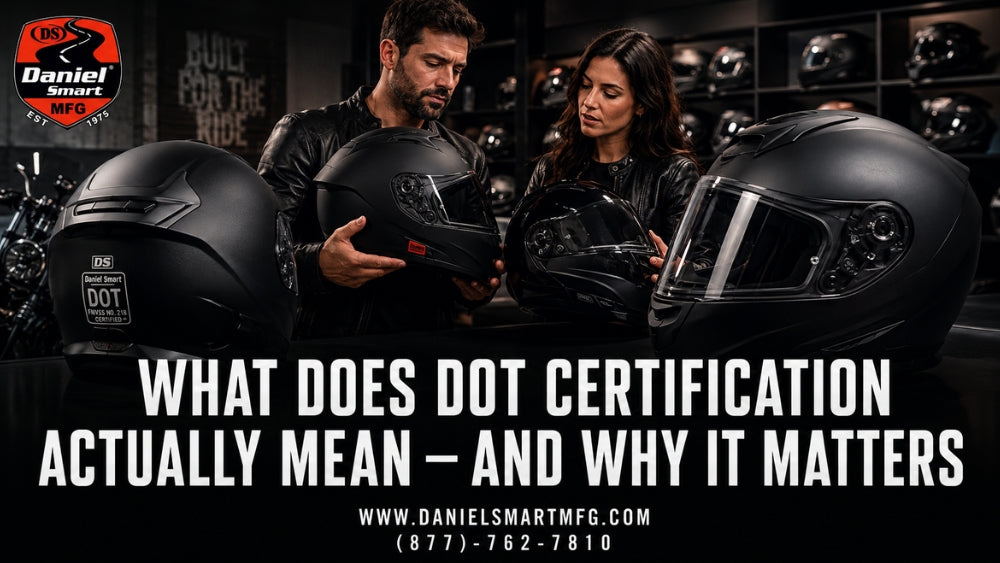
Since there's no requirement for pre-market approval, it's pretty easy to find counterfeit stickers, particularly on those inexpensive novelty helmets you might come across at swap meets or online. A genuine label can be found on the lower back of the helmet shell and should include:
-
The letters "DOT," at least 0.38 inches tall
-
The text "FMVSS No. 218"
-
The manufacturer's name and model designation
-
The word "CERTIFIED"
Inside the liner of modular helmets, you’ll find a second label that details the size, materials, and manufacture date. If you come across a helmet that has a DOT sticker on the outside but lacks an interior label, that’s a red flag. You should also consider the weight and shell thickness as practical tests. A genuine DOT-certified helmet usually weighs at least three pounds and features
EPS foam that’s thicker than half an inch. On the other hand, those so-called micro dot motorcycle helmets- those ultra-thin, low-profile "beanie" or novelty helmet styles that claim to be DOT-compliant- often fall short on both counts. If a helmet feels unusually light for its price, it’s likely that the sticker is more about marketing than actual safety.
Are DOT-approved Helmets Safe?
For everyday street riding, yes.
What DOT certification doesn’t guarantee is that a helmet is the absolute best choice. Since the standard is based on self-certification and hasn’t had a significant update since 1988, it doesn’t evaluate chin bars, face shields, or oblique impacts like ECE or Snell do.
So, a helmet can be legally DOT-certified but still not meet the higher standards of an independently tested ECE or Snell-rated helmet. For most riders, the key takeaway is pretty simple: choose a brand with solid U.S. distribution, look for both exterior and interior labels, and think of DOT certification as just the starting point, not the end goal.
DOT versus ECE: What You Must Know?
If you're a rider venturing abroad or picking up some imported gear, you'll likely come across ECE helmets, which are certified under Europe's ECE 22.06 standard. What sets ECE apart from DOT is that it mandates independent lab testing before a helmet hits the shelves, plus regular production audits to ensure quality.
Some helmets even sport both a DOT sticker on the shell and an ECE tag stitched into the chin strap, providing riders with the benefits of two distinct testing philosophies.
Conclusion
Understanding DOT certification helps riders make informed decisions when choosing protective gear. While DOT compliance confirms that a helmet meets the minimum U.S. safety requirements, selecting a trusted manufacturer adds another layer of confidence.
Whether you prefer motorcycle half-helmets, open-face helmets, or full-face designs, always choose helmets built with high-quality materials and reliable construction.
Daniel Smart MFG offers a wide range of DOT-certified motorcycle helmets designed for comfort, durability, and everyday riding.
Investing in a certified helmet from a reputable brand means better protection, greater peace of mind, and a safer riding experience on every journey.
FAQs
1. Is a DOT-certified helmet enough for everyday riding?
Yes, a DOT-certified helmet meets the minimum legal safety standards for U.S. roads. Many riders also prefer ECE-certified helmets for additional independent testing.
2. How can I tell if a DOT helmet is genuine?
Check for the official DOT label and the interior certification information. Buy from trusted brands or authorized dealers to avoid counterfeit helmets.
3. Can a motorcycle half helmet be DOT-certified?
Yes, some Motorcycle Half Helmets are manufactured to meet DOT safety standards. Always verify the certification label before purchasing or riding.