



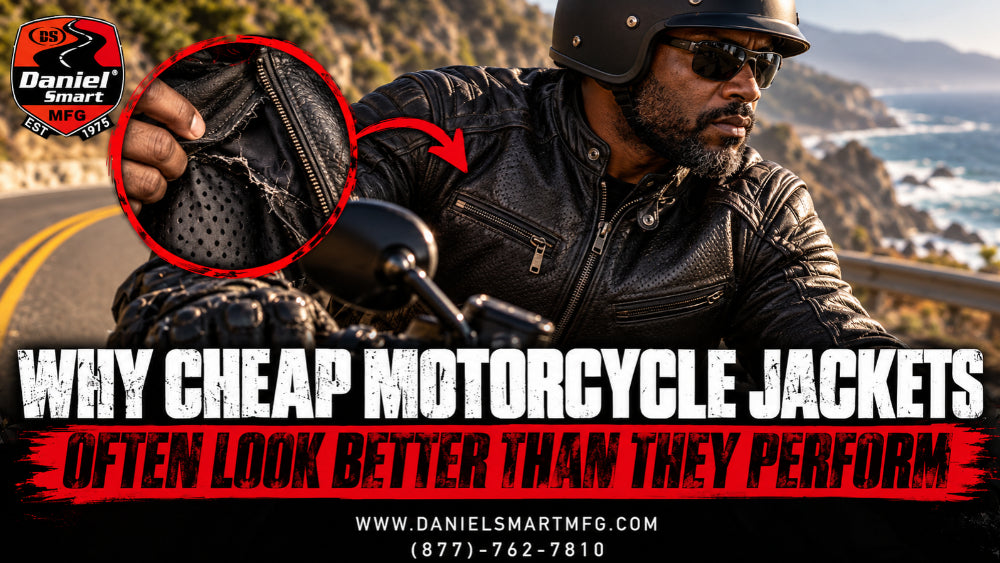
Motorcycle jackets you find between $80 and $120 often look great, especially in pictures.
You may feel like you're getting premium gear in an affordable range because it shows it all, from aggressive shoulder lines to quilted panels and racing stripes.
The photo shows styling, but what about the protection? How do you ensure it? Because style production is cheap and somewhat easy. The tough part is functionality and safety.
Previously, we highlighted common jacket-buying mistakes and walked you through the motorcycle jacket fitting test to help you choose gear that fits properly and keeps its protective features where they belong. Today, we’re taking that discussion a step further by exploring why cheap motorcycle jackets often look better than they perform.
This article shows you exactly where cheap motorcycle jackets cut corners.
So how do you check a jacket before you pay?
The Illusion of Protection: Fake Styling Cues
Many low-cost motorcycle jacket quality mimic the visual cues of high-end gear, but not the engineering to back it up. Common tells are:
-
Quilted panels that simulate thermal lining but are purely decorative and don't actually provide any insulation or impact dispersion.
-
Cosmetic padding on shoulders and elbows that looks like armor pockets but is thin foam or nothing.
-
Thin leather (often less than 1.0mm) or bonded leather that feels soft and supple but will tear within seconds of contact with asphalt.
-
Inferior stitching, single-row seams, low thread count, etc which can burst open on impact and make the jacket useless.
Quilted panels, decorative padding, thin leather, and weak stitching can make a cheap jacket look more protective than it actually is. Before buying, look beyond the styling and check the materials, certified armor, seam construction, and overall build quality.
These design choices make a convincing visual promise of safety but deliver little real-world protection.
Why are Cheap Motorcycle Jackets Bad?
The best fit is what you need to get a good ride.
Here is how cheap construction creates problems with fit:
-
Motorcycle Jacket Armor Drift
Armor drift is when shoulder, elbow, or back protectors move out of position during riding or a crash. Cheaper jackets often have large, nonadjustable pockets and no retention straps, so the armor slides toward the arm's centerline or bunches at the spine.
A protector two inches from its target zone protects nothing. Look for Velcro or strap retention, adjustable elbow positioning, and pocket size to match the armor.
-
Motorcycle Jacket Noise
Motorcycle jacket noise is not just a nuisance. Loose, stiff, or oversized shells will flutter at speed, and wind noise inside a helmet can reach levels associated with hearing damage on long highway rides.
A flapping jacket also signals poor fit and cut, which usually means the armor isn’t staying put either. Earplugs help, but a well-cut jacket with adjustable cuffs, waist, and biceps straps addresses the problem at the source.
-
Motorcycle Jacket Fit
Motorcycle jacket fit is not the same as street-clothes fit. The jacket should be tight enough for armor to sit over joints, but loose enough to allow full movement in a riding posture. Cheap sizing can be inconsistent, and “one-size-fits-most” cuts rarely match riders’ actual proportions.
Many are cut for standing mannequins, so the sleeves ride up and the back panel lifts when you lean forward.
What a Real Motorcycle Jacket Is Built to Do
The real purpose of a biker jacket goes beyond just looking good; it’s all about keeping your skin, bones, and organs safe if you take a spill. A quality leather motorcycle jacket or a durable textile version is built with this in mind:
-
Abrasion Resistance: It is key, so choose thick, full-grain leather (minimum 1.2mm to 1.4mm) or tough, high-denier textiles like Cordura that can take a slide on pavement without falling apart.
-
CE-certified Armor (Level 1 or Level 2): It should be in the shoulders, elbows, and back. This will help lessen the impact if you take a tumble.
-
Seam Integrity: Look for double- or triple-stitched seams using high-strength thread to keep your jacket intact under pressure.
-
Fit for Riding Posture: Opt for the design that is suitable for your riding position on the bike. This helps keep the armor in place and prevents sleeves from creeping up.
Without these features, a jacket is just something stylish. It won’t protect you.
What Should I Look for in a Good Motorcycle Jacket?
When you are looking for the best motorcycle jackets, focus on safety features. What are those? Here is a short list for you:
-
CE certification: Look for jackets that have the EN 17092 label. Make sure they have at least a Class AA rating for good abrasion resistance.
-
Armor Quality: Look for CE Level 1 or Level 2 protectors in the shoulders, elbows, and back. Level 2 is a great choice since it can absorb up to 50% more impact energy.
-
Material Thickness: Choose full-grain leather that’s around 1.2mm to 1.4mm thick, or high-denier textiles with reinforced panels for extra strength.
-
Stitching and Construction: Look for double- or triple-stitched seams, especially in areas most likely to take impact.
-
Fit and Function: Choose a fit that’s snug yet allows movement, ensuring the armor stays securely in place when you’re riding.
Brands that openly publish test results, CE certificates, and detailed material specifications are often more credible than those that rely heavily on lifestyle imagery alone.
Investing in Real Protection Pays Off
Sure, cheap motorcycle jackets can save you a few bucks at first, but they can cost you much more when it comes to safety. A single accident can expose shortcuts in materials, stitching, and armor quality. That's why it's so important to invest in a CE-certified jacket with solid construction, not just to meet standards, but to maximize your chances of walking away from a crash.
For riders in the USA, where highway speeds and changing weather require trustworthy gear, choosing proven protection over aesthetics is one of the smartest moves you can make.
Conclusion
Don't judge a motorcycle jacket by appearance alone. Understanding the purpose of a biker jacket means looking beyond aggressive styling and checking abrasion resistance, certified armor, stitching, fit, and overall construction.
Cheap jackets may imitate premium designs, but the real difference often appears in the materials and protective features hidden beneath the surface.
Daniel Smart MFG focuses on motorcycle gear and apparel designed with riders’ practical needs in mind, helping riders consider protection alongside style.
Before buying, examine the jacket carefully, verify its certifications, and make sure the armor stays positioned correctly. The right jacket should provide confidence through thoughtful construction, not appearance alone.
FAQs
1. Why do some cheap motorcycle jackets look similar to expensive ones?
Cheap motorcycle jackets can copy premium styling features without offering comparable protection. Always check armor, materials, stitching, certifications, and fit before purchasing.
2. How can I check whether motorcycle jacket armor will stay in place?
Try the jacket in a riding position and move naturally to check armor placement. Look for adjustable pockets, retention straps, and a snug fit.
3. Is a leather motorcycle jacket always more protective than a textile jacket?
Not necessarily. Protection depends on materials, construction, abrasion resistance, certified armor, stitching, and fit, rather than whether the jacket is leather or textile.