



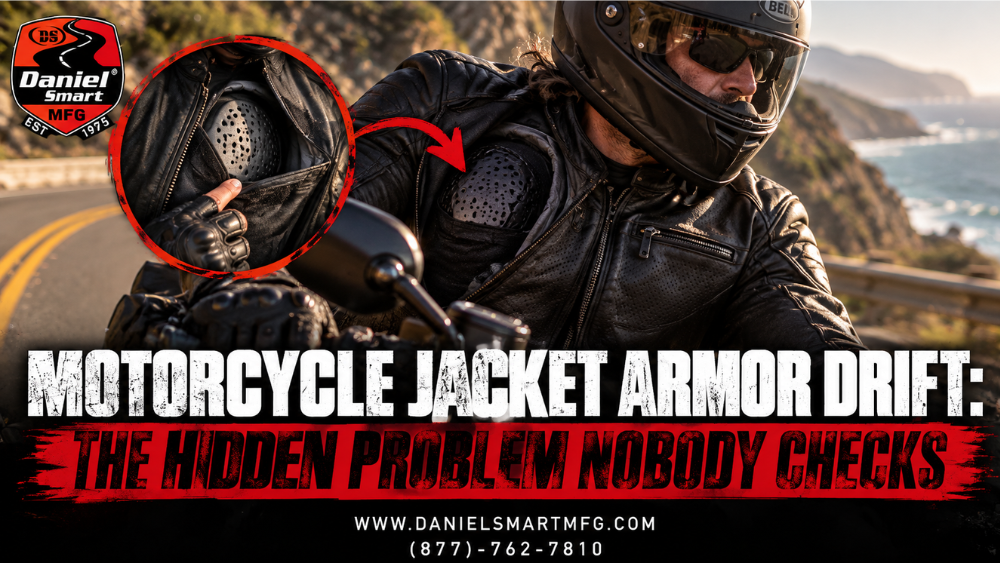
You bought a jacket after asking so many questions to the point that salespeople feel frustrated. Yet a jacket with CE-rated protection can end up with armor that isn’t over your joints when you need it most.
Now, you may think it’s armor, but it is not. It is the motorcycle jacket armor drift. This is one of the major motorcycle safety gear fit problems.
The silent movement of elbow, shoulder, and back pads makes it uncomfortable during real riding.
What Is Motorcycle Jacket Armor Drift?
Motorcycle jacket armor drift is when protective pads become misaligned while you ride, brake, lean, or slide. A few centimeters of travel can mean the difference between absorbing crash energy on bone or soft tissue.
When you wear a men's protective leather biker jacket, this shows up in practice as:
-
Elbow armor rides up the forearm when you reach the bars
-
Shoulder pads slipping down to your neck or off the deltoid
-
Lower spine exposed by riding up back protectors
-
Chest protectors moving or dropping beneath the sternum
That’s why fit and retention systems matter as much as CE ratings when you’re searching for the best armored motorcycle jackets for men.
Why Armor Moves
A neutral standing position is sewn for armor pockets. Riding position is the opposite. Elbows bent and flared, shoulders rotated forward, spine curved into a tuck. All mirror checks and cornering lean have the shell and body moving slightly at different rates.
The shell stretches and then settles one way. The armor, which must be loose enough to flex, settles another. That mismatch builds up over a ride – this is motorcycle armor at its most basic, a mechanical byproduct of soft-goods construction, not a flaw.
Where does the Drift of Armor Happen?
When you're buying a jacket, just understand where the armor drifts.
-
Elbow Armor:
One of the most common fit problems riders report is motorcycle jacket elbow armor moving. Common failure modes include:
-
Armor that sits 1-2" above the elbow cap while standing, then glides up higher on the bike
-
Sleeve length is correct when standing but too short in riding position.
-
No forearm or cuff adjusters, so the sleeve rides up under wind loading
If the elbow armor shifts, the ulna/olecranon takes the impact instead of the protector, increasing fracture risk. This is an important motorcycle safety gear fit issue that a lot of buyers miss when they only look at CE level.
-
Shoulder Pads Sliding off the Joint
Shoulder armor should sit right over the acromion (the bony point of your shoulder). Typical problems:
-
Pads easing to the neck, exposing the joint
-
Broad shoulders to allow armor to slide side to side in a crash
-
No outside shoulder adjusters to tighten the cap.
Moving shoulder armor exposes the clavicle and proximal humerus, both frequent fracture sites in motorcycle crashes.
-
Back Protector Ride-up
Back protectors are particularly vulnerable to motorcycle jacket armor drift because:
-
Jacket hems lift when you lean forward or tuck in
-
Waist straps too loose or missing altogether
-
The protector pocket is too high, permitting vertical Motion
Even a CE level 2 motorcycle riding jacket's certified back protector can ride up, leaving the lumbar spine and tailbone exposed. The waist should be adjusted well, and the torso fit snug to keep it centered on the spine.
Why Fitting Rooms Miss It
Most of the fit issues with motorcycle safety gear stem from sizing that focuses on chest measurements instead of the distance between joints. You could have two riders with the same 42-inch chest, but their forearm lengths and shoulder widths might differ significantly. This variation can change where the armor sits when the rider is crouched on the bike, rather than standing up straight.
Standard fitting-room checks don’t really test that forward-leaning position, so they often fail to show whether the armor tracks the joints correctly or lags behind.
How to Fix Armor Drift (Quick Checklist)
You can fix the motorcycle armor shifting just by using the quick fixes below:
-
Adjust your bike gear: While in your riding stance, reposition your elbow, shoulder, and back armor over your joints before you tighten anything down.
-
Securing sleeve length: How to fix motorcycle elbow armor shifting? Tighten those cuff and forearm straps so your sleeves stay in place and don’t pull your elbow armor up with them.
-
Stabilizing the torso: Use the waist and side adjusters to keep your jacket from riding up and keep the back protector aligned with your spine.
-
Fixing pocket movement: Make sure your armor doesn’t shift or flop around; look for jackets with contoured, zip-closed armor pockets, or add a thin backing to eliminate slack.
-
Upgrading worn gear: If your liner or shell has seen better days, consider upgrading to a well-fitted CE level 2 motorcycle riding jacket that has the right adjustment points for a secure fit.
Practical Steps to Keep Armor in Place
Here’s how to keep motorcycle armor in place that you already own:
-
Start by tightening the cuff and forearm straps to prevent those sleeves from riding up.
-
Make sure to use waist belts to stop your jacket from lifting and to keep your back protector in place.
-
When you’re adjusting your armor, do it while you’re in your riding position, not just standing around.
-
If your liners or shells have lost their grip and can’t hold the pads securely, it’s time to replace them.
For any new gear, prioritize CE Level 2 motorcycle riding jackets with smart retention systems over simply choosing the thickest armor. A well-fitted Level 1 jacket that doesn’t shift can actually outperform a poorly fitted Level 2 in a crash.
Conclusion
Motorcycle jacket armor drift is an often-overlooked fit issue that can reduce protective gear's effectiveness when it matters most.
Proper positioning, secure adjustment points, and a riding-position fit can help keep elbow, shoulder, and back armor aligned with the body. Whether you prefer heavy motorcycle jackets or plan to buy a genuine leather motorcycle vest, don't judge protection by material or appearance alone.
Daniel Smart MFG emphasizes practical motorcycle gear designed with riders’ needs in mind. Before every ride, check your armor placement, straps, cuffs, and waist fit to help ensure your protective equipment stays securely positioned throughout your journey.
FAQs
1. What causes motorcycle jacket armor drift?
Motorcycle jacket armor drift occurs when protective pads move away from joints during riding. Loose fits, insufficient adjusters, and incorrect sizing commonly contribute to movement.
2. How can riders prevent armor from shifting?
Riders can reduce armor movement by tightening cuffs, forearm straps, and waist adjusters properly. Always check armor positioning while sitting in your riding position.
3. Does thicker motorcycle armor prevent armor drift?
Thicker armor does not necessarily prevent shifting if the jacket fits poorly. Secure pockets, proper sizing, and effective retention systems help keep protectors in the right place.