



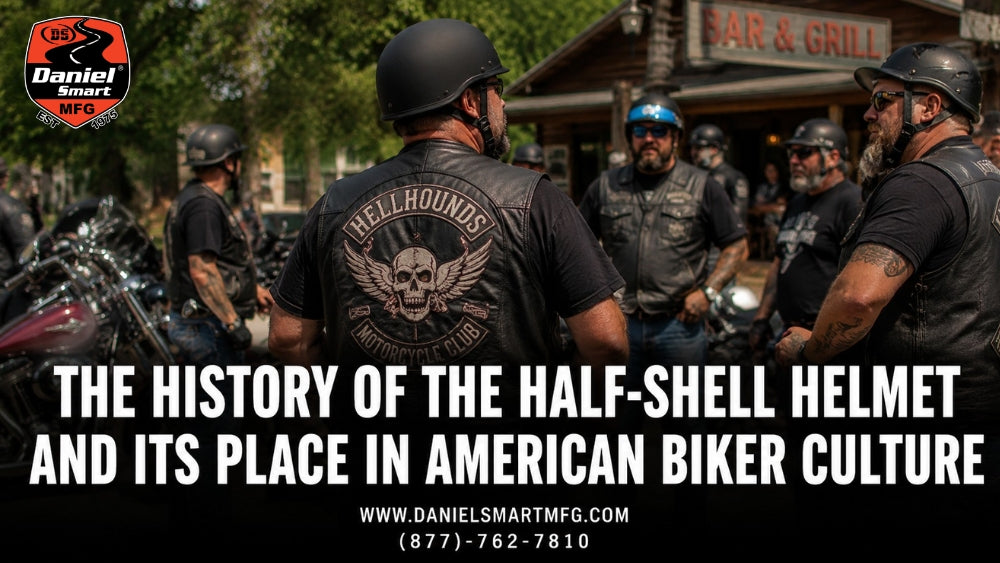
The story of the half-shell helmet goes back to war. It is small and lightweight, and it was used by bikers before helmets were a thing. In fact, it was there before the safety certifications were put in place.
However, if you are a biker of today’s time and need to understand which helmet is good and why the half-shell helmet is a preferred choice of many, you must know about the history and how this half-shell helmet fits into modern American culture.
Let us explore the details for better understanding.
How Did Early Motorcycle Gear Come into Existence?
Before the advent of modern motorcycle helmets, riders wore whatever would keep the wind out of their hair, literally. They didn’t care about protection. There was comfort and looks.
The first true safety helmet, with a rigid shell and impact-absorbing liner, appeared in 1953, when Charles F. Lombard, a researcher at the University of Southern California, patented a three-layer design: a hard outer shell of fiberglass, impact foam in the middle, and a padded liner inside. Roy Richter, founder of Bell Helmets, took that design and made the Bell 500, which became the basis for modern motorcycle helmet design.
But full-shell helmets came along, and many American riders resisted them. The predominant aesthetic in the 1950s and 60s was minimal - stripped bikes, stripped gear, maximum wind. The half-shell that fits like a glove.
Half-Shell Helmets and the Chopper Era: 1950s–1970s
The History of half-shell motorcycle helmets takes us back to World War II. This is why these helmets are also often known as German-style helmets. But not all half-shell helmets are German style.
As for the history, the half-shell helmet’s rise in American biker culture is inextricably linked to the rise of the chopper.
The bobber trend began in the United States after World War II, when returning servicemen removed all parts that were too big, too heavy, ugly, or not essential: fenders, turn indicators, even front brakes. They made the machines lighter to perform better. That same philosophy extended to gear.
One reason chopper motorcycles became so popular was the rise of the half-helmet. Choppers were custom-built bikes with the fewest features, often with a minimalistic design. A big full-face helmet on a stripped chopper looked wrong. The half shell looked good.
In the 1950’s and 1960’s, when motorcycle culture was booming, half-helmets became increasingly popular.
They were worn by riders who wanted a quieter look and feel while on their motorcycles. They also allowed for more ventilation than a full-face helmet, making them more comfortable on long rides, a vital consideration for the cross-country jaunts that defined the period.
You can see the visualization of these styles in movies like Easy Rider (1969) and Captain America.
Why half-shell helmets hold a certain value:
-
Well-suited with bobber and chopper visuals.
-
Lighter means less neck strain.
-
Better vision than any full-face helmet.
-
Great when you need situational awareness.
-
Lower price and easy access for all kinds of riders.
Besides, in the early 60s, safety measures weren’t widely implemented, so security authorities didn’t care what you were wearing.
Why Do Bikers Wear Half-Shell Helmets?
Cultural Reasons for half-shell helmets also matter the same as functional ones. In American culture, these helmets also stand for: independence, a relaxed approach to safety, and the idea that the experience of riding takes precedence over total protection.
No, it is not about being reckless, but rather about preserving the valuable style.
Are Half-Shell Helmets Safe for Motorcycle Riders?
When it comes to safety, being honest is way more important than just marketing hype.
Any helmet is generally better than wearing no helmet at all. However, DOT-certified helmets—including motorcycle half helmets—provide a verified minimum level of protection that non-certified helmets cannot guarantee.
But there are some real limitations on protection:
-
About 45% of impacts to helmets hit the chin and face area. A full-face helmet can take that hit for you, while a half-shell leaves those areas pretty exposed to serious injuries.
-
Generally speaking, full-face or full-coverage helmets provide a higher level of protection than open-face styles, with half-helmets being the least protective among the certified options.
-
Then there are those novelty "beanie" helmets. They might look a lot like DOT-approved half shells, but since they aren't certified, they offer absolutely no real protection in a crash, even if they’re popular at bike rallies.
The practical guidance for U.S. riders:
-
Make sure the DOT label is either molded into the helmet or permanently marked on it. If it’s just a sticker, it means you’re looking at a non-certified novelty helmet.
-
Half-shell and Micro DOT motorcycle helmets are great for low-speed city rides, cruising, and events, but they’re not really designed for high-speed highway driving.
-
If you’re using a half-shell helmet, be sure to wear the right eyewear or a face shield, because the open design leaves your eyes totally exposed to debris and bugs.
-
Don’t forget to check your state’s helmet laws, as they can really vary across the U.S. In fact, some places don’t have a universal requirement for riders over 21.
The Half-Shell Helmets Today
The Half-shell helmet biker culture is still around, and it doesn’t look like it’s going anywhere anytime soon. Events like Daytona Bike Week, Sturgis, and Laconia Motorcycle Week attract riders who specifically prefer this style for its classic vibe.
Originally, it came from surplus military gear, a Polo-style helmet for riders, and leather skullcaps, but it has turned into one of the most iconic symbols in American motorcycle culture. The half shell represents a certain type of rider: someone who relishes the wind, the open road, and the freedom to make their own choices, all while being smart enough to wear a certified helmet before hitting the road.
Conclusion
The evolution of American biker helmet styles shows how the half-shell helmet became a lasting symbol of freedom, individuality, and riding culture.
From its military-inspired origins to its role in the chopper and bobber eras, it continues to represent a classic aesthetic embraced by riders today.
While modern safety standards highlight the importance of certified protection, many riders still choose this style for comfort and tradition.
Brands like Daniel Smart MFG contribute to rider culture by offering a wide range of motorcycle gear that blends durability, comfort, and classic biker aesthetics. Ultimately, the half-shell helmet remains a cultural icon in American motorcycling history.
FAQs
1. Are half-shell helmets safe for highway riding?
Half-shell helmets offer basic protection but are less secure than full-face helmets. They are better suited for low-speed or city riding conditions.
2. Why are half-shell helmets popular in American biker culture?
They are tied to classic American biker-style helmets, symbolizing freedom, minimalism, and the chopper lifestyle of the 1950s and 60s.
3. Do modern brands still produce half-shell helmets?
Yes, many manufacturers still produce half-shell helmets today. They are designed for riders who value a classic look while meeting basic safety standards.