


When a mechanic looks at a bike, it's not like we do. It doesn’t judge it by its paint. He will check for the chain slack, pad thickness, and fluid color. So, next time you are shopping for your motorcycle jackets, judge in the same way. How to do it?
Let us help you through this motorcycle jacket buying guide. We will talk about how to read a motorcycle jacket in 10 minutes.
How Can I Tell if a Motorcycle Jacket Is Good Quality?
Cheap motorcycle jackets can look tempting, but without the right features, it is just aesthetics. Here is how to check motorcycle jacket quality.
-
Start With the Label
This is the fastest way to check a motorbike jacket's quality, and most buyers don’t do it.
-
Certification: Look for EN 17092 with a class: AAA (highest abrasion resistance), AA, or A. Class B only covers abrasion; Class C only covers armor. In the U.S., there is no federal standard for jackets (DOT is for helmets), so certification is voluntary. A tag that says "CE approved" without a standard number means little.
-
Armor rating: Shoulder and elbow armor tested to EN 1621-1, back protectors to EN 1621-2. Lab averages are under 9 kN transmitted force for Level 2 compared to 18 kN for Level 1. A pad is a back pocket foam sheet, not a certified back protector.
-
Material: Full-grain is the strongest hide. Genuine leather is a marketing term, usually a lower grade. For fabrics, check the denier and weight, like 500D nylon or above.
-
Seams: Turn It Inside Out
Seams are one of the first places a jacket reveals its true construction quality.
Inspect the inside carefully—strong materials mean little if the stitching and reinforcement are weak.
-
Stitching should be neat and tight, with no missed stitches or loose ends.
-
Crash loads tend to focus on the shoulders, sleeves, and side seams, so double- or triple-stitch these areas.
-
Bartacks (dense reinforcing stitches) should be found on zipper ends and pocket corners.
-
Nylon or polyester thread, bonded. Cotton thread decays and wears out.
-
Lightly tug on each seam. If the thread stretches, or you can see light through the gap, walk away.
-
Zippers and Vents
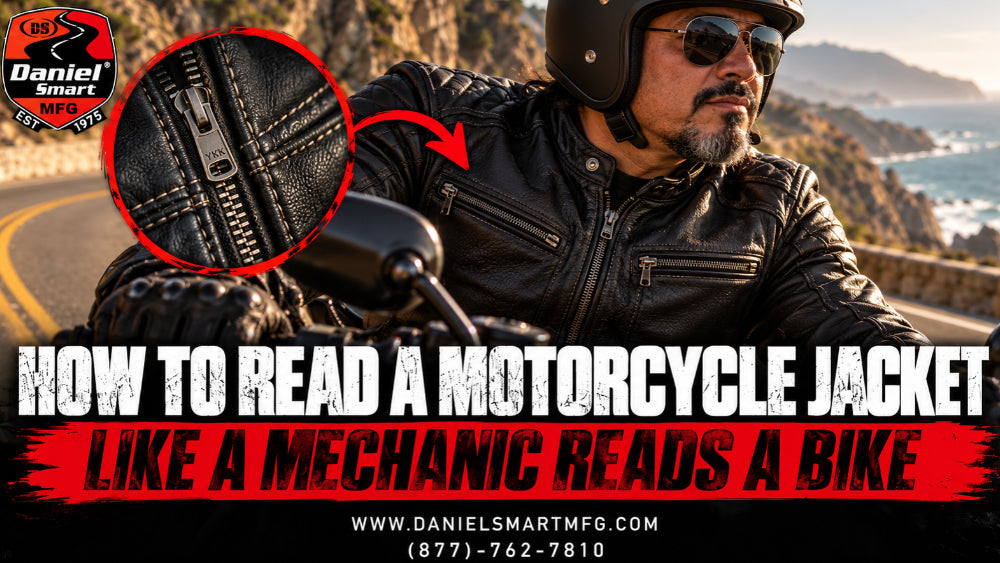
Look for a YKK stamp or some other named maker on the pull and a heavy metal or coil zipper with a storm flap behind it. Gloved hand: Work the main zip 10 times. If it catches on the flap, it will break at a fuel stop, not in the store. Also look for a connecting zipper, which links the jacket to the trousers and prevents the jacket from riding up in a slide.
Mesh behind the zipper is needed for vents. Otherwise, they just drill holes. Vents are cooling while you’re moving. They don’t do much at red lights.
-
Liners
A good liner should improve comfort and weather protection without compromising the jacket’s fit or movement. Check how securely the liner is attached and inspect the inside for signs of proper waterproof construction.
-
Secure a removable thermal liner at multiple points, not just a single collar loop.
-
For waterproofing to be effective, there must be heat-sealed seam tape on the inside. If that’s missing, water can seep in through the stitch holes.
-
Make sure the membrane liner isn’t loose and flapping around. It should lie flat to avoid bunching.
-
Assess Stretch Panels and Fit
A jacket that limits your movement is likely to make riders want to take it off, which totally defeats the purpose of a biker jacket in the first place. On the other hand, stretch panels can boost comfort while still keeping safety in mind.
-
Panel Placement: Look for accordion-style or elasticated panels under the arms, across the shoulders, and along the spine. These features let you lean forward without feeling restricted.
-
Material Match: The stretch fabric should be just as tough against abrasions as the main shell. Be cautious of thin mesh panels in high-impact areas; they can be a real risk.
-
Motorcycle Jacket Fitting Test: When you sit on a bike (or mimic the riding position), the jacket should:
-
When you lean forward, ensure that your belt line overlaps by at least 3 inches.
-
You want to be able to extend your arms completely without any riding up.
-
It should feel snug but not constricting, particularly across your chest and shoulders.
What Should I Look for When Buying a Motorcycle Jacket?
Prioritize verified safety ratings, construction quality, and real-world fit. Here are some key questions to ask:
-
Is it certified with EN 17092 and CE armor ratings?
-
Are the seams reinforced at the stress points?
-
Do the zippers and closures feel robust?
-
Does the armor stay put when you’re on the move?
-
And importantly, does it fit well when you’re in a riding position, not just when you’re standing?
Avoid These Common Jacket Buying Mistakes
Even seasoned riders can miss important details. Avoid these common traps:
-
Focusing on Style Instead of Certification: A stylish jacket that lacks EN 17092 or CE armor is just a fashion statement, not real protective gear.
-
Neglecting Fit for Riding: Just because it fits well when standing doesn’t mean it’s right for riding. Always try it out in a riding position.
-
Thinking All Leather Is the Same: Not every leather motorcycle jacket is made from full-grain or cowhide. Some are made from split leather or synthetic mixes that don’t hold up well against abrasion.
-
Forgetting the Back Protector: Many jackets leave out this essential component. If it’s not included, make sure to budget for a CE Level 2 back insert.
-
Choosing Based on Price Alone: You might find motorcycle jackets under $200 with CE Level 2 armor, but they often skimp on shell quality, stitching, or liner durability.
Conclusion
Choosing a motorcycle jacket should be about more than looks or price. A quality jacket combines certified protection, durable construction, secure armor, dependable closures, and a comfortable riding fit. Take ten minutes to inspect labels, seams, zippers, liners, stretch panels, and armor before buying.
Also consider practical details such as motorcycle jacket noise, especially if you ride long distances. Daniel Smart MFG focuses on motorcycle gear designed for real riders, giving you another option to consider when comparing equipment.
The right jacket should protect you without restricting movement or comfort on the road, in changing weather conditions.
FAQs
How should I test a motorcycle jacket before buying?
Sit in your riding position, move your arms, and check that the jacket stays secure. Confirm sleeves, cuffs, and waist remain comfortably positioned.
How can I tell if motorcycle jacket armor is positioned correctly?
Motorcycle jacket armor drift can occur when protectors move away from your joints. Check that armor stays centered while seated and moving.
How should a motorcycle jacket fit when riding?
A motorcycle jacket should fit snugly without restricting movement, with armor staying correctly positioned while seated in your riding position.