



You cannot find a vendor saying that the helmet they sell is only good for 2 years, so you should discard it and get a new one. One reason is because helmets don’t really have an expiry date. But yes, they do have a shelf life. If you think your helmet is good for life until it is in a crash or accident, you are making a mistake. This helmet can cost them protection.
So, how long do helmets last? It depends. Let’s see what factors.
How Long Does a Motorcycle Helmet Last?
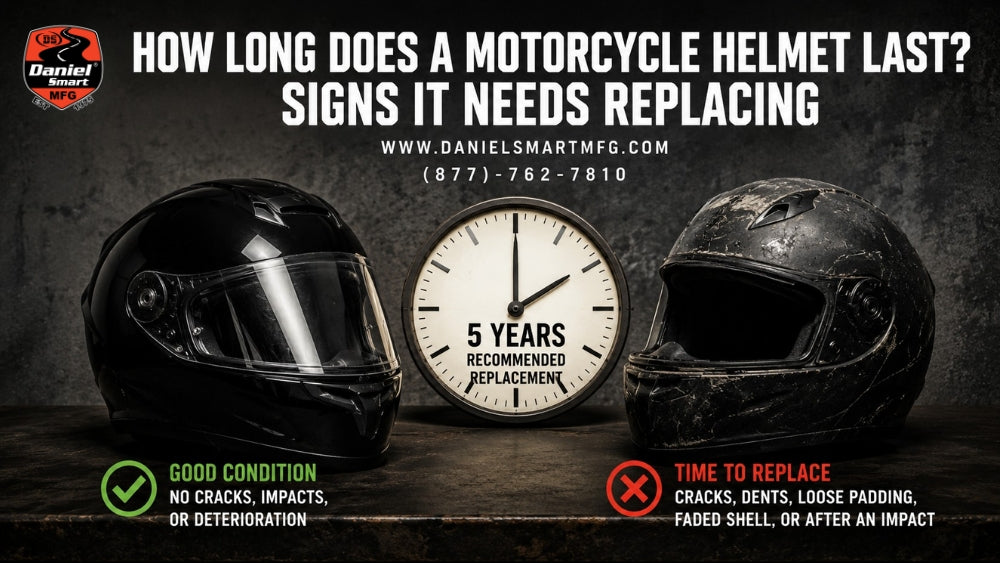
If you ask reputable manufacturers directly, they might tell you that a helmet can easily last 5 years from the date of manufacture, but you must change it.
Some also recommend replacing within 3 years. Why is there even a timeline?
This is because the materials inside a helmet will break down over time, even if the helmet looks fine on the outside.
The impact-energy-absorbing expanded polystyrene (EPS) foam liner density degrades with time. Glues, resins, and fabric lining also break down due to sweat, body oils, UV, and temperature changes. A helmet kept in a hot garage or strapped to the back of a bike in the sun will age faster than one kept indoors at room temperature.
So, when people ask how long a motorcycle helmet lasts, the honest answer is: it is contingent upon the helmet, how it’s used and how it’s stored, but five years is the outer limit for every DOT-certified motorcycle helmet that’s on the market.
Where to Find the Manufacture Date
This is the most important question to keep in mind when buying a helmet. You can often find it somewhere inside - maybe even sewn into the liner or mentioned on a label.
Many of the ECE-rated helmets use the Micro DOT motorcycle helmet system. Therefore, you will find a sticker covered in tiny dots. Each sticker has a unique code that traces the helmet back to its production batch and date. This system is designed to combat the production of counterfeit helmets in the market.
If you bought a used helmet and don’t know the date, you can check the manufacturer’s website. If they mention it, it will be easy to find through a model number. Do not just guess; ask.
Factors That Shorten a Helmet's Lifespan
5 years is not a guaranteed timeline for motorcycle half helmets or any other kind. Things that might speed up the damage are:
-
Frequency of Use: A rider who rides every day puts a lot more strain on their helmet. On the other hand, someone who rides occasionally may not face much damage to the helmet.
-
Climate: Heat, humidity, and UV rays can crack the foam inside or damage adhesives. In cool weather, it may not be that damaging.
-
Storage Habits: Do not carelessly toss the helmet on the ground, leave it in direct sunlight, or store it in a hot trunk; it tends to age more rapidly.
-
Cleaning Products: Using harsh chemicals to clean them. As it can wear down the shell and liver with time.
-
Sweat and Oils: Sweat and constant contact with skin oils can be damaging. It breaks down lines faster than anything else.
Signs That a Motorcycle Helmet Needs Replacing
When it comes to knowing when to replace a motorcycle helmet, age isn’t the only factor to consider. Keep an eye out for these physical and functional signs:
-
Look for cracks or dents in the shell, even tiny ones; these can really compromise the helmet's strength.
-
Check the foam liner; if it feels loose or crushed, it’s not going to absorb impacts like it should anymore.
-
Notice any fading or peeling on the interior padding? That’s a clear sign that the materials have seen better days.
-
If the fit feels loose or wobbly compared to when you first got it, that’s a red flag: foam compresses over time.
-
Don’t ignore frayed straps, broken buckles, or a chin strap that just won’t stay snug.
-
Strong odors that just won’t wash out? That often means the liner has soaked up moisture and bacteria beyond saving.
-
And remember, if you’ve been in a crash or dropped your helmet, it’s time for a replacement, even if there’s no visible damage.
EPS foam is designed to compress and won’t bounce back to its original shape. So, if your helmet shows any of these signs, it’s clear: it’s time to replace it; don’t wait!
After a Crash: Always Replace
It's worth saying again because this mistake can lead to serious injuries for riders. If a helmet has taken a hit, especially an open-face helmet, even just a minor fall from a garage shelf- it’s probably lost some or all of its ability to absorb energy. The outer shell might seem fine, but the foam inside could be compromised. Unfortunately, you can't see this kind of damage just by looking at it.
If your helmet has been involved in an accident, it's time to replace it. This is a must-follow rule in any genuine motorcycle helmet replacement guide.
ECE vs. DOT Certification: Which One Lasts Longer?
In the U.S., the legal minimum for motorcycle helmets is set by DOT-certified motorcycle helmets, which rely on manufacturers to self-certify and undergo occasional testing by the Department of Transportation.
On the other hand, the ECE 22.05 and the newer 22.06 standards, popular in Europe, require more thorough third-party testing before a helmet can hit the shelves.
As a result, many riders in the U.S. are now on the lookout for modular helmets that boast both DOT and ECE certifications for that extra peace of mind. However, it’s important to note that neither certification affects how long the materials last, so a five-year-old ECE helmet needs replacing just as much as a five-year-old DOT helmet.
Conclusion
Understanding how long a motorcycle helmet lasts depends on several factors, including age, usage, storage, and overall condition. While most helmets should be replaced around the five-year mark, visible damage, poor fit, or any crash impact means replacement should happen sooner.
Choosing the right helmet from trusted brands and exploring different motorcycle helmet styles can help riders find the protection and comfort they need.
Daniel Smart MFG provides quality motorcycle gear and accessories designed to support riders with reliable products. Regular helmet inspections and timely replacement are essential steps for maintaining safety on every ride.
FAQs
-
How long does a motorcycle helmet last before needing replacement?
A motorcycle helmet generally lasts around five years from the manufacturing date. However, damage, crashes, or improper storage can shorten its useful lifespan.
-
Can a motorcycle helmet expire even if it looks new?
Yes, helmets can age internally even without visible damage. Materials like EPS foam and adhesives gradually lose their protective performance over time.
-
Should I replace my helmet after a minor drop or accident?
Yes, replacing a helmet after impact is recommended because internal damage may not be visible. Compromised foam may fail to provide proper protection.