


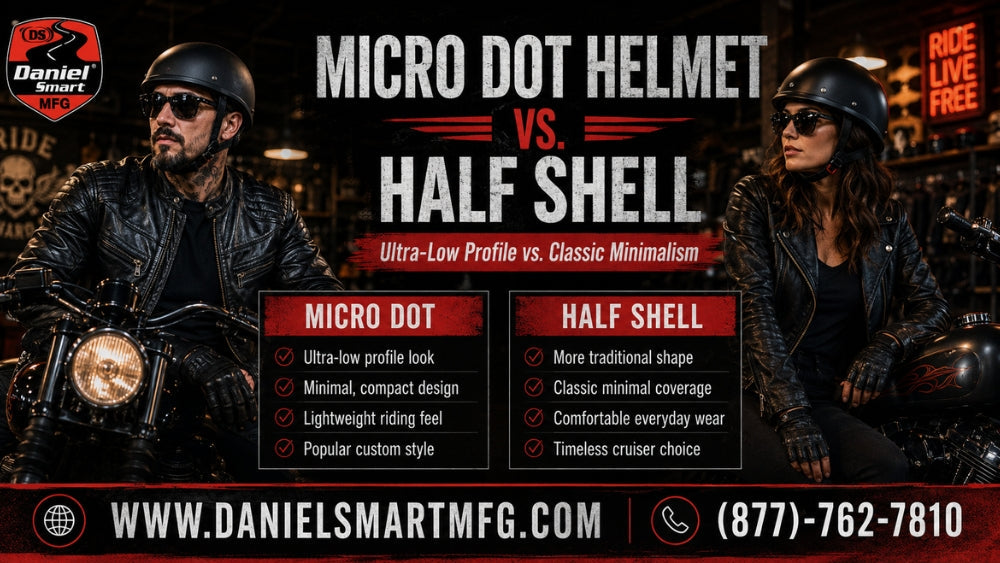
The minimalism trend wasn’t just about homes, styling, and consumption. It has affected bikers' accessories too. So, when riders are looking for low-profile helmets, they often choose between Micro DOT helmets and half shells.
Previously, we explored the best helmet for cruiser riders and compared the key differences between open-face and full-face helmets, looking at how coverage, comfort, and riding preferences influence the right choice.
Today, we’re taking a closer look at another popular comparison for riders who prefer a minimalist look: Micro DOT helmet vs. half shell.
If riders don’t understand what each means, they are often stuck with an expensive choice. Now, before you go shopping, read this to understand the difference between the two.
What "Micro DOT Helmet" Actually Means
A micro DOT helmet is a low-profile, thin-shell helmet that meets Federal Motor Vehicle Safety Standard 218 (FMVSS 218), the federal regulation that has applied to every motorcycle helmet sold for road use in the U.S. since 1974.
It’s enforced by the National Highway Traffic Safety Administration (NHTSA), but there’s a catch that riders don’t always know:
NHTSA does not test helmets before they are on the shelves. DOT certification is self-certification. A manufacturer manufactures the helmet, tests it in-house, and applies the DOT label. NHTSA's job is to do random compliance testing after the fact. Helmets that fail are recalled and fined.
This is important as the term “micro DOT” is used in two ways in the marketplace:
-
Genuine low-profile DOT helmets. Major brands offer real thin-shell designs that still pass FMVSS 218 impact and penetration tests, even at a smaller size.
-
Novelty "beanie" helmets marketed as DOT. German helmets/army-style or skullcap-style shells with a sticker slapped on that never saw a compliance test.
NHTSA has identified ultra-thin, low-profile beanie helmets as one of the styles most commonly associated with counterfeit DOT labels. A 2007 NHTSA study tested seven popular novelty helmets and found that they provided virtually no impact-absorbing capability.
Computer simulations show anyone wearing one is 100 percent likely to suffer a skull fracture or brain injury in a crash. “That is no small safety gap.” That’s the difference between a helmet working and a helmet not working.
Where the Half Shell Fits
A half-shell helmet covers the top and sides of your skull, stopping just above the ears. It doesn’t include a chin bar or a face shield mount, and it has a shallow shell depth. This helmet is the ultimate minimalist choice, the classic "brain bucket" style that’s been a go-to for cruiser enthusiasts for years.
Unlike the micro DOT category, half shells usually avoid the misleading labeling issues, primarily because riders know what they’re getting: less coverage in return for enhanced airflow, visibility, and that low-profile, snug fit.
The trade-off is something you can’t ignore. Half-shell helmets offer zero protection for your jaw or face. In comparison, a 3/4 shell motorcycle helmet includes a partial face bar and provides more coverage along the sides.
Then there are modular helmets, which flip up at the chin bar, offering full-face protection while still providing the convenience of a half-shell when you’re parked. When riders are deciding between an open face and a full face helmet, they’re really weighing how much coverage they’re willing to trade off for comfort and visibility, and the half shell is definitely on the far end of that trade-off.
How to Identify a Real Micro DOT Helmet from a Fake One
Do not just buy something because it is DOT labeled; ensure you check the following:
-
Outside Label: A true DOT sticker is affixed to the lower back of the shell, and since the 2013 update, it includes the word "CERTIFIED" along with "FMVSS No. 218," rather than just the "DOT" letters.
-
Interior Label: Legitimate helmets feature a second label within the liner that details the size, materials, and manufacture date. If you can’t find an interior label, that’s definitely something to be cautious about.
-
Weight and Shell Thickness: A real DOT-certified helmet generally weighs no less than three pounds and comes with an EPS foam liner that's over half an inch thick. If you encounter a helmet that feels as light as a bicycle helmet, it’s probably not passing federal impact standards.
-
Manufacturer Track Record: The NHTSA provides a list of helmet brands that have failed compliance tests. Spending a quick five minutes to look this up before buying from a brand you’re not familiar with is definitely worth it.
Are micro DOT helmets safe? The authentic ones have gone through the same federal testing as a full-face helmet, just in a smaller package.
Unfortunately, fake versions that share the same name don’t meet those standards, and no amount of design tweaks can fix that.
Micro DOT Helmet vs. Half Shell: How to Choose?
Avoid any "micro helmet" without a verifiable DOT label in the 2013+ format. You may find non-certified motorcycle helmets, like those German-style beanie shells that started the micro DOT craze, for sale, but wearing them on public roads is illegal in states with helmet laws.
The NHTSA's crash simulations show that if you're in a crash while wearing one, your chances of a serious head injury are practically guaranteed.
So, when searching for the best low-profile DOT motorcycle helmet, focus on one that you can verify against the NHTSA's compliance list, rather than just picking the one that appears the smallest.
Conclusion
Choosing between motorcycle helmets requires more than comparing appearance or profile. When considering a micro DOT helmet vs. a half helmet, riders should evaluate certification, coverage, fit, and intended use rather than focusing solely on minimalism.
German Helmets and novelty-style options may offer a classic look, but riders should always verify safety certification before purchasing.
For riders exploring different styles and motorcycle gear, Daniel Smart MFG offers a range of helmet options and rider-focused products. Ultimately, the right helmet should balance personal style with verified protection and comfortable, responsible riding.
FAQs
1. Are low-profile motorcycle helmets safe for everyday riding?
Low-profile helmets can provide protection when properly certified and fitted. However, riders should understand their coverage limitations before choosing one for regular riding.
2. How do I know if a motorcycle helmet is genuinely DOT certified?
Check the certification markings, manufacturer information, and interior labeling before purchasing. Be cautious of unusually thin helmets or sellers making unsupported safety claims.
3. What should I consider when choosing between different minimalist motorcycle helmets?
Consider certification, coverage, fit, shell construction, ventilation, and riding conditions. A helmet should provide verified protection while matching your comfort and style preferences.