


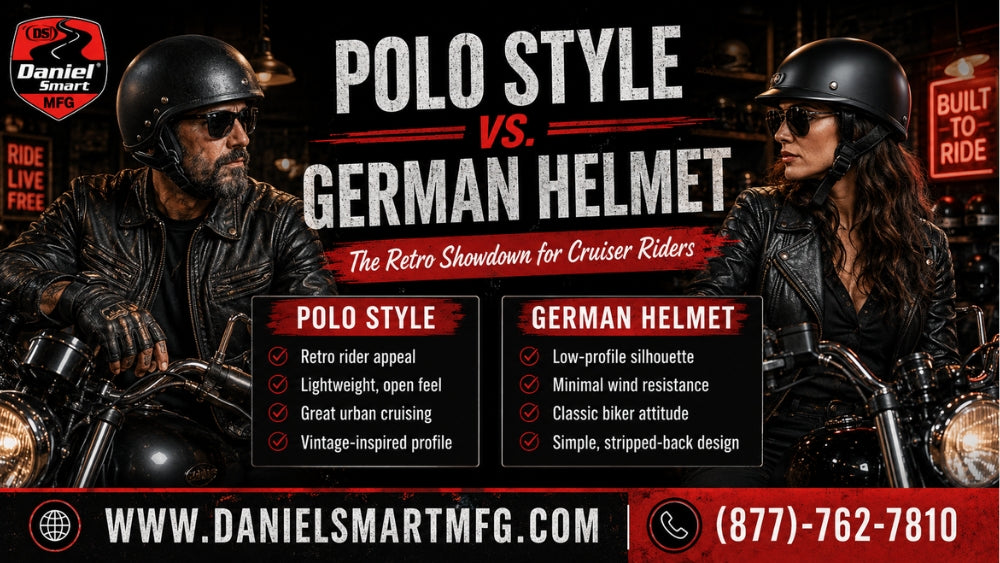
Notice the cruiser accessories, and you will see many polo-style and German helmets. Most often, they might even look the same. But as a biker, you know that they are different. However, it can be hard to spot the real differences.
Previously, we compared Micro DOT helmets vs. half helmets and explored some of the best low-profile DOT motorcycle helmets for riders looking for a compact, minimalist design. Today, we’re taking a closer look at another popular retro comparison: Polo Style vs. German Helmet.
So, what's the difference between a polo-style helmet and a German helmet? How do cruisers prefer one over the other? We'll answer all your questions.
Origin & Overview of Polo Helmet and German Helmet:
The German-style helmet is shaped like German military helmets from the World War II era. The look came home with American GIs returning from Europe, and it made its way into early motorcycle clubs that formed around leather vests and stripped-down bikes in the late ’40s and ’50s.
The flared sides and rounded crown would become permanent features of chopper and Harley culture, and the style never left.
The Polo style motorcycle helmet has a simpler crown, no flared sides, and a shorter or no brim. It is named for its resemblance to an equestrian polo cap: smooth, snug-fitting, with a rounded dome and a slight peak. It looks like a cleaner, more minimal cousin of the Germanic shape.
The difference between the two is in silhouette, side-by-side:
-
German Style: Flared side panels, more coverage at temples, more angular look.
-
Polo-style: Rounded, continuous shell, shorter sides, more compact overall footprint.
Neither provides any face or chin protection. Both are half helmets, so they cover the top and back of the skull and stop above the ears.
Polo Style vs. German Helmet: Retro motorcycle helmets comparison
Before you get your best helmet for cruiser riders, know that the difference between a polo helmet and a German helmet comes down to the following aspects:
Fit & Comfort
For cruiser and chopper riders, the attraction of both styles is the same: less weight on the neck, more airflow, and a low profile that doesn’t fight the bike’s lines. A full-face or modular helmet can feel heavy on a bike with a laid-back riding position. Half helmets sit close and light.
Where they differ:
-
German-style helmets with flared sides tend to sit a little higher off the head, so they look a little bulkier from the front.
-
Polo-style helmets are a type of low-profile beanie helmet, and some are marketed as Micro DOT helmets. They fit closer to the skull and are designed to minimize the “mushroom head” look associated with bulkier half helmets. Their compact profile makes them particularly appealing to cruiser riders who prefer a lightweight, minimalist appearance.
-
Goggles and a more pronounced retro or military look pair nicely with the German-style shells.
-
Polo shells have a cleaner, almost old-school racer look and work well with a simple bandana or skull cap underneath.
Neither scores well overall for comfort. It ultimately depends on the head shape and how low-profile you want the end result to be.
Weather, Wind, and Everyday Ride Comfort
The major retro motorcycle helmet comparison is that a rider doesn't always want full coverage, especially on a cruiser made for low-speed touring. That's why half-shell helmets exist. Both retro styles sacrifice face protection for airflow, and that trade-off plays out differently depending on how you ride.
-
The open face and light shell weight of either style help reduce heat build-up that a full-face or modular helmet can trap in hot-weather states like Texas, Arizona, or Florida.
-
German-style helmets have flared sides that sit a bit farther from the ears, allowing more airflow but also more wind noise at highway speeds.
-
Polo-style helmets fit closer to the skull, reducing wind noise a little but holding a little more heat against the scalp on long rides.
-
Neither style is at home in rain or cold. Riders who ride year-round might use a half helmet in summer and switch to a modular helmet for wet or cold-weather rides.
Fit is more critical here than with a full-face helmet because there is no chin bar to keep the shell steady. A loose half helmet will shift at speed, so it’s worth trying one on or checking a brand’s size chart before ordering online.
Ways of Styling a Retro Look on a Cruiser
Riders often choose these two helmet styles over modern designs because of how well they fit the aesthetic of a cruiser or chopper. They don’t try to look sleek or technical; instead, they give off a nostalgic vibe reminiscent of bikes from long ago.
The German-style helmet leans into its military background with flared sides and a rounded dome, making it a natural fit with goggles, a leather vest, and a minimalist bobber build. It embodies classic Harley culture and vintage motorcycle clubs. In contrast, the polo-style helmet has a more polished look that’s less about military influence.
Its smooth, low crown works beautifully with a simple bandana or a cafe-style jacket, perfect for a vintage build where you want the helmet to blend in rather than steal the spotlight. Both styles are available in gloss black, metallic flake, and matte finishes, and choosing a bright or metallic option can help you stand out to other drivers in traffic.
Price and What You're Actually Paying For
Both styles are pretty budget-friendly for motorcycle helmets, especially compared with full-face or modular options. This makes them a great choice for a quick add-on purchase or as a second helmet for those seasonal rides.
You can usually find basic versions for much less than what you'd pay for a mid-range modular helmet.
If you're willing to spend a bit more, you can snag features like Bluetooth intercoms, sun shields, or even premium materials like fiberglass instead of the usual ABS plastic.
The price difference between the two styles is generally minimal. What really affects the cost is the shell material and any extra features, not whether you choose the German silhouette or the polo silhouette.
Which One to Buy - German or Polo-Style?
If you're looking to capture that classic chopper aesthetic with flared sides and a bit of heritage, a German-style helmet is your best option. However, if you prefer a more compact fit with a cleaner look, then a polo-style helmet might be the right choice for you.
Both styles are great for cruising, offering a balance of face protection, airflow, and a lightweight design, while also letting you keep that retro charm that full-face or modular helmets just can't provide.
Ultimately, your decision will come down to your head shape, the climate you ride in, and which silhouette aligns with your overall style.
If you have the chance, try both on before you decide; the comfort difference is something you’ll definitely want to experience firsthand.
Conclusion
Choosing between a polo-style and German helmet ultimately comes down to your riding style, preferred fit, and the retro look you want to achieve.
Both offer the classic appeal cruiser riders love, while options such as the best vintage helmets for cruiser motorcycles, 3/4 shell motorcycle helmets, and other retro designs provide different levels of coverage and comfort.
Riders should always check certification requirements before buying, as non-certified motorcycle helmets may not meet local safety standards.
For riders exploring classic motorcycle gear and accessories, Daniel Smart MFG offers a range of vintage-inspired options designed to complement cruiser and chopper builds while keeping style at the forefront.
FAQs
1. Is a polo-style helmet better than a German-style helmet for cruiser riding?
Neither is universally better; the choice depends on fit, comfort, riding conditions, and personal style. Both offer a lightweight, retro appearance suited to cruiser and chopper riders.
2. Do polo-style and German-style helmets provide the same protection?
Protection depends on the helmet’s certification, construction, and coverage, not its style. Both are commonly half helmets, offering less coverage than 3/4 or full-face helmets.
3. How do I choose the right retro helmet for my cruiser?
Consider certification, fit, coverage, riding conditions, and the overall look you prefer. Polo styles offer a cleaner profile, while German styles deliver a distinctive classic, military-inspired appearance.