

The darker the night, the higher the risk of riding. You will face reduced contrast, headlight glare, and drivers who just don’t see you on the road. Now, you think you have the right jacket for such adventures. Think again…Can it protect you in a crash? Can it improve your visibility so the other drivers can see you clearly?
Don’t worry, we have a small motorcycle jacket checklist for riders.
Previously, we explored whether heavy motorcycle jackets are really safer and shared a 10-minute motorcycle jacket fitting test to help riders identify fit and comfort problems before heading out. Today, we will take that one step further and present a practical motorcycle jacket checklist for riders who ride at night.
If you check the boxes, you will be ready for the real world out there at night.
Why Night Riding Demands a Different Jacket
A biker jacket protects the rider from abrasion, impact, and the elements. At night, it has a third job: being seen from all sides. Many “cheap motorcycle jackets” skip this in favor of tiny reflective logos that disappear in real-world light.
For a night-riding motorcycle jacket, choose one with continuous reflective coverage, stable armor, and a fit that stays in place when you’re on the bars.
How can a Motorcycle Jacket Improve Visibility at Night?
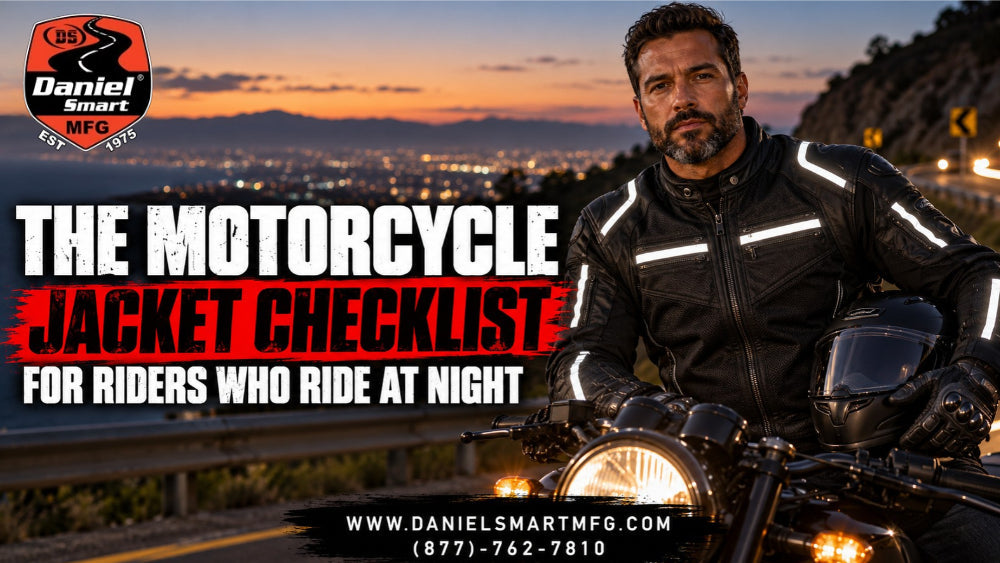
Motorcycle jacket visibility features focus on retroreflective material that reflects headlight beams back to the driver. It’s more about placement than logos:
-
Large panels on the back and shoulders are visible to drivers behind you.
-
Moving material, signaling, and steering sleeves and forearms. Motion catches the eye.
-
Fluorescent colors work well at dusk but depend on daylight, so don't rely on them in total darkness.
A single small reflective logo on a black jacket is not a night jacket. If yours is dark, add a reflective vest over it. That takes minutes and works on any jacket.
What Should I Look for in a Motorcycle Jacket for Night Riding?
Like any other jacket, motorcycle jackets for night riding need to protect you, remain visible under headlights, and keep you warm when the temperature drops.
When buying, check these 5 things.
-
A Verifiable Garment Rating
The majority of customers use Europe's EN 17092 as a guideline because the US lacks a regulatory standard for riding clothing (federal regulations cover helmets). The highest class, AAA, is followed by C, with AA being typical for touring and A for urban riding.
Two pitfalls: class and armor level are unique. So a jacket can be Class AAA with Level 1 armor, and "CE armor" often refers only to the inserts, while the shell has no garment certification. Check the label for a class letter.
-
A Fit that Keeps Armor on the Joint
Test it in your riding position while wearing your night layers. When your arms are bent, elbow armor should fit over them. Raise your arms, shrug, and have someone tug on a sleeve. Armor that slips well off the joint is liable to drift in a slide. I prefer waist, bicep, and forearm adjustments.
-
Retroreflective Panels, not Just Bright Color
Retroreflective material reflects headlights back to the driver. Fluorescent cloth performs poorly in complete darkness. Look for broad back and shoulder panels, as well as sleeve trim. Shine a phone flashlight at it from a few feet away: genuine retroreflective trim illuminates, but tiny logos barely register. If your favorite jacket is dark, wear it with a reflective vest.
The evidence is generic and not night-specific. According to an Auckland study, riders who wore any reflective or fluorescent apparel had a 37% lower chance of crash-related injury, even though most injury crashes occurred during the day.
-
Warmth and Wind Control
Nights are cooler than the afternoon you left in. Closeable vents are preferred (mesh-only jackets often feel cold after sunset), along with a removable thermal liner and a snug collar that seals against your helmet without chafing.
Leather Motorcycle Jacket vs Textile for Night Use
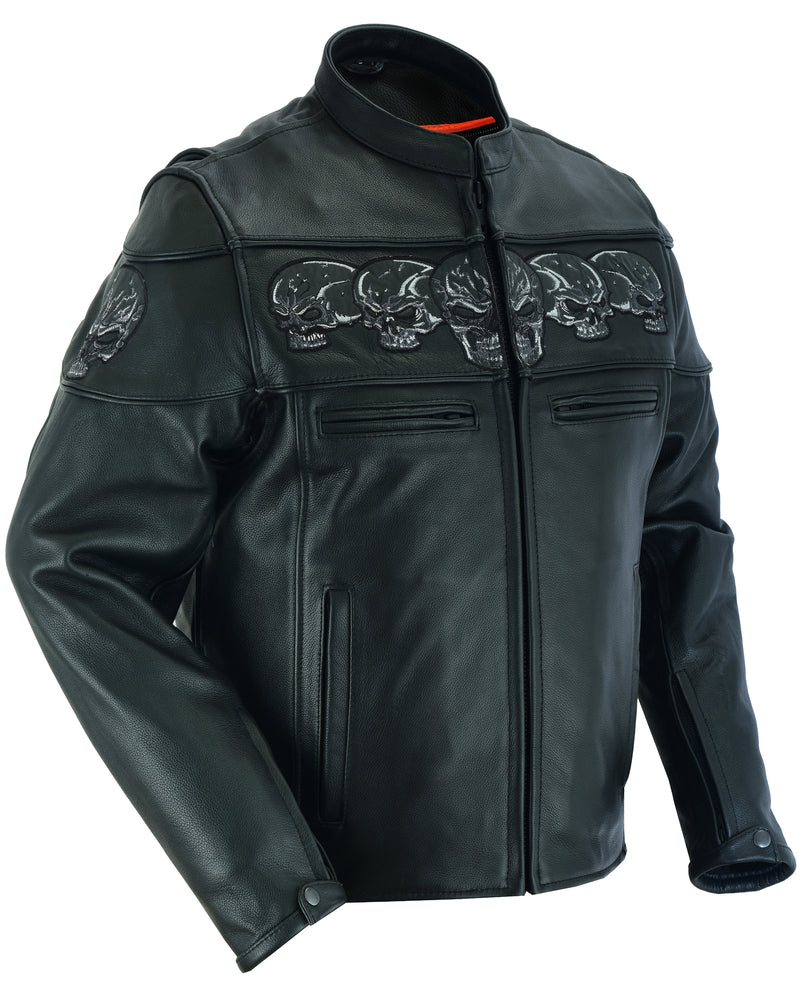
A leather motorcycle jacket is a fantastic choice for its durability and timeless style, but keep in mind that many leather options don’t come with built-in reflectivity.
If leather is your go-to:
-
Look for one with sewn-in reflective piping or panels instead of stick-on options. - Make sure it has pockets for CE-rated armor and a slot for a back protector.
-
Check for ventilation zips; leather can get pretty toasty during those hot US summers.
-
On the other hand, textile jackets often take the lead for night riders because they typically come with reflective tape, waterproof membranes, and adjustable vents that are easier to manage.
So, if you’re after a motorcycle jacket checklist for riders that prioritizes visibility and comfort in all weather, high-quality textile jackets are usually the way to go for your daily rides.
Your Motorcycle Jacket Checklist for Riders After Dark
If you’re on the hunt for a motorcycle jacket, here’s a quick guide to help you out:
-
Start by finding a garment class label, A, AA, or AAA, rather than just relying on "CE armor."
-
Check that the armor fits snugly on your shoulders and elbows when you’re in your riding position.
-
Look for large retroreflective panels on the back and arms to enhance your visibility.
-
Make sure the jacket has adjusters at the waist and arms for a tailored fit.
-
Don’t forget about ventilation; a good jacket should have a plan for airflow and a liner for those cooler nights.
-
Make sure it has a snug collar and a secure zippered pocket for your belongings.
Conclusion
Night riding demands more from your gear than a simple protective layer. A good night riding motorcycle jacket should combine certified protection, secure armor placement, retroreflective visibility, weather control, and a comfortable fit.
As part of your motorcycle jacket buying guide, consider how the jacket performs in headlights, cooler temperatures, and reduced visibility. The purpose of a biker jacket goes beyond abrasion protection; it should help you stay comfortable and visible throughout your journey.
And when comparing motorcycle jackets for short rides vs. long rides, choose features that match your distance and conditions. Daniel Smart MFG offers motorcycle gear designed around practical rider needs.
FAQs
1. Is reflective material better than bright colors for night riding?
Reflective material is generally more effective in darkness because it returns approaching headlights toward drivers. Bright colors work better in daylight and dusk.
2. Should I wear additional layers under a motorcycle jacket at night?
Yes, layering can help manage changing temperatures during nighttime rides. Choose comfortable layers that do not restrict movement or interfere with proper armor positioning.
3. How can I check whether my jacket provides enough visibility?
Use a flashlight in a dim environment to check reflective areas from several angles. Look for broad reflective panels across your back, shoulders, and sleeves.