



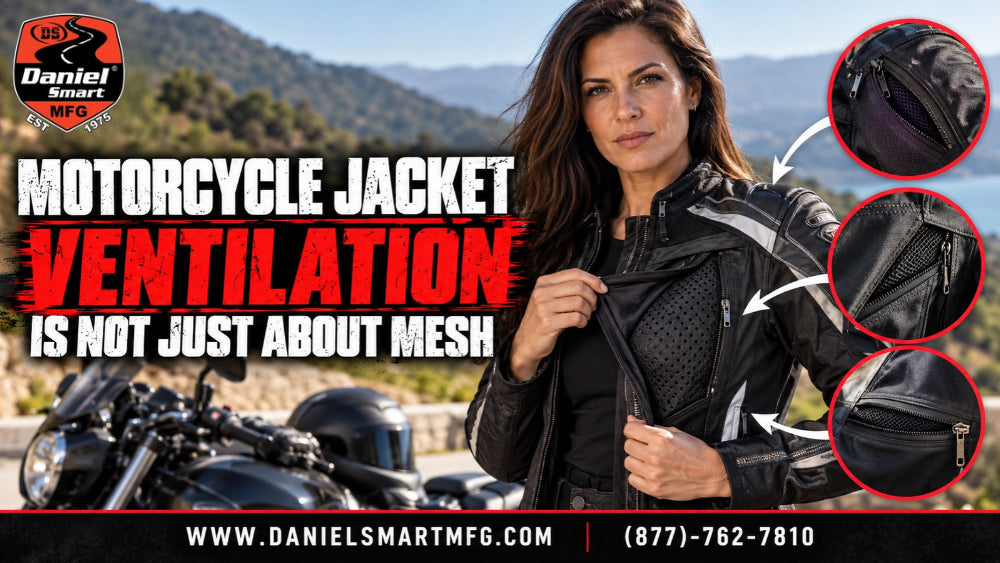
A mesh panel can look cool while you are standing beside your beastly bike. But a real rider knows that real motorcycle jacket ventilation is about function, and it depends on what happens when you're moving at highway speeds.
Previously, we shared a motorcycle jacket buying guide and highlighted the importance of choosing the right motorcycle jackets for night riding. Today, we're shifting gears to another essential factor every rider should consider: motorcycle jacket ventilation.
You have a backpack on, a liner underneath, and you're navigating rush-hour traffic. So, how effectively does that mesh panel actually work? As you can see, mesh is only one part of the system. What makes up a complete ventilation system?
The controlled airflow path. To help you understand it, let’s talk about how the ventilation system works.
Why is Ventilation Important for Motorcycle Jackets?
The best warm-weather jackets have a controlled airflow route: air enters through intake vents, moves across the chest and body, and exits through back exhaust vents.
If any part of that path is blocked by a waterproof lining, a bad fit, a backpack, or even the rider's posture, the jacket may still have visible mesh but provide far less cooling than expected.
For riders in the United States, humid summers, desert heat, stop-and-go traffic, and long interstate miles can make staying cool a challenge. Understanding how a jacket’s airflow system works can help riders make more informed choices.
It also helps them avoid one of the most common jacket-buying mistakes: judging ventilation by how much mesh a jacket has rather than how effectively it moves air.
How Does Motorcycle Jacket Ventilation Work?
Motorcycle jacket ventilation works by utilizing pressure differences caused by riding. As the motorcycle travels forward, air pressure builds up in front of the rider's torso. Intake vents in high-pressure zones let fresh air in. Lower-pressure zones on the jacket's back and sides help remove warm, damp air through exhaust vents.
A functional jacket ventilation system includes:
-
Front chest intakes or mesh panels that catch moving air.
-
Vents on the sleeves or forearms that allow air to enter the arms
-
Side vents direct airflow across the torso.
-
Rear exhaust vents, frequently located across the upper back or shoulder blades.
-
Internal channels, spacer mesh, or a fit that allows air to flow around the body
The idea isn't just to let outside air touch the biker. The purpose is to replace the trapped heat & perspiration vapour with cold, circulating air.
That is the reason a jacket with two modest chest vents and large rear exhaust ports always feels cooler when riding at speed than a mesh jacket. Mesh jackets usually fit too tightly, so it's hard for air to get in. So, if you are asking how motorcycle jacket ventilation works when it is not totally mesh, it works by controlling air intake, circulation, and exhaust, rather than relying on a single material.
Where the Path Gets Blocked: Liners
The most frequent problem you’ll encounter is with the liner. Many jackets feature zippered vents in the outer shell, but the removable waterproof or thermal liner underneath is typically made of solid fabric. When you open the vent, air can flow to the liner, but then it just stops there. This leaves the outer shell cooler while your torso stays warm. Before you buy, make sure to check these three things:
-
Does the liner have mesh windows or perforations that match up with the shell vents?
-
Can you take off the waterproof layer completely and still have a functional jacket?
-
Is the liner secured with zippers that run across the full chest and back, or just at the collar?
Remember, a jacket that claims to have ten vents might actually provide almost no airflow when the rain liner is installed. Unfortunately, product descriptions often overlook this detail. It’s wise to ask the seller or examine the liner in any photos available.
Mesh is Useful, But it is not the Full System
The conversation surrounding motorcycle jacket ventilation vs. mesh isn’t about whether mesh is a good choice. In fact, top-notch mesh performs exceptionally well in hot, dry weather and allows for fantastic airflow at both city and highway speeds.
The real concern is the assumption that more mesh automatically means better ventilation. While a full-mesh jacket can be great for short summer trips, urban commuting, and those sweltering days, it does have its limitations:
-
It may not offer much temperature control on chilly mornings or when unexpected rain showers hit.
-
When you're cruising down the highway in strong winds, it can get pretty uncomfortable because airflow becomes harder to manage.
-
Some budget-friendly mesh materials tend to lose their shape, which can cut down on the airflow you need.
-
If the mesh is pressed right up against a waterproof liner, it can block air from getting to the rider.
-
Even with large mesh panels, you might still experience heat buildup at the back if your luggage or backpack blocks exhaust flow.
The ideal ventilated, even cheap, motorcycle jackets find that sweet spot between airflow and structure. They use abrasion-resistant mesh in high-wear areas, plus reinforced textile panels, adjustable vents, and a design that keeps air moving smoothly from front to back. Leather motorcycle jackets can also offer good ventilation with strategically placed perforations and zippered vents.
While perforated leather doesn’t offer the same openness as a lightweight mesh jacket, it still allows airflow while maintaining the fit, stability, and classic protection many riders appreciate. For riders who want a versatile jacket that handles both warm highway rides and the occasional chill, the best ventilated leather motorcycle jackets with removable liners may be a better option than a super-light mesh jacket.
Conclusion
Choosing the right motorcycle jacket means looking beyond mesh panels and focusing on how effectively the entire ventilation system moves air.
The purpose of biker jacket design is to balance comfort, airflow, durability, and protection for different riding conditions. When comparing the best ventilated motorcycle jackets, consider intake and exhaust vents, liner construction, fit, and how backpacks or riding posture affect circulation.
Daniel Smart MFG offers motorcycle apparel for riders seeking practical style and dependable construction. Whether you're commuting through summer traffic or covering long interstate distances, choose a jacket that supports consistent airflow without sacrificing essential riding protection and everyday comfort.
FAQs
1. How can I tell whether a motorcycle jacket fits correctly?
A properly fitted jacket should feel snug without restricting movement. Check that protective armor stays positioned correctly when you sit in your normal riding posture.
2. Can I wear a ventilated motorcycle jacket in cooler weather?
Yes, layering with suitable thermal clothing can improve comfort during cooler rides. Choose a jacket with adjustable vents or a removable liner for versatility.
3. How should I maintain my motorcycle jacket?
Follow the manufacturer's cleaning instructions to protect the fabric, seams, and armor. Regularly inspect zippers, ventilation panels, and protective components for wear or damage.