


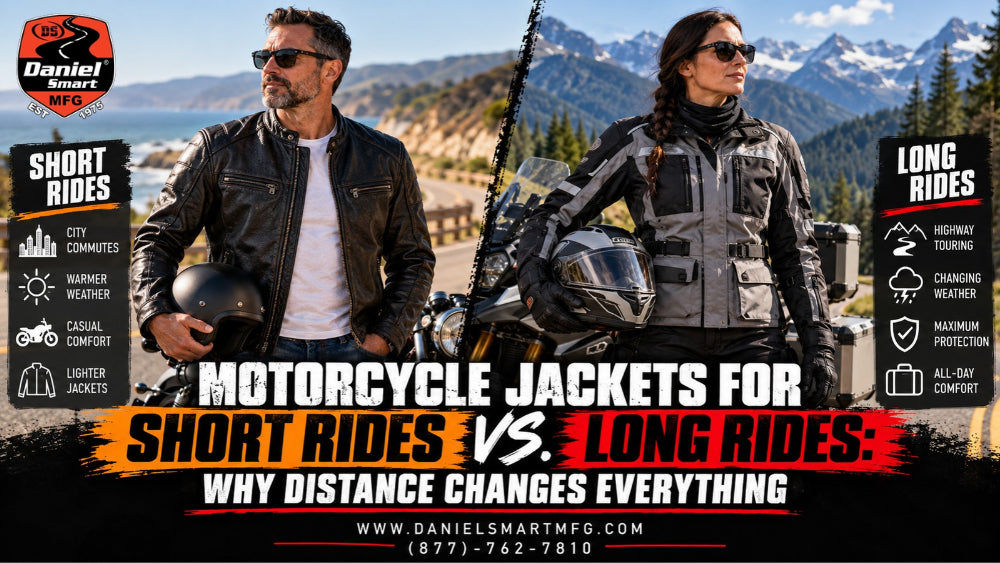
The jacket that feels like a perfect fit for a 15-minute ride for a nearby errand may not feel the same on a 2-hour ride. Suddenly, that same jacket feels more tiring, noisier, and less ventilated. Similarly, a jacket meant for long rides can feel bulky on a short ride.
Previously, we explored jacket-buying mistakes after purchasing the first helmet and highlighted a problem many bikers overlook: motorcycle jacket armor drift. A jacket may look protective and feel comfortable when you first put it on, but small fitting issues can become much more noticeable once you are actually riding.
Today, we'll compare motorcycle jackets for short rides vs. long rides and explain why distance can completely change how a jacket feels and performs.
So, what is the right choice of motorcycle jackets for short rides or long rides?
Motorcycle Jackets for Short Rides: City Errands
City riding involves slow speeds, frequent stops, and constant on/off.
Here's what to prioritize.
-
Comfort: Because you will be wearing the jacket into stores, a lighter Class A or AA garment, such as a short-cut leather jacket, is recommended. Class A is designed for lightweight clothes and low-risk applications.
-
Ventilation: At 25 mph with frequent red lights, little air passes through the mesh screens. Zippered vents and a removable liner allow for adjustments, which is preferable to a fixed-mesh jacket that cannot be closed.
-
Pockets: Your phone, wallet, and keys must be accessible while wearing gloves. Chest and hand pockets with secure closures are more important than pocket count.
-
Collar: A soft, low collar is OK. Shoulder-checking should not choke you.
-
Armor: Level 1 protectors are meant to protect while minimizing ergonomic drawbacks. That's ideal for short, sluggish excursions.
What type of motorcycle jacket is best for short rides? A certified Class A or AA jacket in perforated leather or vented textile, featuring shoulder and elbow armor and back protection that fits securely.
Cheap motorcycle jackets can function here if the tag indicates a verifiable class and the armor pockets include real armor. Inexpensive jackets frequently ship with plain foam that has no CE rating, so check the label rather than the product image.
Motorcycle Jackets for Long Rides: Where Small Flaws Compound
On a long ride, a collar edge that bothers you at minute ten becomes a chafed neck at hour three.
-
Comfort: When reaching for the bars, sleeves should not come up past the wrist. The rear hem should not rise as you lean forward. Weight builds up on the shoulders over time.
-
Ventilation: Long rides involve temperature changes. A textile jacket with a removable thermal and waterproof liner provides more coverage than a non-perforated leather jacket. Class AA is ideal for touring riders, as it provides weather protection with strong abrasion resistance and a lower ergonomic penalty than AAA.
-
Pockets: Waterproof or storm-flapped pockets protect phones from rain. Avoid putting heavy objects in chest pockets, since the weight pulls on the jacket and can shift armor out of place.
-
Collar: Choose a collar with a plush lining and an adjustable fastening. This one reduces wind pressure on your neck. This keeps it from pressing against your helmet or blocking your head turn.
-
Armor: Level 2 protection can be heavier, thicker, and less ergonomic. At highway speeds, the extra protection is typically worth it.
So, what motorcycle jacket should I wear for long-distance rides? The Class AA textile jacket is a great option. It includes removable liners, Level 2 armor for your shoulders and elbows, and a back protector for added safety.
It also has adjustable cuffs, waist, and collar, plus reflective panels for riding at dusk.
If you want a leather motorcycle jacket, it’s a tough choice with an AAA rating for abrasion resistance. Just know, it can get quite hot and heavy, so it’s best for touring when the weather is cool or moderate.
Feature Checklist: Short Rides vs Long Rides
|
Feature |
Short rides (city/commute) |
Long rides (touring) |
|
Cut & length |
Slim, shorter; easy on/off |
Longer tail, pre‑curved sleeves; connects to pants |
|
Ventilation |
Chest/arm vents, mesh for stop‑and‑go heat |
Large mesh with multiple zips and must seal against wind/rain |
|
Weatherproofing |
Basic water resistance |
Waterproof‑breathable membrane with storm flaps |
|
Liners |
Optional light thermal/mesh |
Removable thermal and mesh liners for climate range |
|
Pockets |
Minimal, discreet, lined |
Multiple external/internal, glove‑friendly, rear pouch |
|
Collar & cuffs |
Soft, simple collar; basic cuffs |
Padded, adjustable collar, sealed and adjustable cuffs |
|
Armor |
CE shoulder/elbow, removable for comfort |
CE Level 2, longer back protector, stable under vibration |
|
Best for |
Errands, commuting, office‑to‑bike |
Multi‑hour tours, all‑weather highway riding |
Practical Guidance for Riders Who Do Both
-
If You Mostly Commute but Tour Occasionally: Choose a well-made textile commuter jacket with excellent vents. It’s also a smart idea to keep a separate rain layer handy. Just be aware that on long, rainy days, you might not feel as comfortable as you would in a jacket designed specifically for touring.
-
If You Mostly Tour but Ride in the City: A 3-in-1 touring jacket with excellent ventilation is the way to go. Use the liners as you see fit; while it may add a little bulk when you take breaks, you'll appreciate the added protection and comfort during longer journeys.
-
Fit Test for Distance: A motorcycle jacket fitting test means wearing the jacket for a solid 30 to 45 minutes while in your normal posture. Watch for collar chafing, the waist riding up, or vents that don’t match your heat zones. These issues can really become a pain on longer rides, even if everything feels fine during a quick jaunt.
Conclusion
Choosing the right motorcycle jacket depends on how, where, and how long you ride. This motorcycle jacket buying guide shows why short city trips and long-distance journeys require different priorities, from ventilation and comfort to armor and weather protection.
Understanding the purpose of different biker jacket options can help you choose gear that fits your riding style without unnecessary compromises.
For riders seeking dependable motorcycle gear, Daniel Smart MFG offers options designed with practical riding needs in mind. Ultimately, the best jacket fits securely, provides appropriate protection, and stays comfortable on every ride, whether commuting across town or touring long distances.
FAQs
1. How should a motorcycle jacket fit?
A motorcycle jacket should fit snugly without restricting movement, especially around your shoulders, arms, chest, and waist. Armor should stay securely positioned.
2. Is leather better than textile for motorcycle riding?
Leather generally provides excellent abrasion resistance, while textile jackets offer greater versatility, ventilation, and weather protection. Your riding conditions should determine which material works best.
3. Do I need different jackets for commuting and touring?
Not necessarily, but specialized jackets can improve comfort for each riding situation. A versatile touring jacket can work well for both if properly ventilated.