


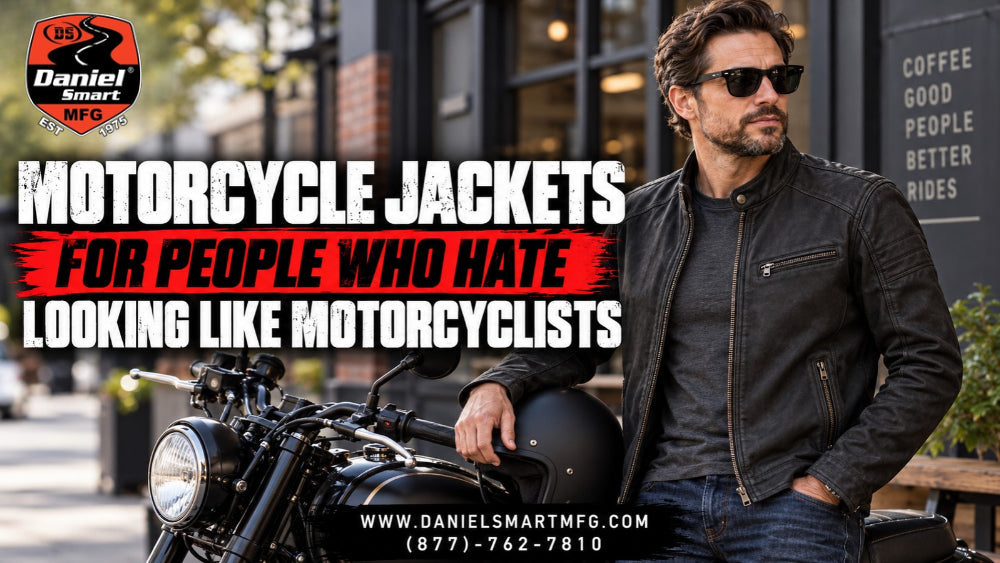
Many city riders wear hoodies because other riding outfits look like military uniforms. But that is not the right choice, not for looks, and definitely not for rider safety. This is changing as more manufacturers address the problems riders face.
So, now, you can find motorcycle jackets that don’t look like one. They are warm and have hidden armor inside. So what should you look for in a jacket when you don’t want to look like a motorcyclist?
What a “Regular-Looking” Riding Jacket Really Needs
Don't choose a smart motorbike jacket based solely on appearance. A biker jacket's primary purpose is to reduce injury risk during a slide or accident; therefore, abrasion resistance, impact armor, secure closure, and coverage matter more than color, branding, or silhouette.
According to the National Highway Traffic Safety Administration, well-made jackets, pants, boots, and gloves can help reduce abrasions and bruising.
Look for the following non-negotiables:
-
CE-certified shoulder and elbow armor; CE Level 2 absorbs greater impact energy than Level 1.
-
A pocket for a back protector, preferably one you've purchased and installed rather than one that is empty.
-
Abrasion-resistant shell materials include reinforced textiles, leather, waxed cotton with a protective lining, and denim developed expressly for riding.
-
Look for a full-length front zipper, an adjustable waistband, and cuffs that stay in place while riding.
-
Enough length to cover your lower back when you lean into the handlebars.
A regular-looking jacket without these qualities is simply a jacket. It may complement an outfit, but it doesn't provide the protection motorcyclists need in a crash.
How Can I Wear a Motorcycle Jacket Without Looking Like a Biker?
The simplest approach is to use neutral colors, simple logos, and familiar shapes. Black, blue, olive, charcoal, brown, and sand appear to be typical streetwear. For a subtler look, avoid large race graphics, sponsor patches, strong color blocking, and heavily padded shoulders.
Practical options for stylish motorcycle jackets:
-
Select a matte black or brown leather motorcycle jacket with clean lines and no visible branding.
-
Wear a textile commuter jacket that looks like a bomber, field jacket, or utility jacket.
-
Wear a riding denim jacket with dark jeans, boots or shoes, and a basic T-shirt or button-down.
-
In cooler weather, wear a waxed jacket for a rougher, non-motorcycle look.
-
Keep reflective features subtle: small reflective piping, a detachable vest, or reflective panels that are less visible in daylight.
Visibility is still important. Retroreflective materials are especially effective at night since they reflect vehicle headlights back towards the source, increasing riders' visibility. If you dislike high-visibility gear, choose motorcycle jackets with subtle reflective strips or a lightweight reflective vest for darker roads.
What Motorcycle Jacket Looks Like a Regular Jacket?
Several types of outerwear fit the bill for everyday wear:
-
Field jackets made from waxed cotton or canvas, complete with armor pockets.
-
Bomber jackets, whether in leather or heavy-duty fabric.
-
Denim or chino jackets lined with aramid fibers like Kevlar for added protection.
-
Hooded jackets that have abrasion-resistant panels on the inside.
You’ll mostly find options in brands' urban collections. Just keep an eye on their latest offerings, as styles can rotate pretty quickly. But know that you still need to do a proper inspection for safety and fit.
Tips to Find the Right Fit, Noise, and Heat
An uncomfortable motorcycle jacket noise? That’s just a ticket to the back of the closet.
-
To make sure your motorcycle jacket fits right, try a fitting test at home; just keep those tags on.
-
Start by sitting on a bike or a chair, arms out like you’re holding the handlebars. Your sleeves should still cover your wrists nicely.
-
Then, reach forward and twist to peek over your shoulder. The jacket should stay put, not riding up your back or feeling constricted across your chest.
-
Check the armor placement next. The elbow armor should sit right over your elbow, not creeping down to your forearm.
-
Now, shake your arms a bit. If the armor moves around, it’s not in the right spot for a crash. And remember, wear the layers you’d actually ride in, like a cozy sweater or hoodie.
How your casual motorcycle jacket fits can really help control noise. Loose fabric can flap at speed, and wind noise inside your helmet can reach levels that might harm your hearing over time, especially if you ride daily.
A snug fit, a sealed collar, and adjustable cuffs can cut down on that annoying flutter. Plus, riding earplugs are affordable and definitely worth using.
Motorcycle jacket ventilation is especially important in hot urban areas. Keep an eye out for zippered vents on the chest and back, a removable thermal liner, and perforated panels if you’re going for leather.
While full mesh jackets look sporty, riders in places like Phoenix or Houston might prefer a vented waxed-cotton or lightweight canvas jacket that still blends in with everyday clothing.
What Motorcycle Jacket is for Night?
To be honest, Night commuting is the weak spot, especially if you are going for a jacket without armor.
We get it: dark, low-profile clothing isn’t exactly what drivers are looking for, and let’s face it, motorcyclists can be pretty hard to see. Therefore, wearing reflective or fluorescent clothing can lower the risk of crash-related injuries.
You don’t need a neon vest to reap the benefits. If you’re shopping for motorcycle jackets for night riding, consider these options:
-
Reflective piping or small panels on the back and sleeves can make a difference.
-
A removable reflective vest or sash is great for those darker stretches.
-
Choose lighter colors like tan or gray instead of just black if you tend to ride after sunset.
Conclusion
Choosing the right motorcycle jacket doesn't mean sacrificing personal style for safety. For motorcyclists who prefer everyday fashion, the right motorcycle jacket buying guide should focus on protective armor, abrasion-resistant materials, proper fit, ventilation, and visibility. Even when shopping for cheap motorcycle jackets, prioritize essential safety features over appearance or price alone.
Avoid common jacket buying mistakes, such as choosing casual outerwear without proper protection or overlooking nighttime visibility. Daniel Smart MFG offers motorcycle apparel for riders who want distinctive style and practical functionality.
Ultimately, the best jacket complements your everyday look while providing the protection and comfort you need on every ride.
FAQs
1. Can I wear a regular hoodie while riding a motorcycle?
A regular hoodie offers little protection against road abrasion or impact. Choose a purpose-built riding hoodie with protective armor and reinforced materials instead.
2. How do I know if my motorcycle jacket fits properly?
Your jacket should feel secure without restricting movement while riding. Check that the armor stays over your elbows and shoulders when you move.
3. Are leather jackets better than textile jackets for everyday riding?
Leather jackets generally provide excellent abrasion resistance when designed for motorcycling. Textile jackets can be lighter, offer better ventilation, and provide greater weather versatility depending on their construction.